A leap meant to leave misfortune behind
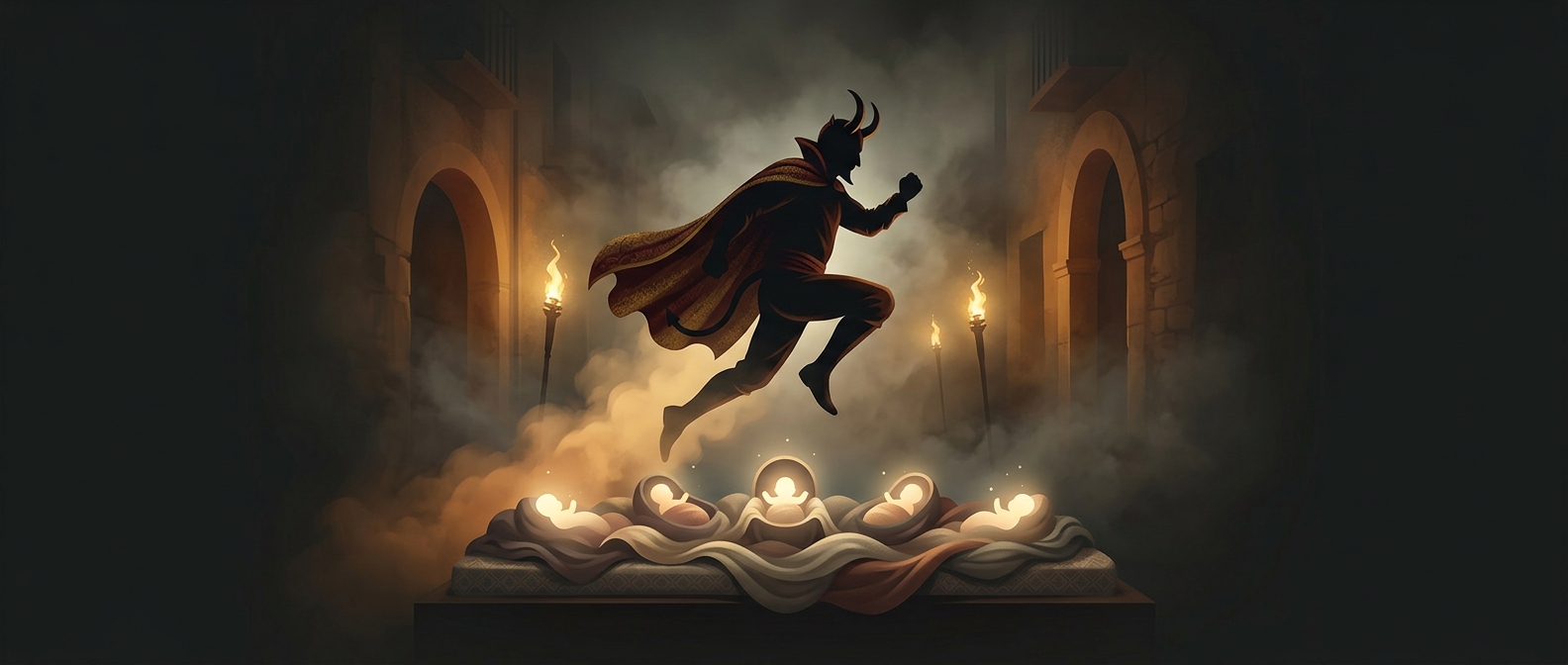
At El Colacho, the baby-jumping is part of a larger Catholic celebration known as Corpus Christi, which honors the Eucharist. The festival takes place in Castrillo de Murcia, a village in Spain’s Castile and León region. Its central figure, El Colacho, wears a devil-like costume and runs through the streets as part of a ritual that gives the day its striking, theatrical character.
The infants are placed in a row on mattresses, and the costumed men leap over them. In the ritual’s symbolism, the jump carries away evil and helps protect the children. It is not a stunt performed for a practical physical effect; its meaning comes from the community’s religious tradition and the contrast between the frightening-looking figure and the blessing intended for the babies.
A village ritual with a public audience
The event turns a local religious observance into a spectacle that draws visitors. For families, the babies’ participation connects the children to a custom understood as a sign of protection. For onlookers, the same moment can feel alarming: the safeguard is represented by a man vaulting over a vulnerable infant.
That tension is part of what makes El Colacho memorable, but it can obscure the festival’s purpose. The leap is not presented by participants as a threat to the children. It is a symbolic passage: the devil-like figure crosses over them, while the ritual expresses the hope that they will be spared harm.