Why Mardi Gras Beads Become a Street-Cleanup Problem
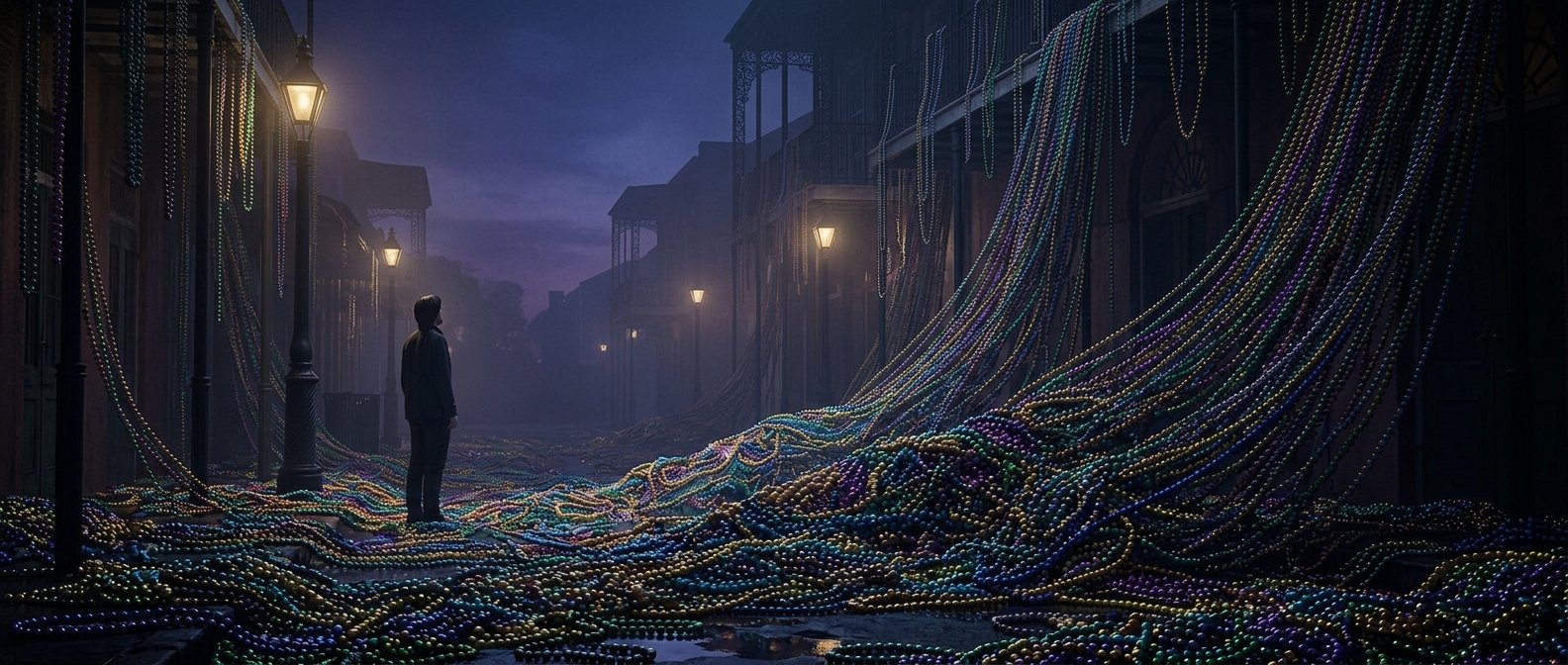
A parade throw is designed to travel only a few feet: from a float into a spectator’s hands. But beads miss, are dropped in the excitement, or are left behind when crowds move on. Along busy parade routes, thousands of small, lightweight strands can end up mixed with cups, food wrappers, and other litter.
The size that makes beads easy to toss also makes them awkward to clean up. They scatter across sidewalks and settle into gutters, where sanitation crews must gather them along with other debris. A strand can snag on street fixtures or become tangled with litter, turning a quick sweep into slower, more hands-on work.
Why They Are Hard to Keep in Circulation
Cheap plastic beads are often treated as single-use souvenirs, even though a strand may remain usable after the parade. Collecting them for reuse can help, but it depends on people returning them and on organizers having a way to sort and store them. Once beads are mixed with street trash, recovering them becomes more difficult; small plastic pieces are also not automatically recyclable just because they are plastic.
That leaves sanitation crews with the immediate task of clearing the route before ordinary city life resumes. The contrast is part of the problem: a festive throw lasts seconds, while the cleanup falls to workers after the crowds have moved on.