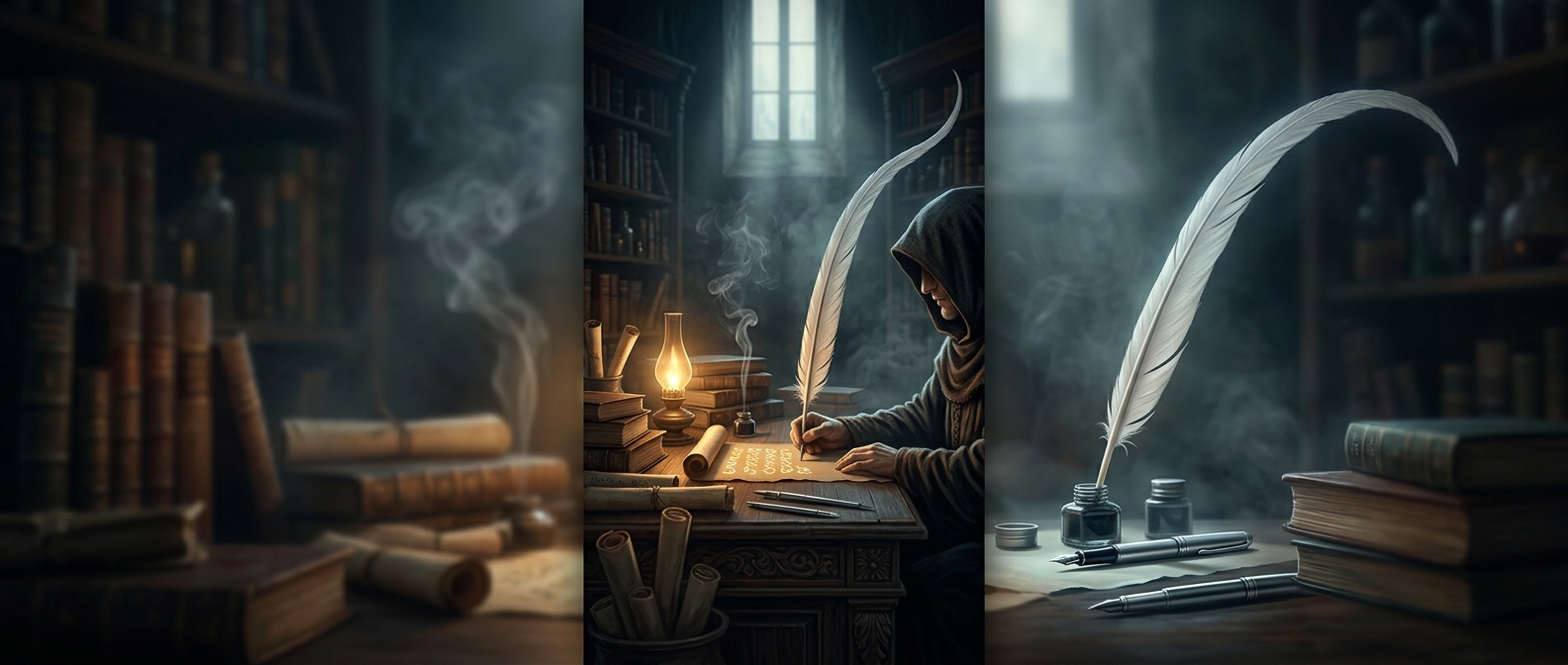
Why a Quill Can Feel More Authentic in Ritual
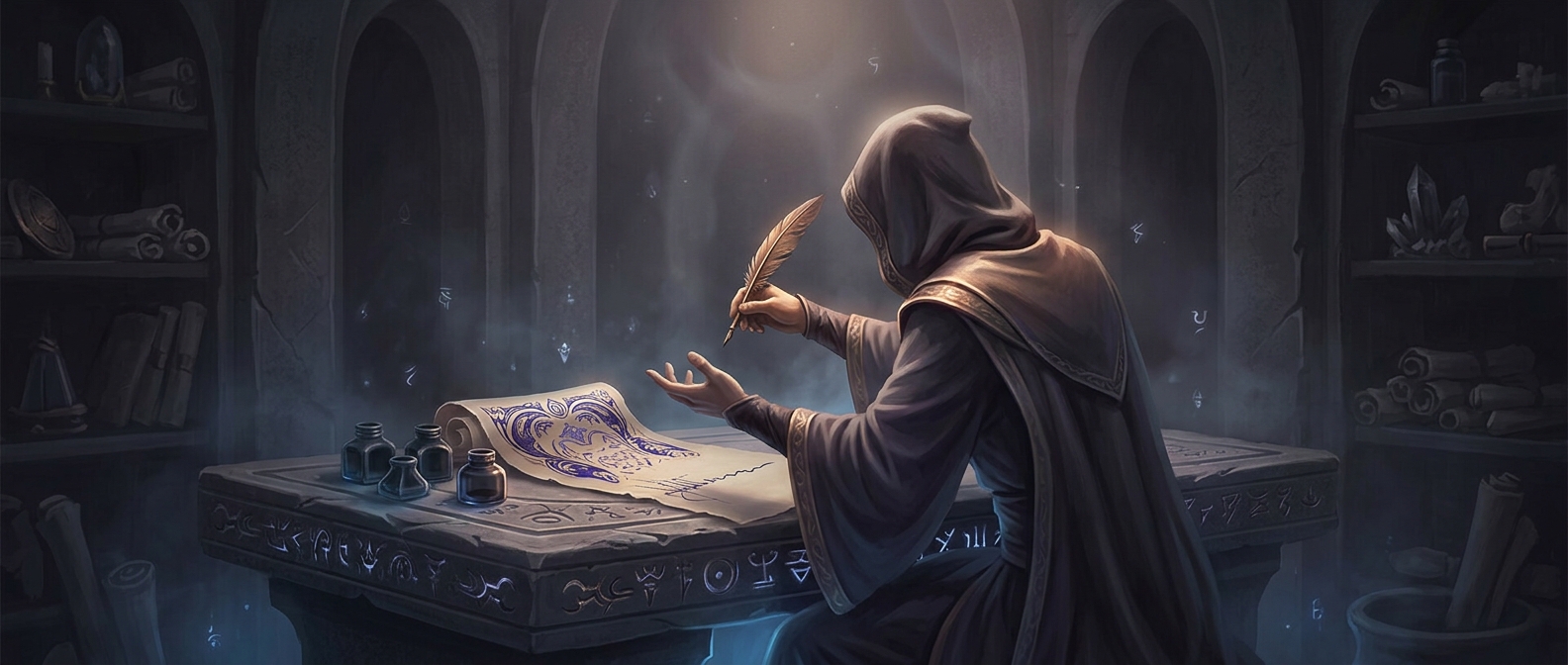
A quill is not simply an old-fashioned pen. Its feather, cut tip, and need for a separate inkwell make writing feel like a deliberate handcraft rather than an ordinary task. For practitioners drawn to historical or esoteric imagery, that difference can matter: the tool helps make a written act feel set apart from everyday life.
The appeal is usually about meaning, not efficiency. A quill can evoke manuscripts, charms, and inherited traditions, giving a ritual a tangible connection to the past. Using one can also slow the writer down. Each dip and careful stroke turns the making of a symbol or text into part of the ceremony.
The Friction Is Part of the Experience
A quill holds only a small amount of ink at its tip, so the writer must dip it repeatedly. Its point can catch on paper or release ink unevenly, especially if it is poorly cut or handled. A modern pen largely hides these mechanics; a quill makes them visible—and sometimes messy.
That inconvenience is the tradeoff. The tool’s value lies partly in the atmosphere and attention it creates, not in producing the fastest or neatest writing. A blot or hesitant stroke may be an annoyance, but it also reflects the physical work of making the mark by hand.