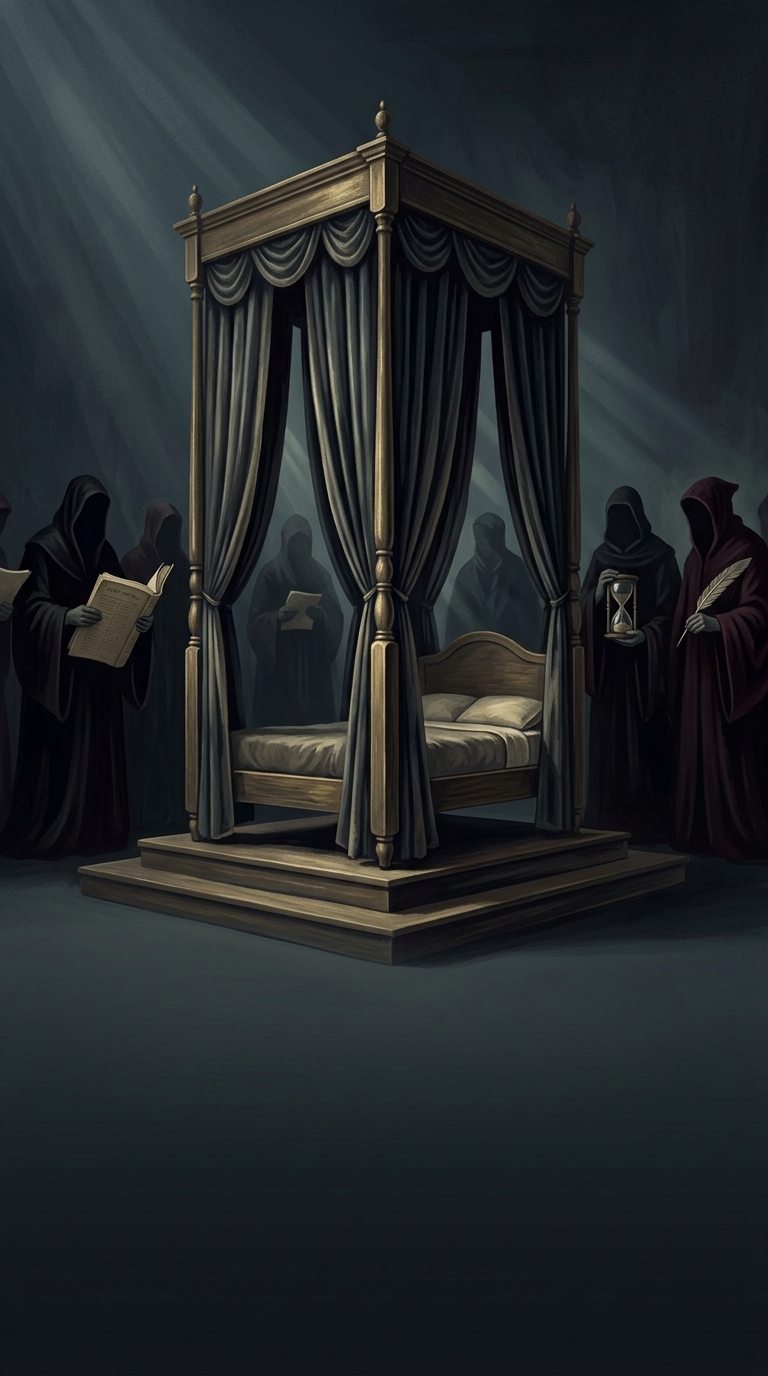
A Marriage Put on Trial
In early modern France, a wife who said her husband could not consummate the marriage could seek to have it declared invalid. The legal issue was not whether the spouses should separate after a failed relationship; it was whether a valid marriage had ever taken place. Church law treated consummation—the couple’s first sexual intercourse—as part of what made a marriage fully binding.
That distinction matters: the procedure sometimes described as a “divorce trial” was more accurately a case for annulment, a ruling that the marriage was invalid from the start. A successful case could free a woman to marry again, while a husband accused of impotence faced public humiliation and the loss of his marriage.
Why the Court Called for a Test
A court could not simply take one spouse’s word for what happened in private. Judges relied on testimony and examinations by medical experts, and in some cases ordered a congrès—a formal attempt by the couple to have intercourse, conducted under official observation. Church officials could also be involved because the dispute concerned the validity of a sacramental marriage.
The proceeding turned an intimate claim into a matter of public evidence. Officials were meant to determine whether intercourse was physically possible, not to assess affection or compatibility. In practice, the test placed the husband’s sexual capacity under intense scrutiny and could make an already bitter marital dispute a spectacle.
A Brutal Standard of Proof
The procedure reflected a legal world in which marriage was governed by both church rules and civil courts, and where a woman’s ability to leave a marriage depended on proving a narrow ground recognized by law. Impotence was not merely a private difficulty: if it prevented consummation, it could be treated as evidence that the marriage lacked a necessary condition.
The test also exposed the limits of trying to settle a private, complicated question through a public performance. Rather than asking only what the couple had experienced, the court demanded proof in a form that could be observed and judged. That is what made the congrès so notorious: the court tried to make sexual capacity visible—and turned the marriage bed into a courtroom.