Why the liver seemed to make blood
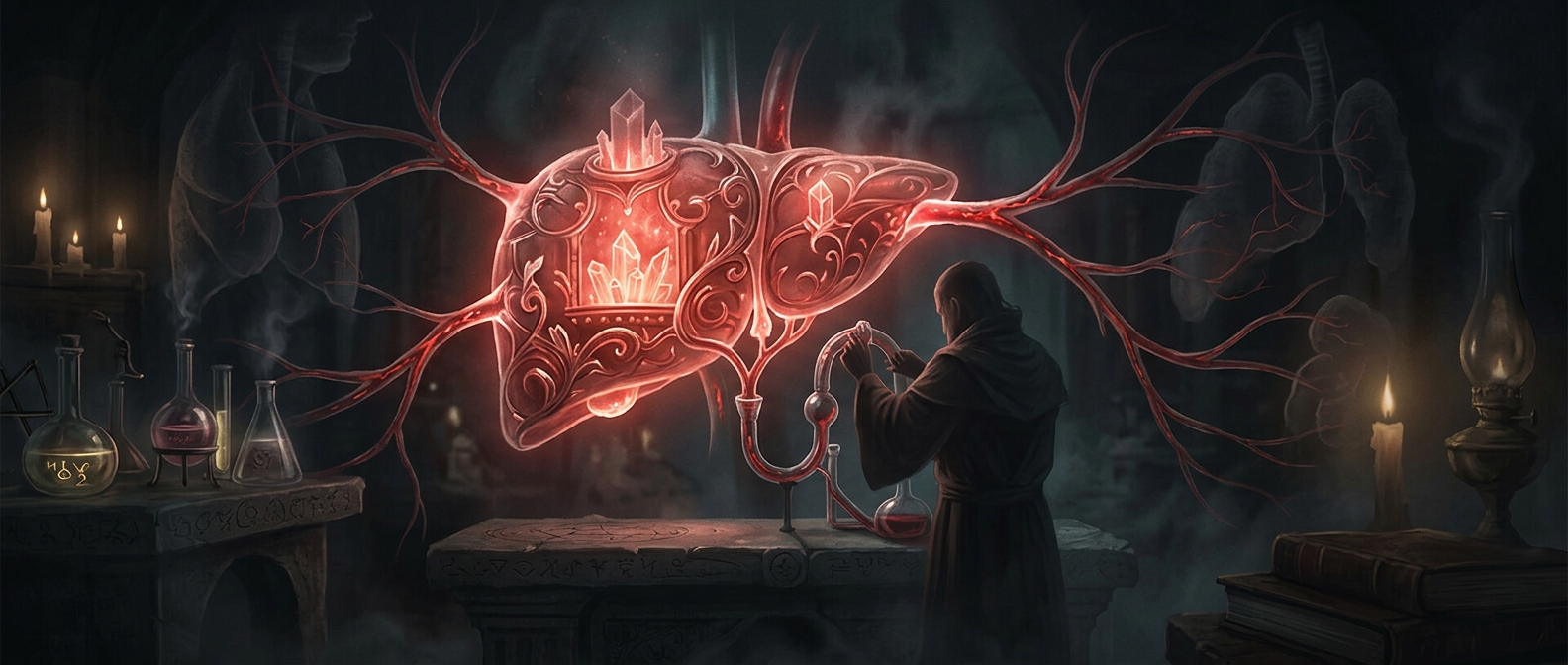
Before circulation was understood, physicians had to infer what organs did from anatomy, injury, and the visible effects of illness. The liver’s deep-red color and its connection to large veins made it a plausible source of blood. In influential ancient medical models, food was transformed in the liver into blood, which then traveled through veins to nourish the body.
This was not simply a guess about one organ. It was part of a broader account of how life worked: the body took in nourishment, changed it, and distributed it. Blood was both material sustenance and a sign of vitality, so an organ thought to produce it naturally acquired special importance.
The heart had a different job
The liver’s role did not make the heart irrelevant. In this model, the heart supplied heat—the body’s internal warmth and energy—while the liver supplied blood. The organs were assigned complementary tasks rather than competing explanations for the same process.
That division also reflects the limits of observation. Without a clear account of blood circulating around the body, physicians could interpret blood in veins as a substance produced locally and sent outward for use. Later anatomical work replaced that picture with a circulatory system in which the heart pumps blood through the body. The older idea remains a reminder that early medicine often explained vitality by giving visible organs distinct, connected roles.