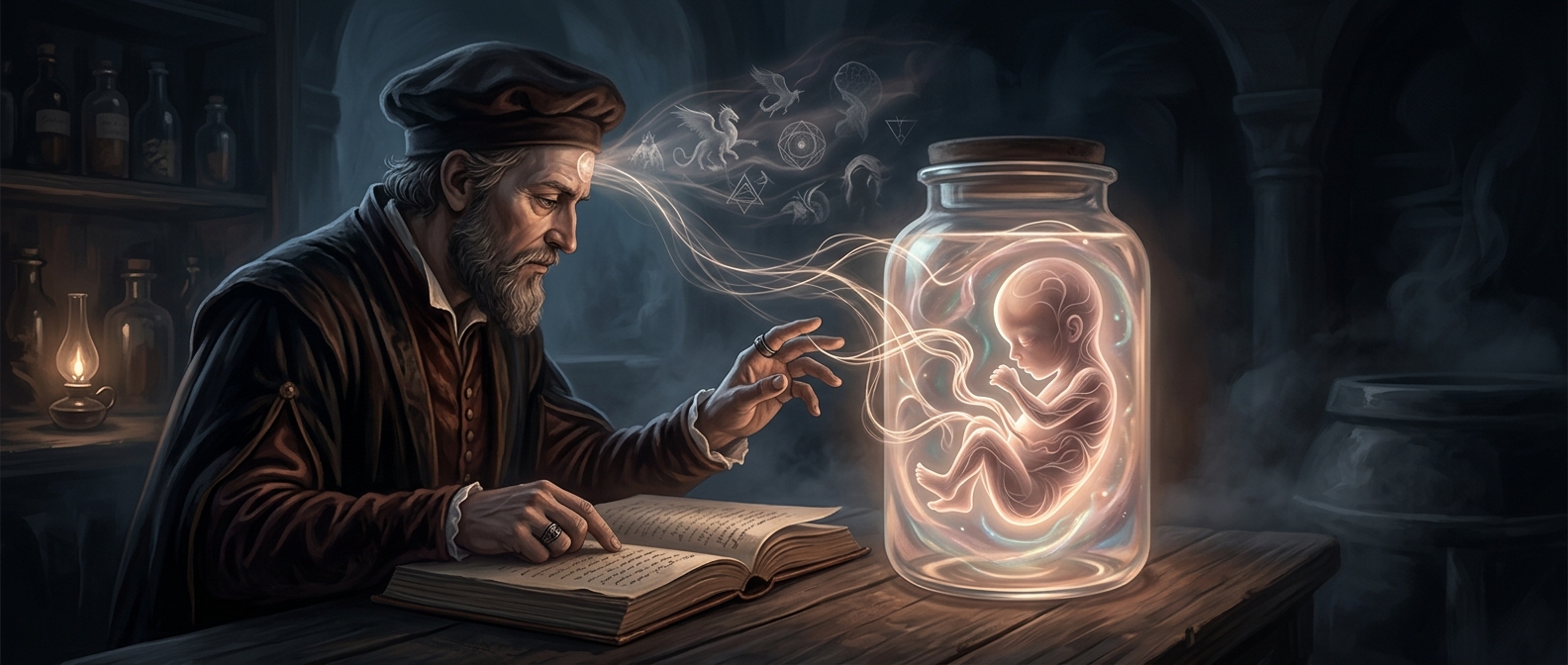
Imagination as a physical force
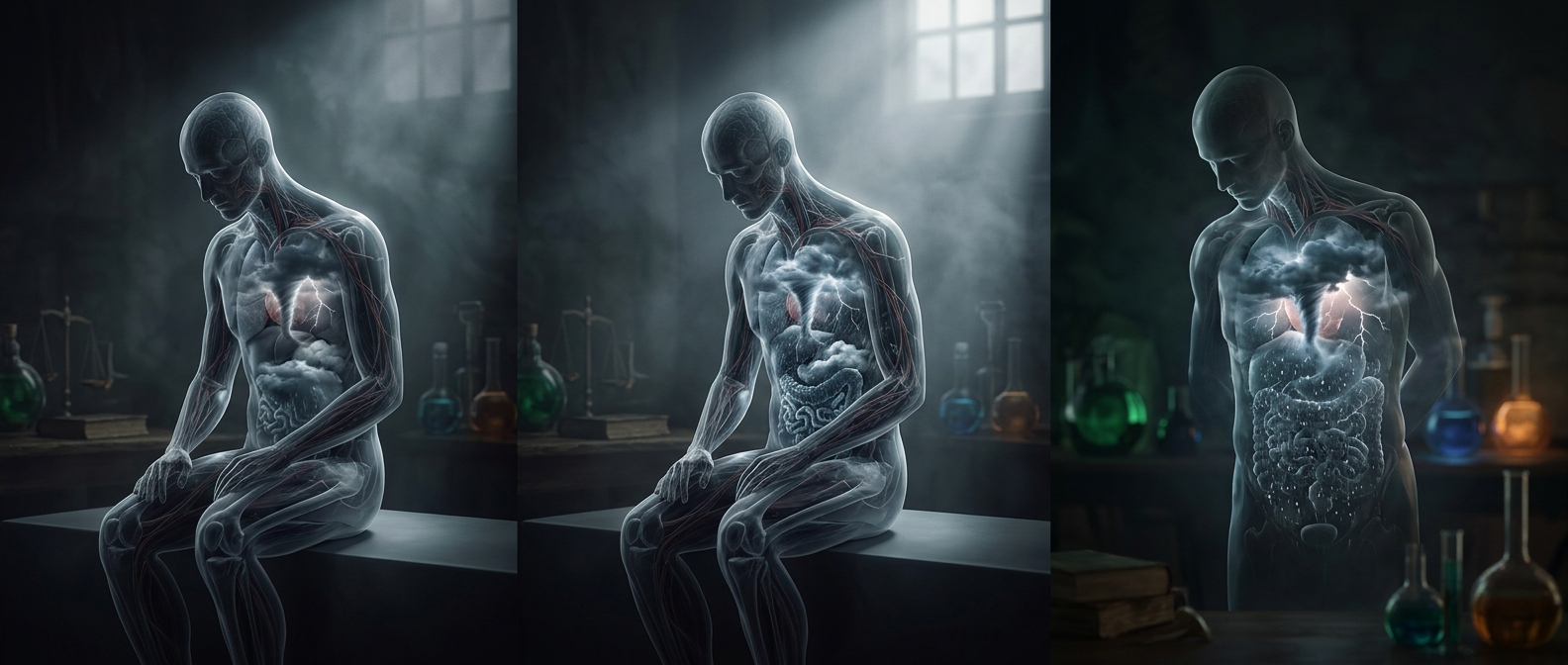
Paracelsus did not treat imagination as mere daydreaming. In his Renaissance view of nature, inner forces could act on the body: a powerful thought or image might leave a material effect. Pregnancy made that idea especially consequential. He believed a mother’s vivid imaginings could help shape the developing child, not simply influence her own feelings.
This was part of a broader way of understanding the body in which mental, spiritual, and physical processes were closely entangled. A striking resemblance or unusual feature could seem to call for an explanation that linked what a pregnant woman had seen or imagined with what later appeared in her child. The proposed mechanism was imagination itself, understood as an active power rather than a private mental picture.
A historical explanation, not a medical mechanism
That belief belonged to Paracelsus’s esoteric medicine, which combined natural philosophy with ideas about hidden forces in nature. It offered a way to explain how an invisible experience might produce a visible bodily result. But it is a historical belief, not a finding of modern medicine: a pregnant person’s thoughts and imaginings do not physically redesign a fetus.
The idea is revealing because it shows how Renaissance thinkers could treat the mind as part of the material world. For Paracelsus, imagination was not safely confined to the head; it could reach into the body—and, in pregnancy, across the boundary between mother and child.