Milk as a Detour at the Doorway
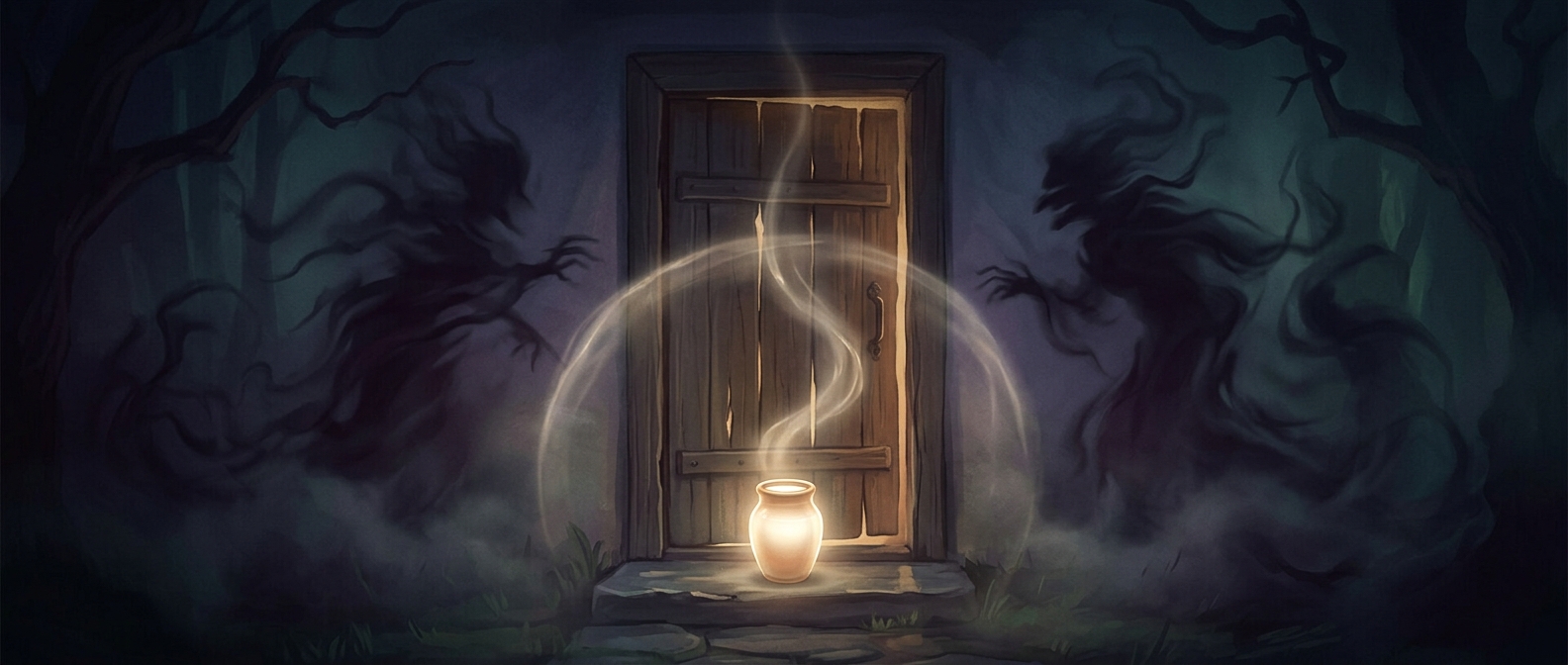
In some Eastern European folk traditions, a jar of milk left outside was imagined as a way to divert a witch before she crossed into the home. The protection worked through a small story of temptation: the visitor would stop to drink or attend to the milk, giving the household safety without a direct confrontation.
That detail makes the practice more than a simple barrier. Instead of trying to overpower a feared presence, people pictured it as having needs and habits that could be managed. The milk offered a distraction at the very point where danger was thought to enter—the threshold between the outside world and the protected interior.
A Familiar Substance Made Protective
Milk also carried associations of purity and nourishment. In a household-centered world, it was an everyday substance tied to feeding and care; leaving it at the door could turn those meanings outward, into a sign of protection. The offering’s force belonged to folk belief and symbolism, not to any demonstrated ability to repel a supernatural being.
Practices and interpretations varied across communities, so the image should not be treated as a single rule followed throughout Eastern Europe. Its memorable logic is the same: a humble jar could serve as both offering and imagined guard, persuading danger to linger outside rather than cross the sill.