Why Salem’s condemned were hanged
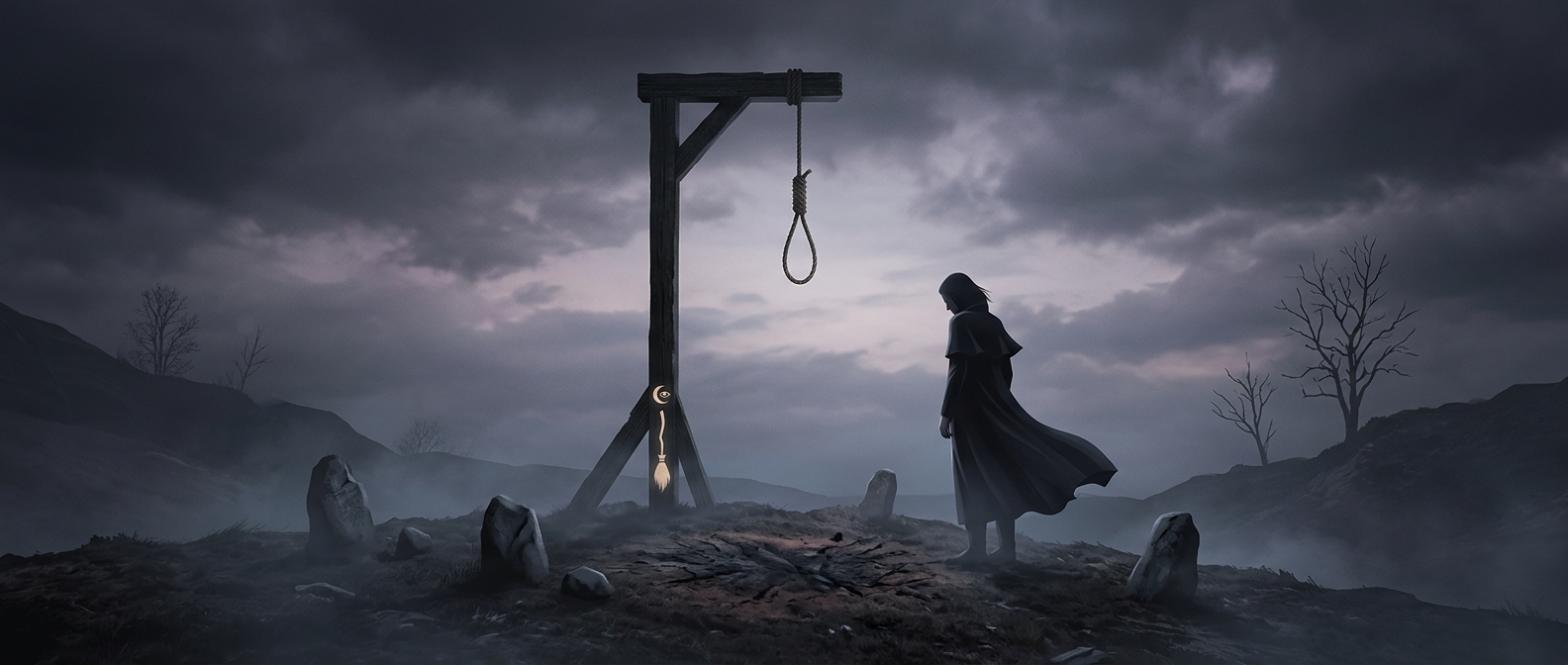
The Salem witch trials took place in Massachusetts, an English colony whose criminal justice system followed English legal practice. In England and its colonies, people convicted of witchcraft were treated as felons and executed by hanging. Burning at the stake, though strongly associated with witchcraft in popular imagery, was more characteristic of some European legal traditions—not the usual punishment in English law.
In 1692, the executions took place at a gallows site near Salem. The familiar picture of a bonfire therefore tells a broader story about witch persecutions, not what happened to those condemned in Salem.
The exception was not a burning
Most of the people sentenced to death in the Salem cases were hanged. Giles Corey, who refused to enter a plea, died under heavy stones during a separate punishment known as pressing; he was not burned or hanged. Others died in jail before they could be executed.
That distinction matters: Salem’s tragedy was carried out through the ordinary machinery of the colony’s courts and gallows, rather than the spectacular stake imagined in many retellings.