How a frozen river became a temporary marketplace
On especially cold winters, parts of the Thames in London could freeze solid enough for people to walk onto the ice. The river’s older course and built environment helped: the old London Bridge’s many piers interrupted the current, slowing water in places where cold could more readily turn it to ice. Severe weather was still essential; the bridge did not freeze the river by itself.
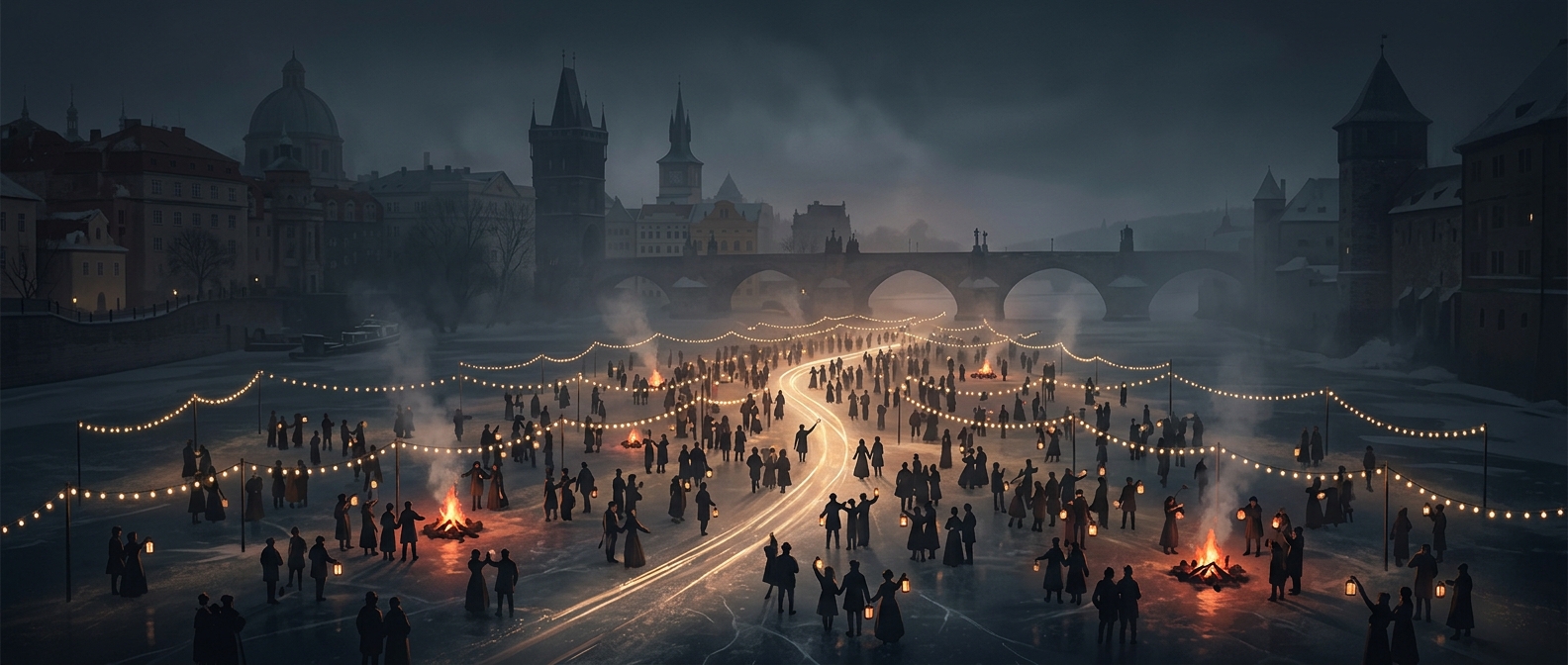
Once the surface seemed firm, the ice offered something rare in a crowded city: a broad, open space in the middle of a familiar route. Vendors set up stalls, served food and drink, and drew crowds who might otherwise have stayed on the riverbanks. These gatherings became known as Thames frost fairs—markets and entertainments made possible by an unusually cold spell.
A market built on a changing surface
The fair’s setting was also its central risk. Ice could vary in thickness, and a sudden change in temperature or river conditions could make a busy stretch unsafe. A market on ice had no permanent foundation: its stalls, visitors, and access routes depended on a surface that could weaken beneath them. The same thaw that ended the spectacle could also turn the river back into a hazard.
The fairs therefore reveal how people adapted commerce to the landscape rather than waiting for the landscape to cooperate. They transformed a frozen transport corridor into a temporary public space—but only while the weather held. As London’s river changed and its winters no longer produced the same reliable conditions, the opportunity faded. For a short time, though, the city’s busiest marketplace could stand not beside the river, but on top of it.