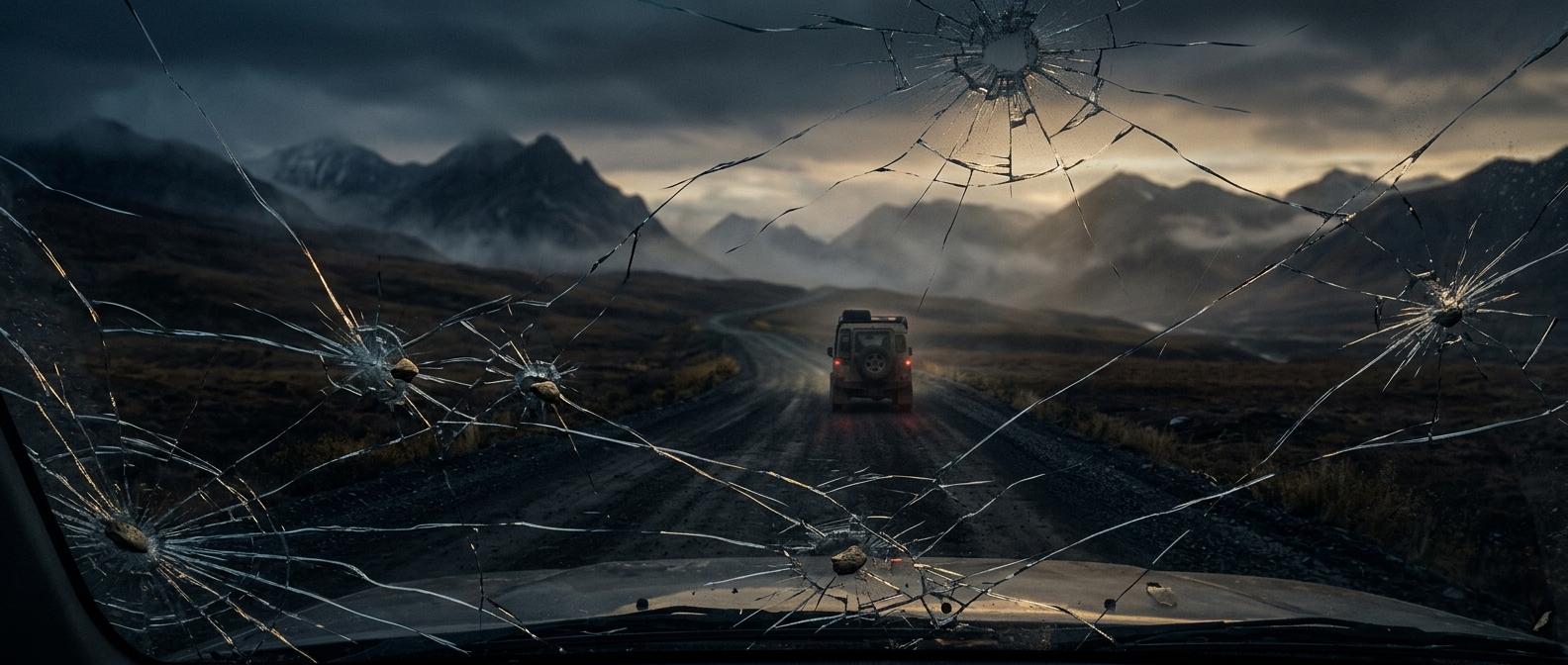
Why gravel roads can be hard on windshields
On an unpaved road, a truck’s tires do more than roll over stones: they press loose gravel into motion. A stone can be squeezed out from beneath a tire or flung backward as the tread turns. Large tires and multiple axles create several chances for debris to fly, while the truck’s wake can keep dust and small stones moving behind it.
A windshield is designed to resist impacts, not shrug off every one. Its laminated construction—glass layers bonded around a plastic sheet—usually keeps the pane from collapsing when struck. But a sharp stone can still chip the outer glass. A chip may spread into a crack as the vehicle vibrates or the glass heats and cools.
The dangerous gap behind a truck
The dust cloud is a warning, but it can also hide the actual threat. A driver following close has less time to react and may meet gravel while it is still flying. Even at a safer distance, a larger stone can arrive with enough force to leave damage.
Slowing down and leaving a generous gap reduces exposure, though it cannot make the road risk-free. The practical tradeoff is simple: the truck may be the only vehicle clearing the route, but following directly in its tracks can turn a routine drive into a windshield repair.