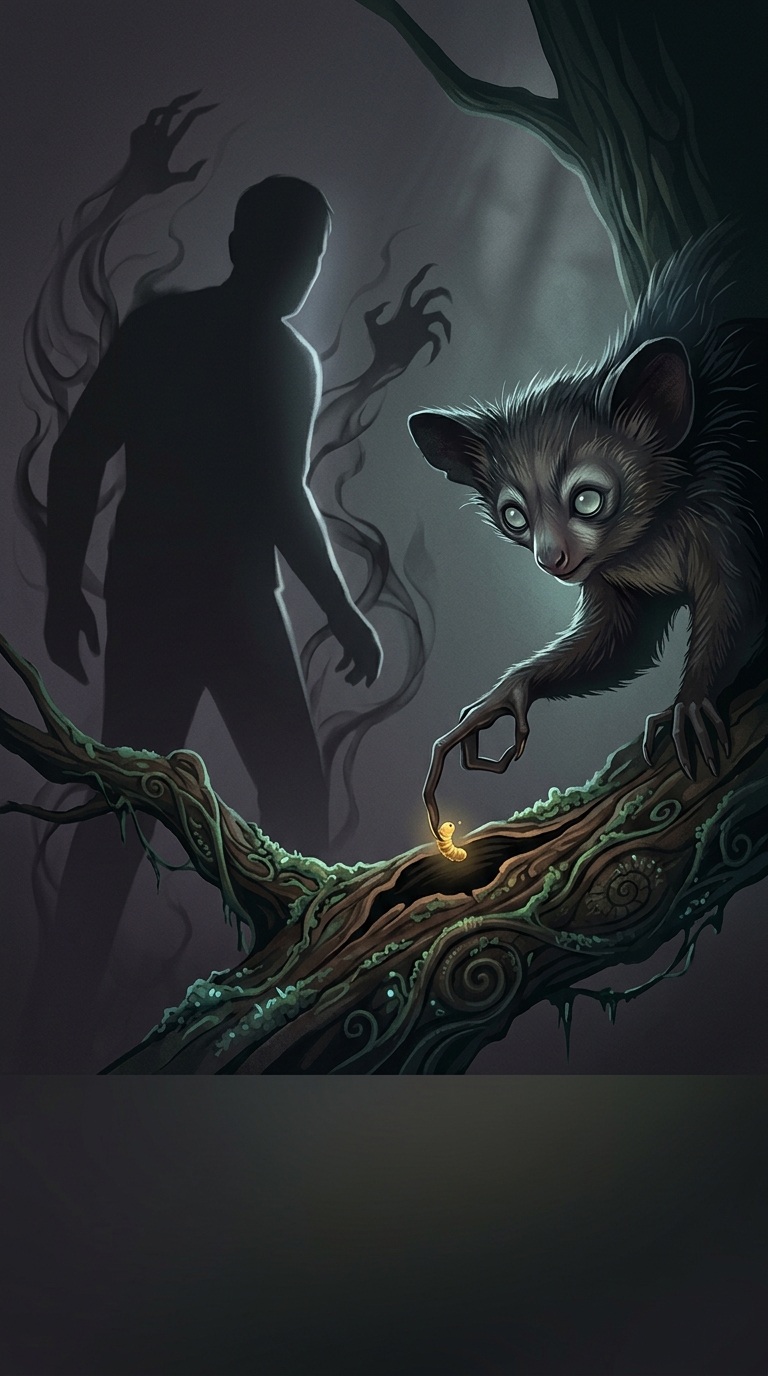
How a Foraging Tool Became an Omen
The aye-aye’s unusual finger is not merely a striking feature: it is part of a specialized way of finding food. The lemur drums on wood, listens for signs of hollows and insect activity, then gnaws into a promising spot and uses its slender finger to pull out grubs. In the dark, that tapping can make the animal seem less like an ordinary forager and more like an unseen presence moving through the forest.
That contrast helps explain why stories about the aye-aye can attach danger to its appearance and behavior. In some Malagasy communities, encounters with the animal are treated as ominous; traditions and responses differ from place to place, rather than forming one belief shared by everyone on the island.
Belief Has Consequences for the Animal
When an animal is understood as a warning of misfortune, a sighting can provoke fear instead of curiosity. Accounts of aye-ayes being killed because of these beliefs have made local attitudes relevant to conservation: protecting the species can involve more than preserving forest habitat. It can also mean understanding the meanings people attach to an encounter and working with communities rather than treating them as a single audience.
The same finger that lets the aye-aye reach hidden prey has helped make it memorable—and, in some places, feared. Its story shows how an animal’s real behavior can become part of a community’s way of interpreting danger.