A ritual built around a powerful name
The Stele of Jeu is a set of ritual instructions preserved among the Greek Magical Papyri, a collection of ancient Egyptian manuscripts containing spells and ceremonies in Greek and other languages. Its “Headless One” is not simply a monster to be summoned. The text addresses a formidable spiritual power and gives the practitioner words and actions meant to enlist that power in the ritual.
That distinction matters: in ancient magical practice, calling on a being could be a way to gain authority over other forces, not merely to make an apparition appear. The ritual’s invocation presents the Headless One as powerful and commanding, placing the practitioner’s request within that authority.
Why diagrams and vowels mattered
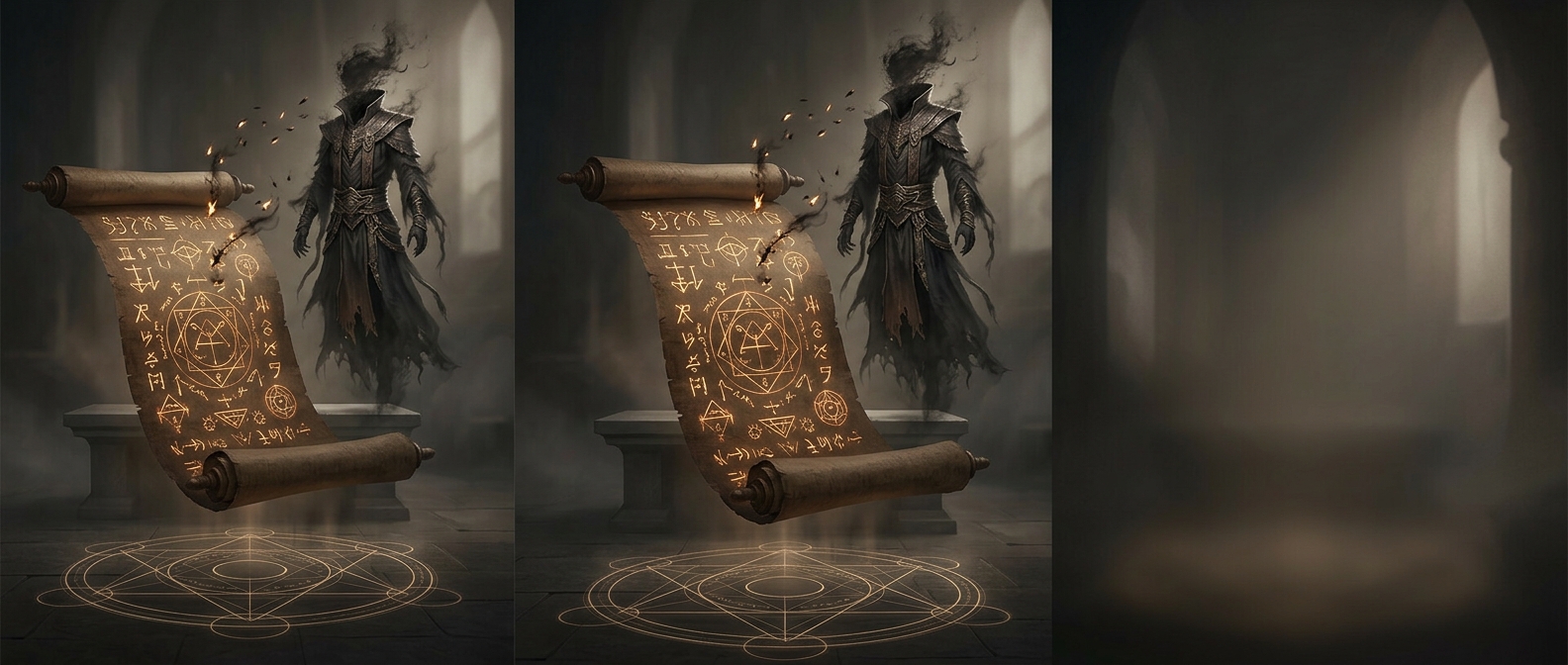
The ritual combines spoken sounds with written signs. Its geometric diagrams make the written page part of the procedure, while strings of vowels turn speech into something more than ordinary conversation. In ancient ritual, unusual names and vocal sequences could serve as potent verbal forms: their force came from performing them as prescribed, not from translating them into a plain sentence.
The result is a ritual that works through coordinated acts—reading, vocalizing, and attending to marked symbols. The papyrus preserves not just an idea about a supernatural being, but a practical script for approaching one. That is why the striking image of a headless spirit sits alongside diagrams and chants: each element belongs to the same attempt to make words and signs do something in the world.