Renunciation Made Visible
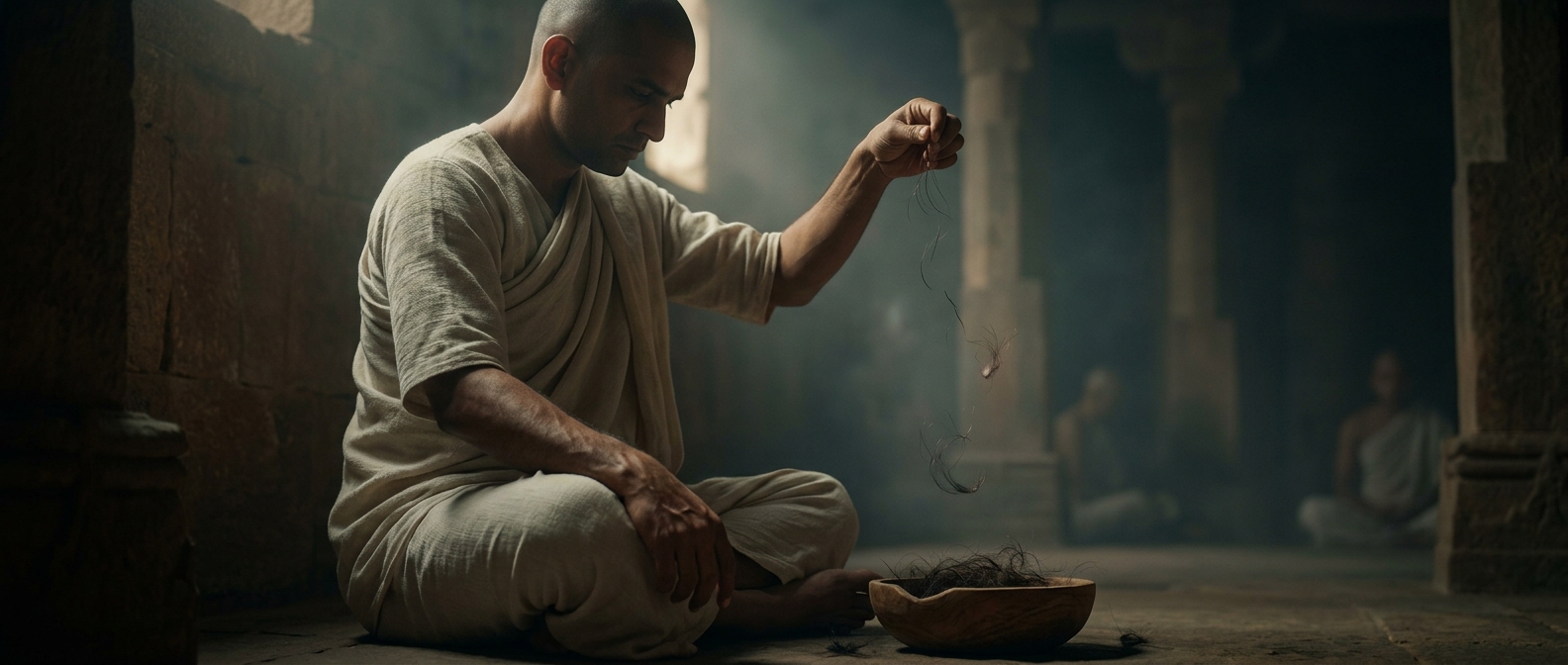
For Jain monks who practice this rite, removing their hair by hand is an act of renunciation: giving up something associated with appearance and comfort rather than maintaining it through grooming. The practice is known as kesh lochan—literally, hair plucking—and is part of a broader effort to loosen attachment to the body and possessions.
It is not meant to celebrate pain for its own sake. In Jain thought, disciplined restraint helps a person avoid being ruled by desires and aversions. Enduring a difficult sensation without treating it as a command to stop can therefore serve as a visible test of resolve. The aim is detachment, not injury as an achievement.
A Practice Within a Larger Discipline
Jain monastic life emphasizes non-attachment and careful conduct. Hair removal takes the place of ordinary grooming, which can involve tools and ongoing attention to appearance. The ritual’s starkness makes the choice legible: the monk accepts discomfort rather than organizing life around bodily ease or presentation.
Practices can differ among Jain communities, and the rite is not a requirement for every Jain person. For those who undertake it, its meaning depends on a wider commitment to religious discipline—not simply on the physical act. What looks like a moment of endurance is meant to express a continuing choice: the body may be cared for, but it is not the self to be perfected or obeyed.