A studio chore became a meal plan
Piero di Cosimo’s reported habit joined two kinds of preparation: making a batch of food and getting materials ready to paint. Egg tempera, a painting medium made by mixing pigment with egg, was common in Renaissance workshops. Glue also served painters, often as a binder or in preparing surfaces. It had to be heated to work, so boiling it was part of the practical labor of maintaining a studio—not an unusual artistic ritual in itself.
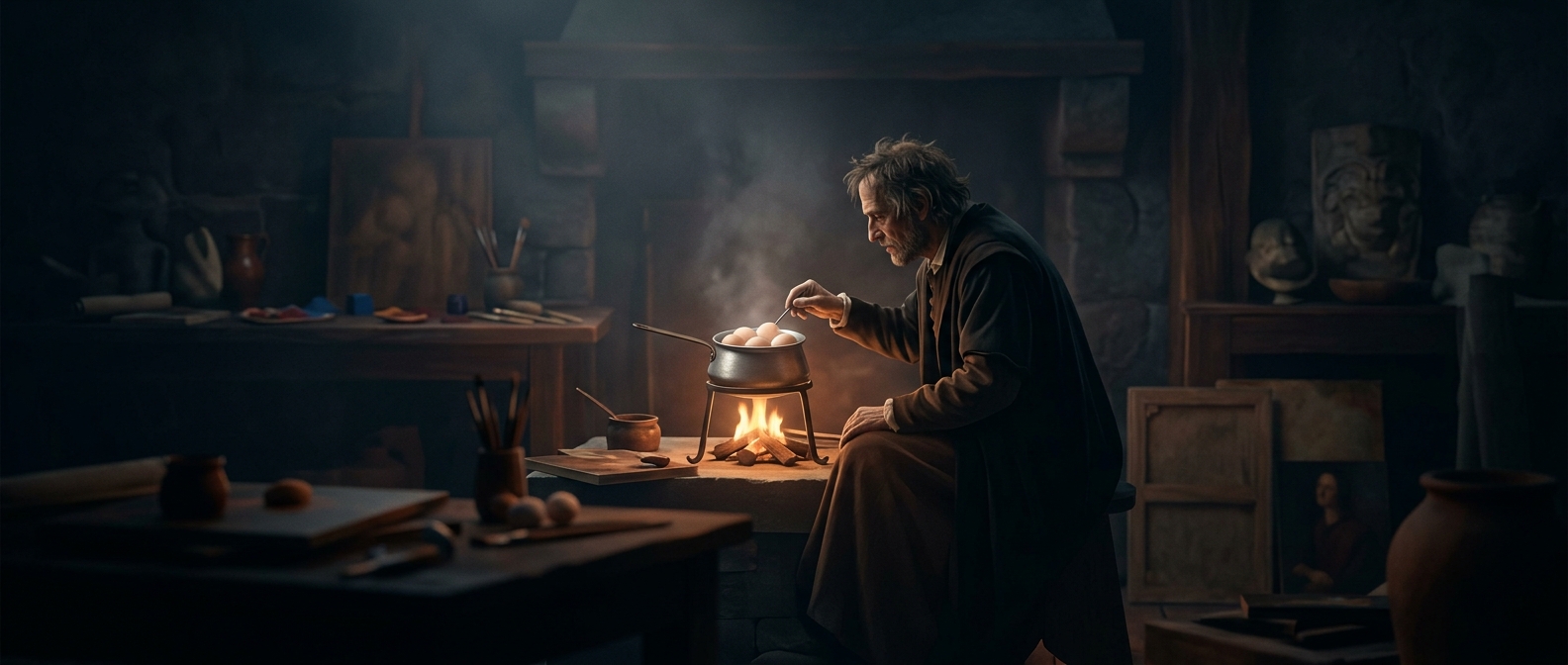
The anecdote says Piero boiled 50 eggs at once while preparing his glue, then lived on the eggs. It does not establish exactly how he cooked or stored them; the memorable point is the scale of the batch and how long it was said to sustain him.
Efficiency, or an artist’s eccentricity?
Preparing a large quantity at once could reduce the need to cook repeatedly. But the story is also a portrait of Piero as an unusually self-contained, eccentric figure. Renaissance accounts of artists often preserved striking personal habits alongside their work, turning a practical detail into a character sketch.
That makes the episode worth reading as an anecdote, not a precise record of his diet. Its compact image—eggs piled up beside the heated materials of the workshop—shows how closely an artist’s daily survival could sit alongside the business of making paintings.