The cross-correspondence puzzle
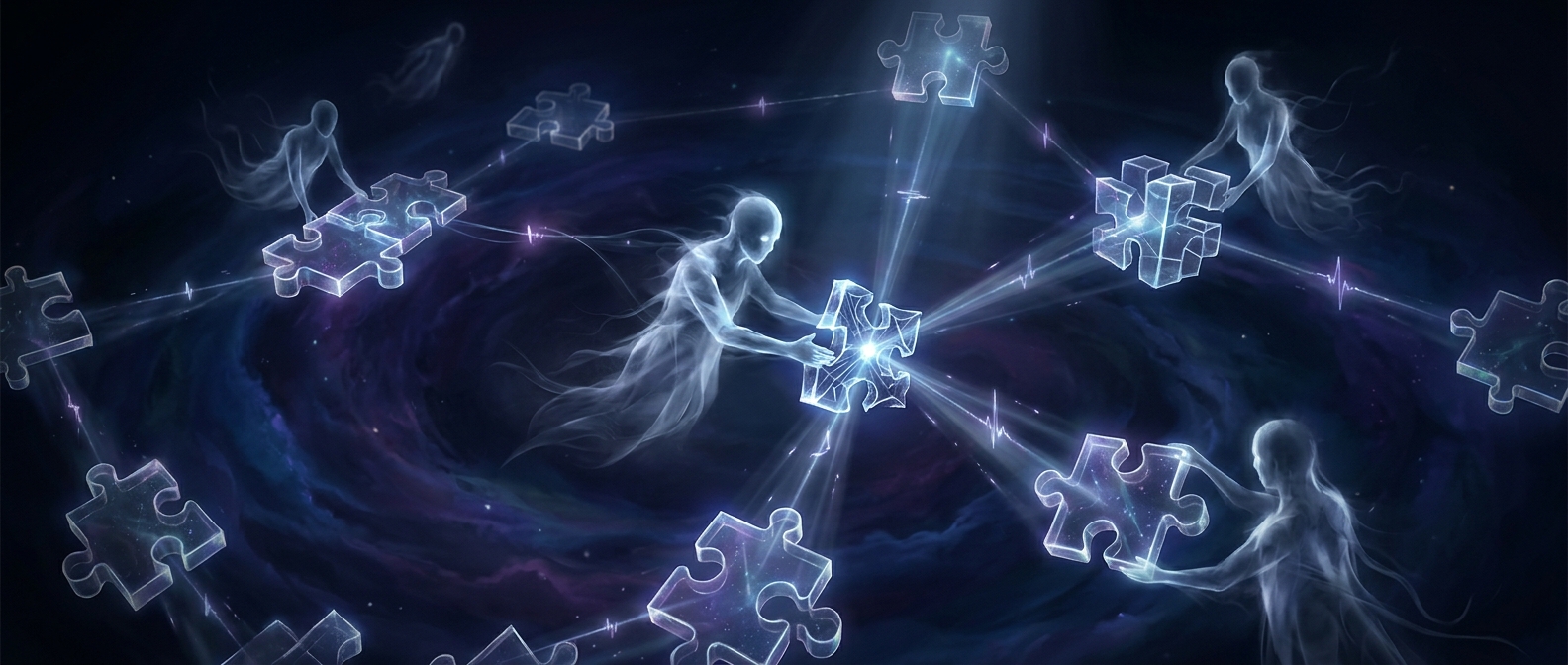
Psychical researchers called this kind of case a cross-correspondence: a message that seemed incomplete when received by one medium but appeared to connect with fragments reported by others. In the cases involving Greek and Latin verse, the fragments were treated as pieces of a literary puzzle rather than as stand-alone messages.
The point of splitting them up was to make the communications harder to explain as a single person’s performance. If separate mediums, in different places, produced details that fitted together—and that seemed to point to classical learning—the researchers could ask whether the combination was more significant than any one fragment alone.
Why the fragments mattered
A scrap of verse or an obscure literary reference could be difficult to interpret on its own. The proposed sender was said to be a deceased scholar, and the scattered clues were understood as a deliberate test: could investigators recognize the intended connection without any one medium supplying the whole answer?
That structure created both the case’s appeal and its difficulty. Investigators had to decide which fragments belonged together and whether their combined meaning was specific enough to count as a coherent communication. The result was not a simple message to read, but an argument assembled from clues reported by different people.
The method was meant to address concerns about fraud by separating the apparent sources of information. Its most memorable feature is also its central challenge: the message only took shape when researchers brought the pieces together.