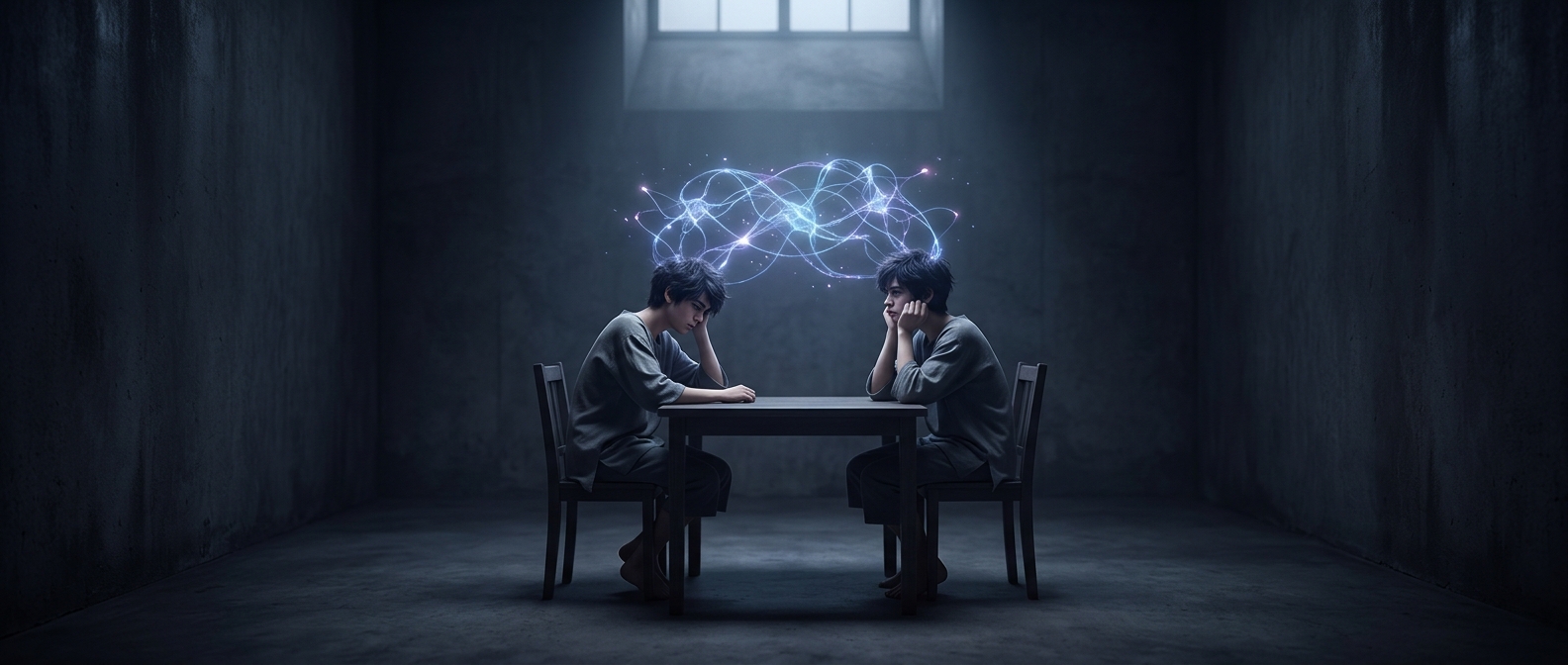
Why “mental texts” are hard to test
A person may believe they sent an image or message to someone else without speaking, writing, or using a device. The difficulty is separating that impression from ordinary ways information can slip through. A receiver might pick up a clue in someone’s expression, posture, timing, or choice of words—even when neither person realizes it. A convincing test has to block those routes, not merely ask the sender to stay quiet.
What a hidden-drawing test can show
In a typical test, one person sees a picture or drawing while another tries to identify it without seeing it. If the receiver’s guesses match the target more often than chance would predict, that is a result worth investigating. But a match alone does not reveal how the information traveled. The setup must prevent the receiver from glimpsing the image, hearing hints, or learning the answer in advance, and it must define the scoring before anyone checks the results.
Cards and hidden drawings can make a simple, memorable demonstration, but they do not by themselves establish direct brain-to-brain transmission. A reliable claim would need repeated results under controls that rule out ordinary information leaks and chance. The central question is not whether two people sometimes have strikingly similar thoughts; it is whether a test can show that one person’s thought reached the other without a known communication channel.
The role of communication
Human beings can share thoughts remarkably quickly, but the process still depends on signals: spoken words, writing, gestures, facial expressions, or technology that converts brain activity into a message another person can receive. Until a test demonstrates otherwise, a supposed mental message is an experience to examine—not evidence that thoughts have traveled directly from one brain to another.