Why Foldable Slippers Feel So Different
A compact travel slipper has to solve a packing problem: it needs to lie flat or fold into a small pouch. Thick foam and a shaped sole add bulk, so many designs use a thin layer of fabric, foam, or flexible rubber instead. That keeps them easy to tuck into a suitcase, but leaves little material to soften the impact of each step or spread pressure across the foot.
The Floor Comes Through
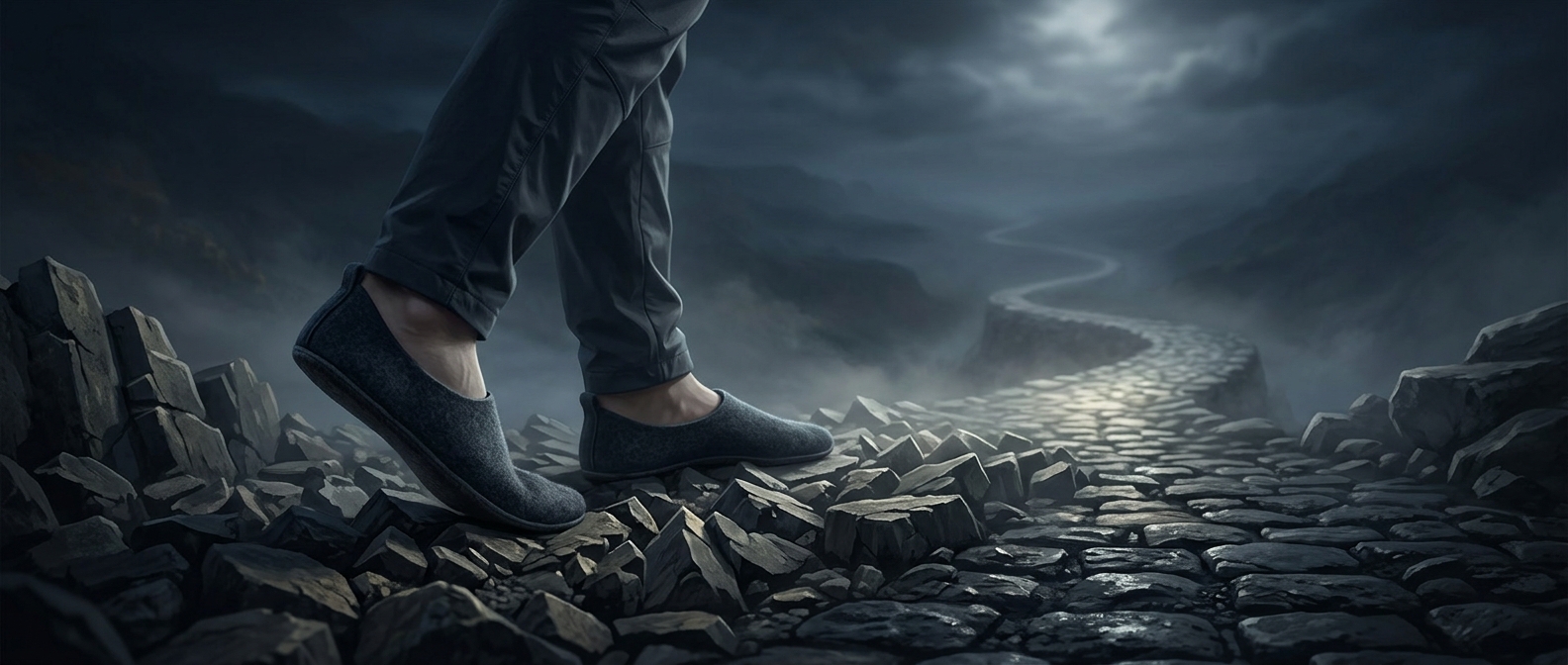
On carpet, that tradeoff may barely matter. On tile, wood, or other hard surfaces, the sole bends with the floor rather than holding the foot in a supportive shape. Small ridges and changes in the surface are easier to feel, and repeated steps can become tiring because the slipper does little to cushion them.
That makes these slippers better suited to short indoor trips than to walking around for hours. They can be handy for crossing a hotel room or avoiding bare feet on a floor, but they are not a substitute for a well-fitted shoe when the route is long, uneven, or demanding.
A Small Packing Tradeoff
The appeal is not hidden engineering so much as a deliberate compromise: less sole means less comfort underfoot, but also less to carry. A pair that folds into a corner of a bag can be useful precisely because it is there when needed—provided the walk is brief.