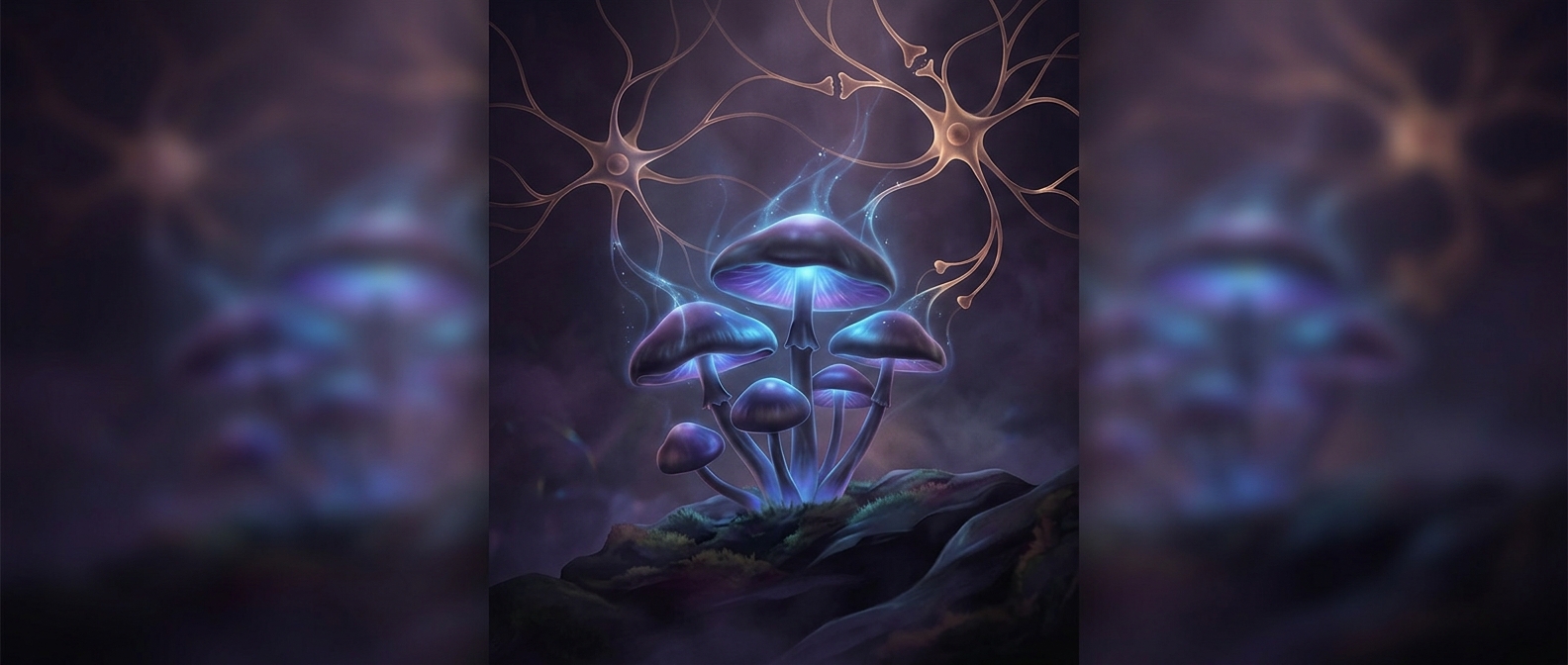
From mushroom compound to active molecule
Psilocybin is a chemical precursor: after it is swallowed, the body removes a phosphate group from it, producing psilocin. That conversion matters because psilocin is the molecule that can reach and activate serotonin receptors in the brain. Serotonin is a messenger nerve cells use to regulate processes including mood, attention, and perception.
Psilocin’s shape lets it fit into some of the same receptor sites as serotonin. But “mimic” does not mean the two chemicals are identical or produce identical signals. Psilocin can activate a receptor in a different pattern, changing how the cells that carry those receptors respond.
How receptor activity changes perception
One important target is the serotonin 2A receptor, found on many brain cells involved in processing information. When psilocin activates these receptors, it can alter communication across brain networks—especially the networks that help organize and interpret incoming signals. The result may be changes in sensory experience, thought, and a person’s sense of self.
The receptor is not a switch for a particular vision or emotion. What someone experiences depends on many interacting factors, including brain activity, surroundings, and individual response. The chemistry helps explain how perception can shift; it does not, by itself, establish that the experience reveals something supernatural.
Why the experience lasts beyond the initial dose
Psilocin does not remain at receptor sites forever. The body gradually breaks it down, and as its concentration falls, receptor activation diminishes. That helps explain why the effects unfold over hours rather than becoming a permanent change. The striking point is that a small molecular difference can redirect the signaling of ordinary brain receptors—and, through them, alter how the brain assembles a moment into a perceived world.