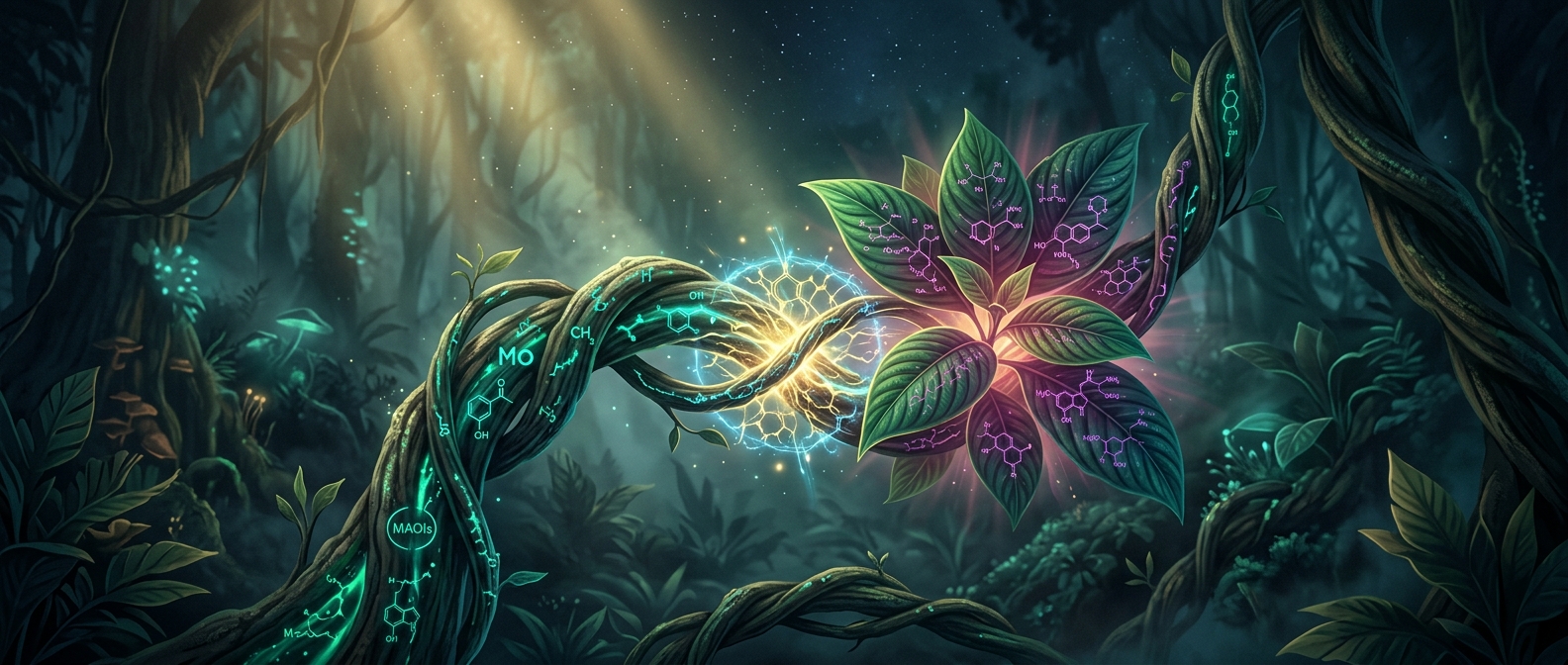
Why the Brew’s Ingredients Work Together
Ayahuasca is not simply a plant containing a powerful psychedelic. In many preparations, its effects depend on combining two kinds of plants: one supplies DMT, a psychedelic compound, while the vine contains chemicals that temporarily inhibit enzymes that would otherwise break down DMT in the digestive system. This interaction lets DMT taken by mouth reach the brain and produce effects that can last for hours.
The plants and their proportions vary among Indigenous traditions and preparations. That variation matters: ayahuasca is a brewed mixture, not a standardized drug with one fixed strength or recipe.
What the Experience Can Involve
Changes in perception may include vivid imagery, shifts in the sense of time, and intense emotions. Nausea, vomiting, and diarrhea can also occur. In some ceremonial settings, these bodily effects are understood as part of a spiritual or cleansing process; that interpretation belongs to the tradition, while the physical symptoms are effects of the brew on the body.
The experience is shaped not only by the chemicals but also by the setting and the people guiding the ceremony. Within Indigenous traditions, ayahuasca may be part of a larger practice involving knowledge, ritual, and relationships with the living world. Describing visions as communication with nature spirits reflects a spiritual understanding, not a mechanism that can be established through chemistry alone.
Why Preparation and Context Matter
Because the brew can alter perception and interact with the body’s chemistry, its effects are not reliably predictable from a general description. The same name can refer to preparations that differ in ingredients and strength, and intense physical or psychological reactions are possible. The central point is that ayahuasca’s force comes from both a chemical partnership between plants and a cultural setting that gives the experience meaning.