An initiation imagined as death and rebuilding
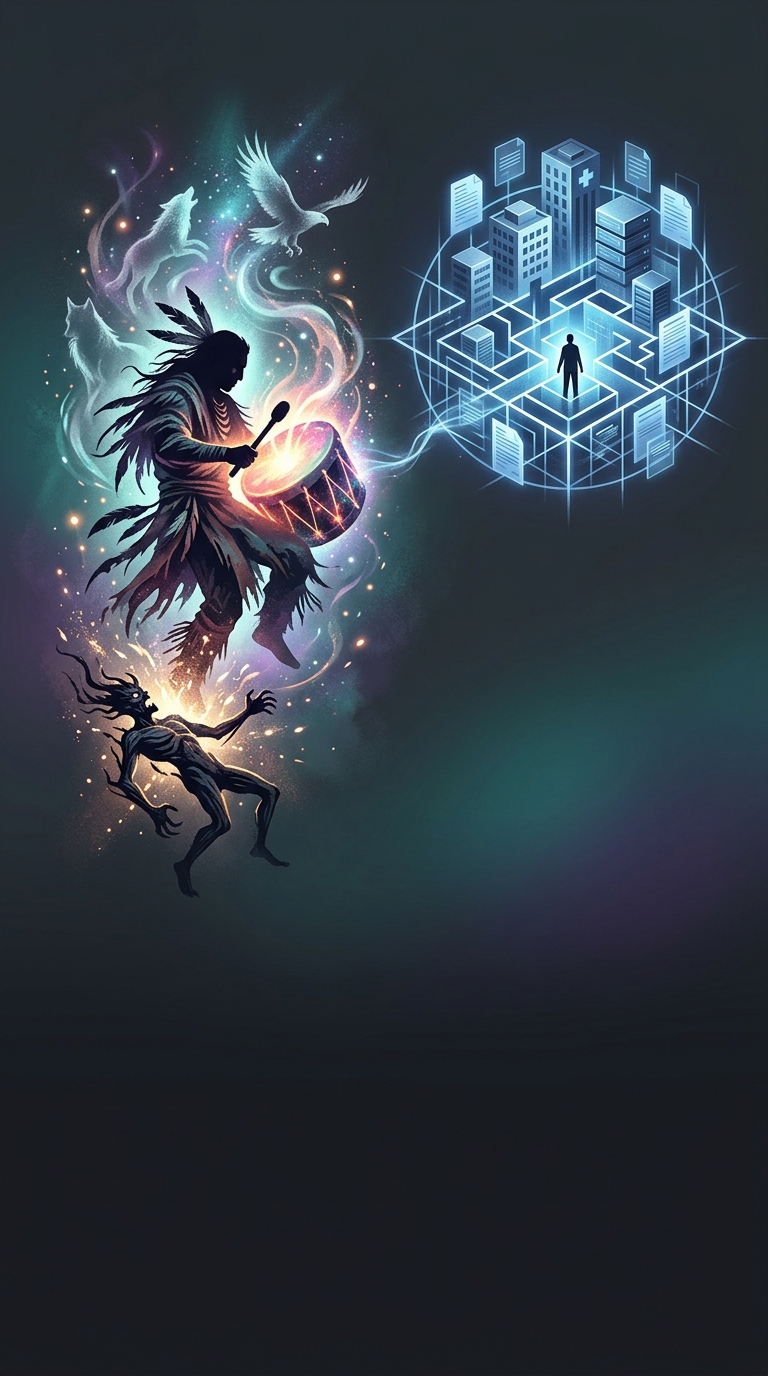
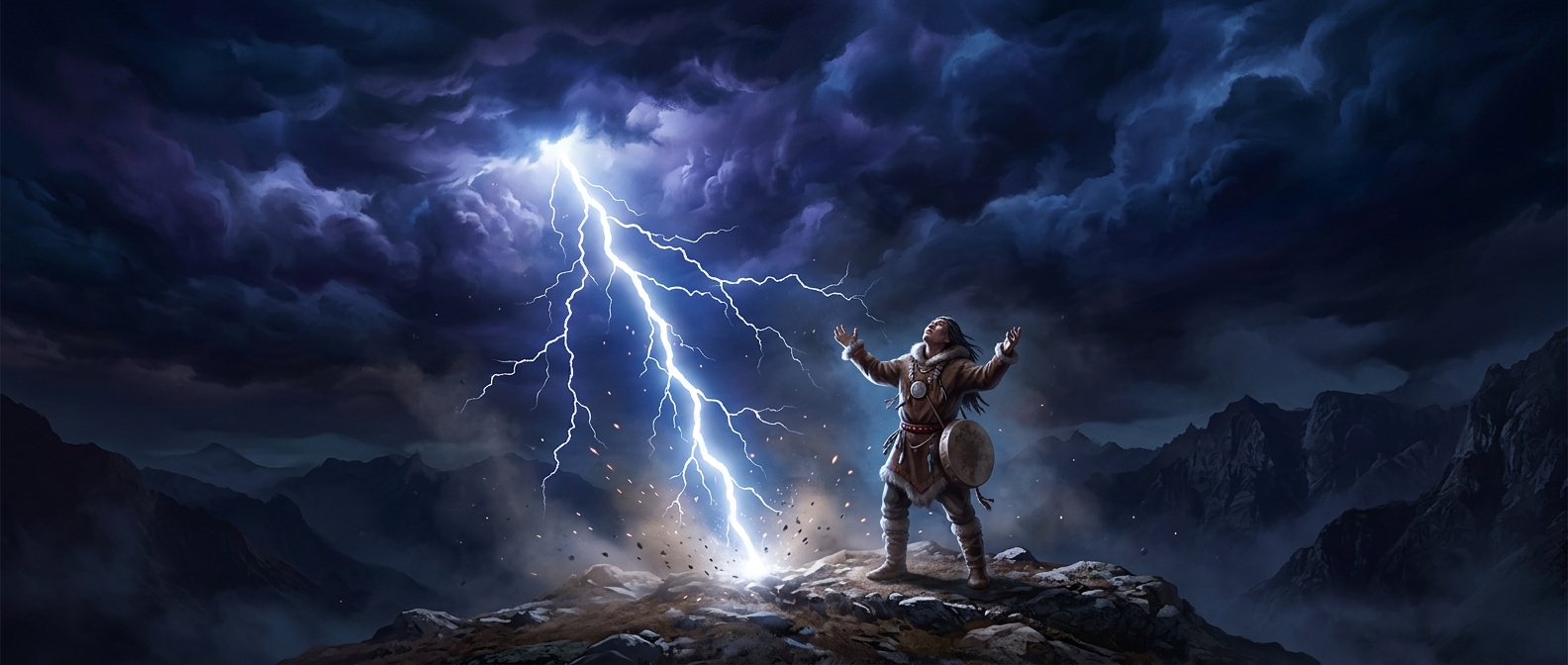
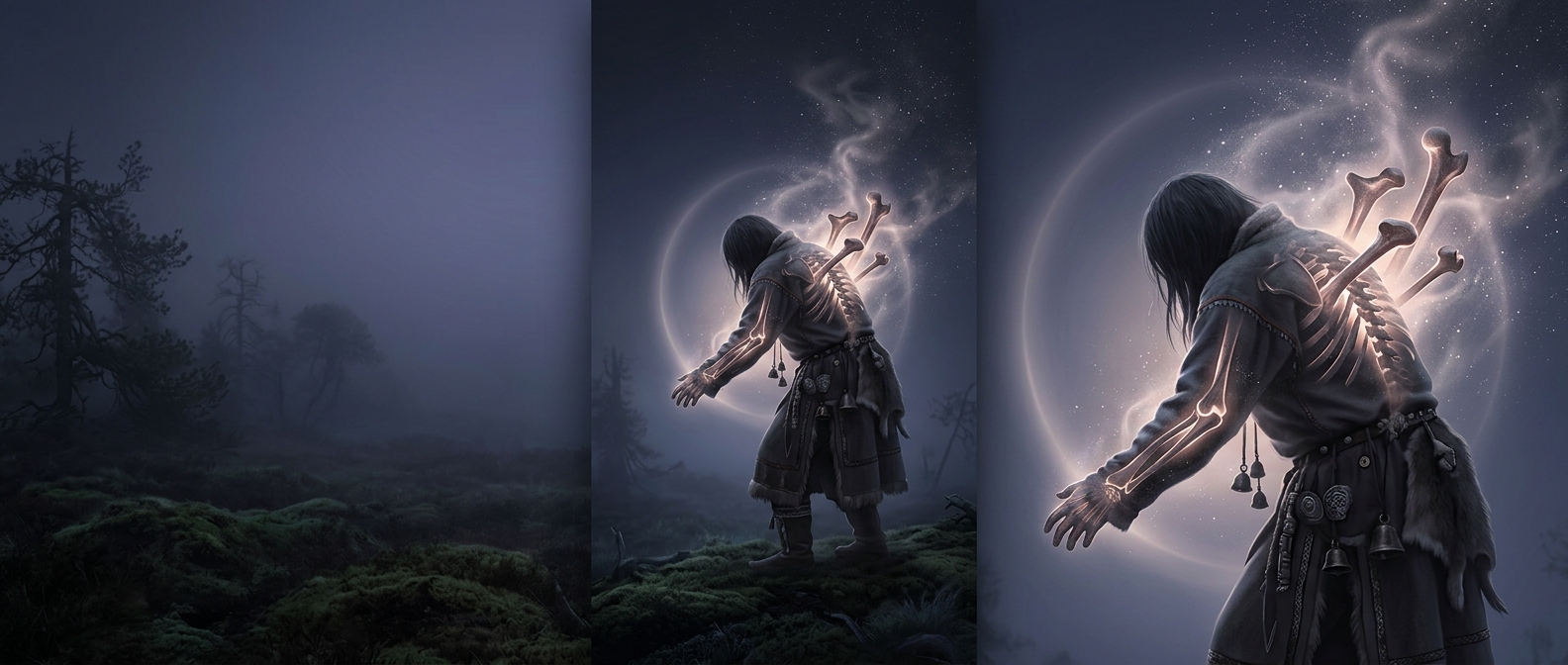
Accounts of Tungus shamanic initiation describe a terrifying ordeal: spirits tear the candidate apart, count the bones, and rebuild the body with an iron skeleton. “Tungus” is an older umbrella term often applied to the Evenki and related peoples of Siberia; these accounts should not be treated as a single, uniform tradition shared by everyone under that label.
The episode is best understood as a visionary account of transformation, not as a claim about a physical operation. In shamanic traditions, a trance could be interpreted as a journey in which spirits tested or remade the future practitioner. The imagined disassembly made the change absolute: the old person was taken apart, examined, and returned in a new form.
Why give the new bones to spirits?
Bones stand for the body’s underlying structure—the part that remains when flesh is gone. Having spirits count them suggests that the candidate’s whole being is under their scrutiny. Replacing them with iron gives the rebuilt body an image of unusual endurance. The iron skeleton marks a changed status: the initiate is portrayed as equipped to withstand encounters with the spirit world that an ordinary person could not.
The story’s force lies in that contrast. A shaman’s authority is not pictured as something simply claimed; it is earned through a symbolic destruction and restoration so severe that even the body’s framework has to be remade.