When a Lightning Strike Became a Sign
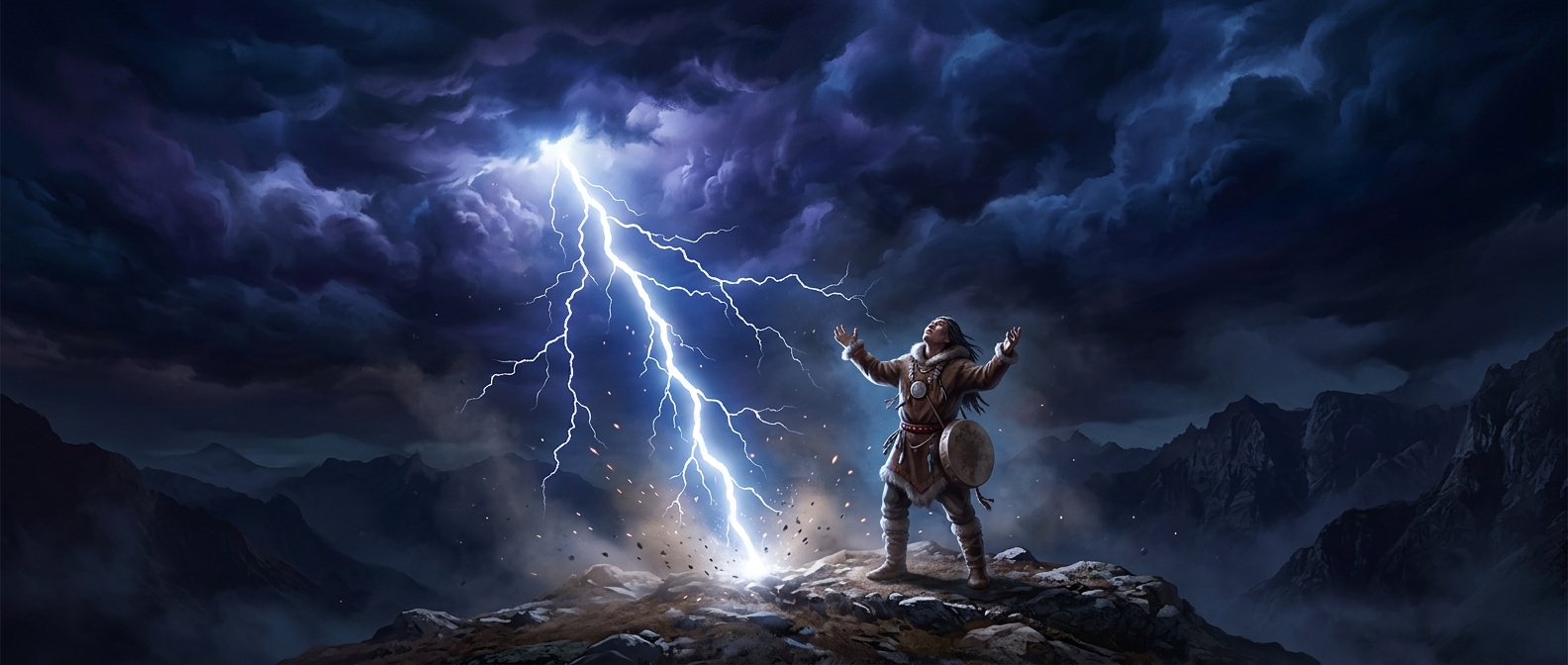
In some Siberian shamanic traditions, a shaman was understood as someone able to communicate across the boundary between ordinary human life and the spirit world. A lightning strike could therefore be read not simply as a violent accident, but as an encounter with powers associated with the sky. If the person lived, survival itself could be interpreted as evidence that those powers had marked them for a role.
That interpretation turned a random event into a kind of recognition: the person’s unusual experience gave others a reason to regard them as a possible mediator between worlds. It was not a test that the person chose or controlled; the meaning came from how the community understood what had happened.
Reverence Could Include the Dead
The same event could carry meaning even when the struck person died. Rather than treating death as proof that the person had failed, the belief described in this tradition could regard the dead with reverence too. The distinction was not simply between success and failure: the strike itself was understood as contact with a sacred power, with survival shaping what role the person might occupy afterward.
That is what made the ordeal so striking as a form of “selection.” Its authority came not from a deliberate examination, but from a community’s interpretation of an event no one could command.