Why Poseidon’s Chariot Needed Sea-Going Pullers
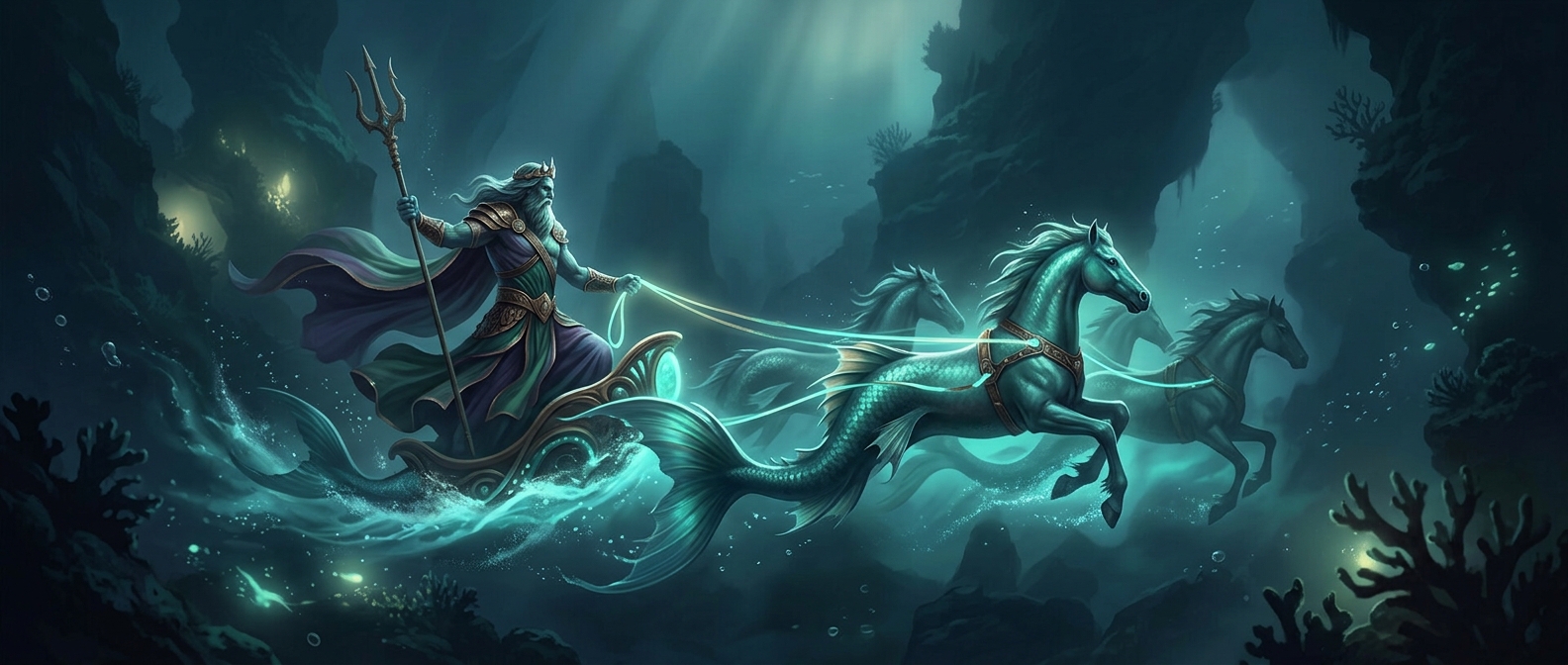
In Greek myth, Poseidon’s hippocamps were not ordinary horses adapted for a strange journey. They were imagined as creatures built for two worlds: horse-like in front, with fish tails behind. That combination made them a fitting team for a god who ruled both horses and the sea.
A Familiar Image, Transformed
A chariot suggests speed, ceremony, and command on land. Giving Poseidon a golden chariot carried by hippocamps let that familiar image travel beneath the waves. The creatures supplied the missing logic: their tails made them seem at home in water, while their forequarters could harness naturally to a vehicle. In art and storytelling, they turned an impossible underwater ride into a scene viewers could picture at once.
What the Team Signified
The hippocamps also made the sea feel like a realm with its own order, not merely open water. Poseidon could move through it with the authority of a king or ruler arriving in procession. Their hybrid bodies expressed the boundary-crossing power of the sea—beautiful and familiar at a glance, but governed by a different element.
That is why the image is more than a fanciful vehicle: the golden chariot announces Poseidon’s status, while its fish-tailed team makes clear that even the god’s pageantry belongs underwater.