What astrologers mean by a Venus placement
In a birth chart, Venus is the planet astrologers associate with attraction, affection, pleasure, and personal values. Its sign is commonly read as describing the style someone favors in romance; its house, the area of life where those themes may show up; and its relationships to other chart placements, called aspects, are used to add nuance. A Venus in one sign might be interpreted as preferring direct displays of affection, while another might be said to value steadiness or independence.
That is why astrology posts often connect Venus with a person’s “love language.” The phrase is a modern shorthand, not a precise astrological measurement or a scientific finding about how someone will behave. Within the tradition, it offers a vocabulary for reflecting on preferences—not a guarantee of compatibility or a verdict on a relationship.
The goddess behind the symbol
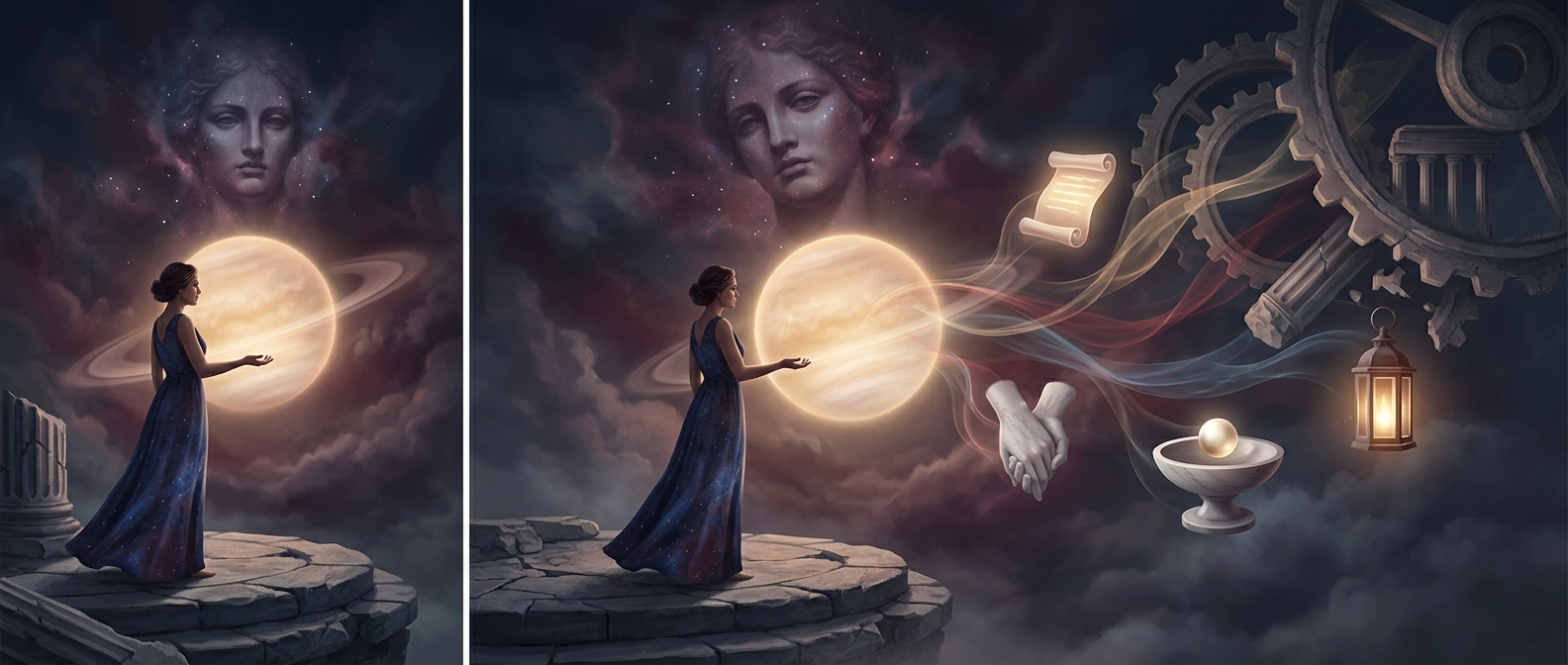
The planet takes its name from Venus, the Roman goddess of love and beauty, closely identified with the Greek Aphrodite. Yet the myths associated with her are hardly simple lessons in tender romance. In the story that leads toward the Trojan War, Aphrodite wins a beauty contest by promising Paris the love of Helen; his choice helps set a devastating conflict in motion.
That contrast gives the symbol its edge: desire can inspire affection, but it can also provoke rivalry, vanity, and costly choices. Astrologers tend to focus on Venus’s appealing side when interpreting romance, while the mythology hints at the complications underneath. The placement can be read as a map of what someone finds attractive—but not as proof that love will be gentle or uncomplicated.