A creature with no single shape
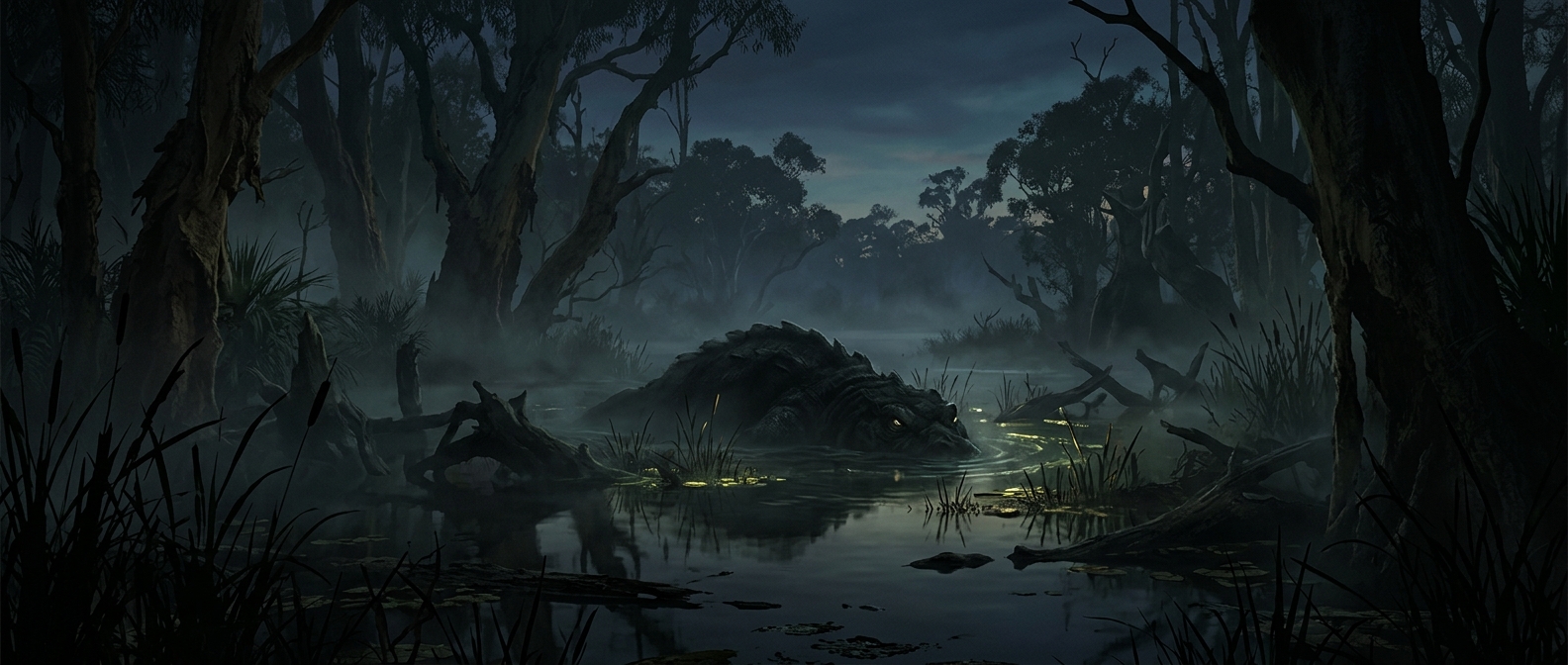
The bunyip belongs to Australian Aboriginal storytelling, but it is not one uniform character shared identically by every Aboriginal nation. Accounts differ: descriptions may give it different shapes, sounds, and habits, and some traditions attach particular meanings to particular places. The familiar image of a monster hidden in a swamp is only one way the figure has been told.
That variety matters. These stories are part of living cultural traditions, not merely a collection of old monster tales, and a version recorded by an outsider cannot stand in for every community’s account.
How the story entered wider Australian culture
European settlers encountered bunyip stories in the nineteenth century and tried to fit them into familiar categories: animal, spirit, or unknown creature. Those attempts helped turn a range of Indigenous accounts into a single popular “mystery beast.” The result was a lasting folklore figure, but also a simplified one: different stories and local meanings could be flattened into a hunt for proof that the creature existed.
No confirmed animal corresponds to the bunyip as folklore describes it. That does not make the stories meaningless. A narrative tied to a particular stretch of water can carry significance beyond the question of whether a creature is physically there.
Why wetlands suit the tale
Still water, reeds, and obscured depths make it difficult to see what is beneath the surface. In a story, that uncertainty can give a place a presence and make its hazards memorable. The bunyip’s enduring power comes partly from that combination: the landscape is real, while the creature’s form and meaning shift from one telling to another.