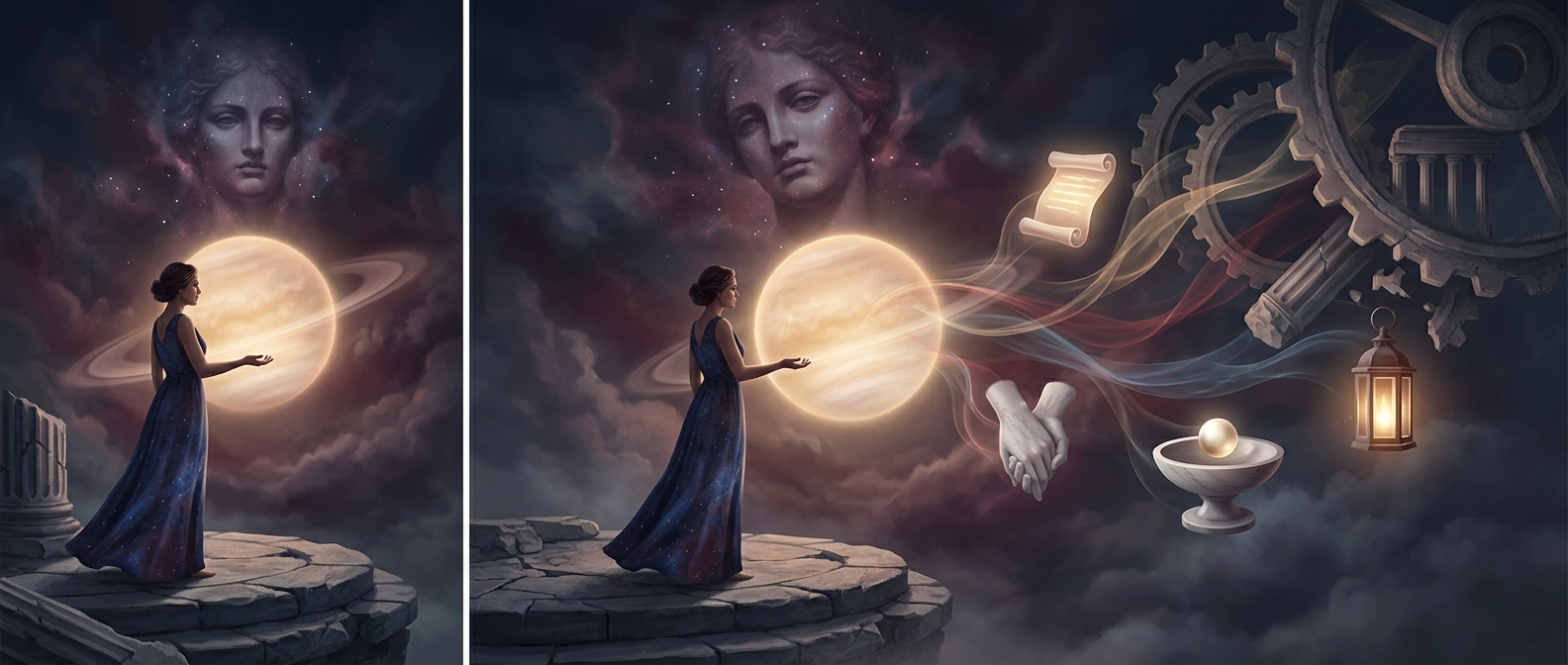
Why Venus Became the Sky’s Goddess
The name Venus comes from the Roman goddess of love and beauty, but the planet was named long before anyone knew it was a world like Earth. To ancient observers, it was a brilliant point of light that appeared near sunrise or sunset. Its striking brightness made it a natural fit for a name associated with beauty.
The Romans inherited much of their astronomy from the Greeks, who called the planet Aphrodite, after their own goddess of love. As Roman names took hold in the Western tradition, Aphrodite’s planetary counterpart became Venus. The name reflects a cultural interpretation of a visible object, not a claim about what the planet is like.
A Name from the Era of the Naked Eye
For centuries, people could track Venus across the sky without instruments, but they could not see its surface or understand its atmosphere. The planet’s closeness to the Sun means it is visible only in the early morning or evening, never far from the Sun’s glare. That pattern helped give rise to familiar names such as the “morning star” and “evening star”—though both refer to the same planet.
The goddess’s name has endured even as telescopes and spacecraft revealed a world of crushing atmospheric pressure and extreme heat. Venus’s name preserves an ancient impression of its radiance, not a description of its harsh physical conditions.