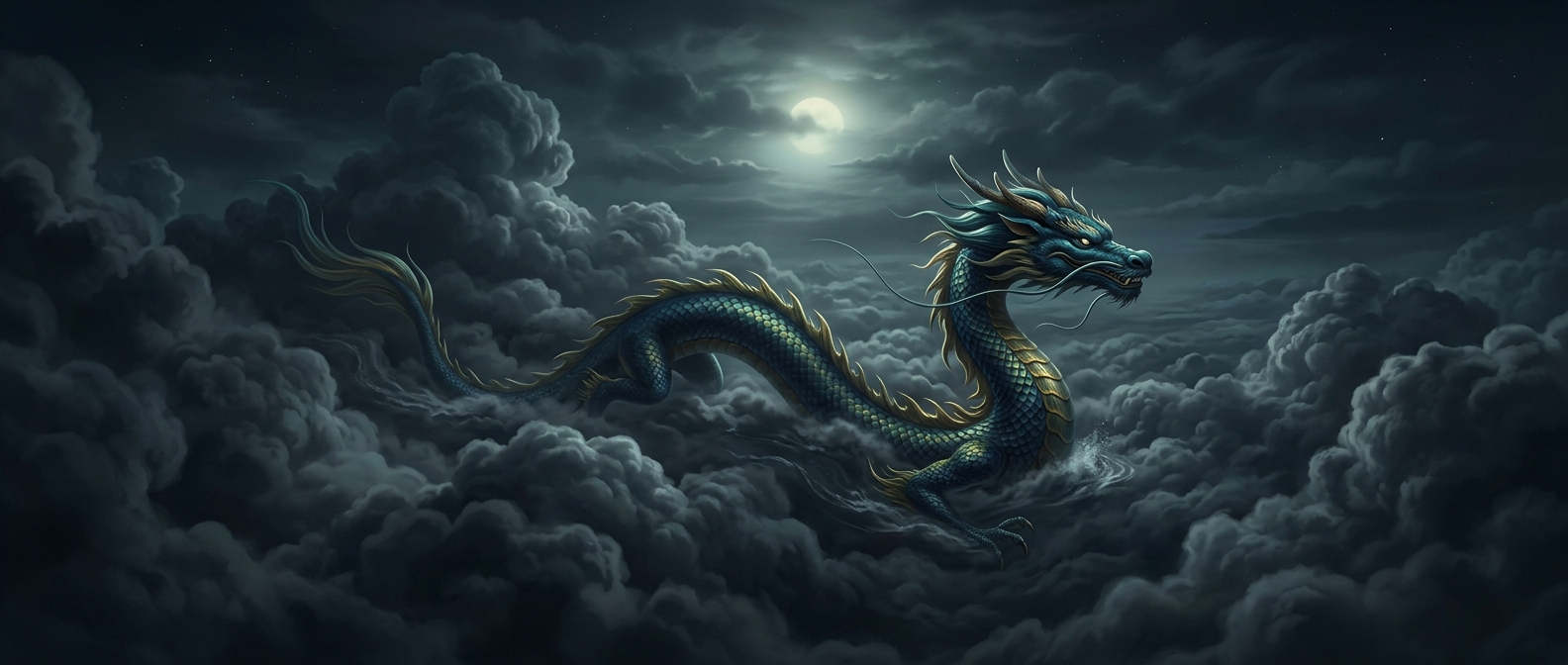
Why Chinese Dragons Belong in the Clouds
In Chinese tradition, the dragon is not chiefly a monster that flies by beating wings. It is a powerful, serpentine being associated with water, rain, rivers, and the forces that shape the natural world. Its movement through clouds expresses command over those forces: the cloudbank is part of its domain, not merely scenery it passes through.
Clouds Make Weather Visible
Clouds gather before rain, so a dragon winding through them could suggest the unseen power behind a storm. Traditional stories and images often connect dragons with rainmaking and water. This mattered in an agricultural society, where timely rainfall could mean a harvest and drought could mean hardship. The dragon’s supernatural influence offered a vivid way to imagine weather as something responsive to powerful beings.
That symbolism also helps explain why the dragon can appear both awe-inspiring and beneficial. Rather than simply threatening people, it may be understood as a force whose rain brings life—though one capable of danger when uncontrolled.
A Different Kind of Flight
European dragons are often imagined as winged creatures, frequently tied to fire and combat. Chinese dragons are commonly shown with long bodies and limbs, gliding or coiling through the sky without visible wings. Their flight is part of their extraordinary nature, often linked in traditional accounts to spiritual power rather than ordinary anatomy.
In paintings and decorative art, clouds help make that idea legible. A dragon can disappear into a cloud and emerge elsewhere, making the sky feel like a fluid landscape. The image captures a traditional view of the dragon not as an animal escaping the ground, but as a guardian and controller of the weather moving through its element.