Why the brew combines two plants
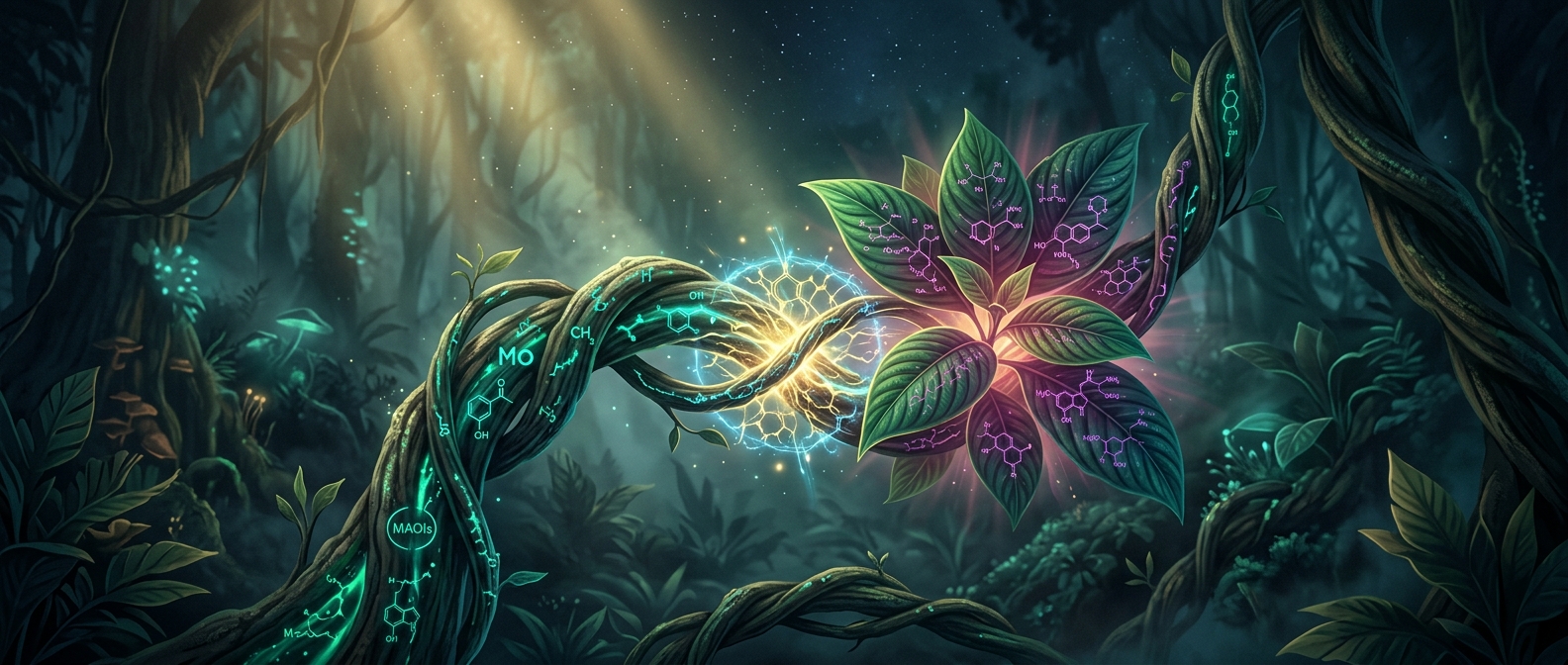
The combination works because the plants contribute different chemicals. Leaves from a DMT-containing plant supply dimethyltryptamine, or DMT, a compound that can strongly alter perception. The ayahuasca vine, Banisteriopsis caapi, contains harmala alkaloids, which temporarily inhibit enzymes called monoamine oxidase A, or MAO-A.
The bottleneck is in the body
When DMT is swallowed by itself, MAO-A enzymes in the gut and liver rapidly break much of it down before it can reach the brain. Harmala alkaloids slow that breakdown. With less DMT destroyed on the way, more can enter the bloodstream and produce effects when taken orally.
That is the key chemical partnership: one ingredient supplies the DMT, while the other changes how the body handles it. The vine is not simply another hallucinogen added to intensify the brew; its enzyme-blocking action helps make oral DMT active.
Why the pairing matters
Traditional preparations can vary in the plants and proportions used, so “ayahuasca” does not describe one chemically identical recipe. But the interaction also helps explain why the brew can be risky: inhibiting MAO-A can affect how the body processes other substances, too. The same mechanism that lets DMT survive digestion can also create dangerous interactions with some medicines and drugs.