What thujone can—and cannot—do
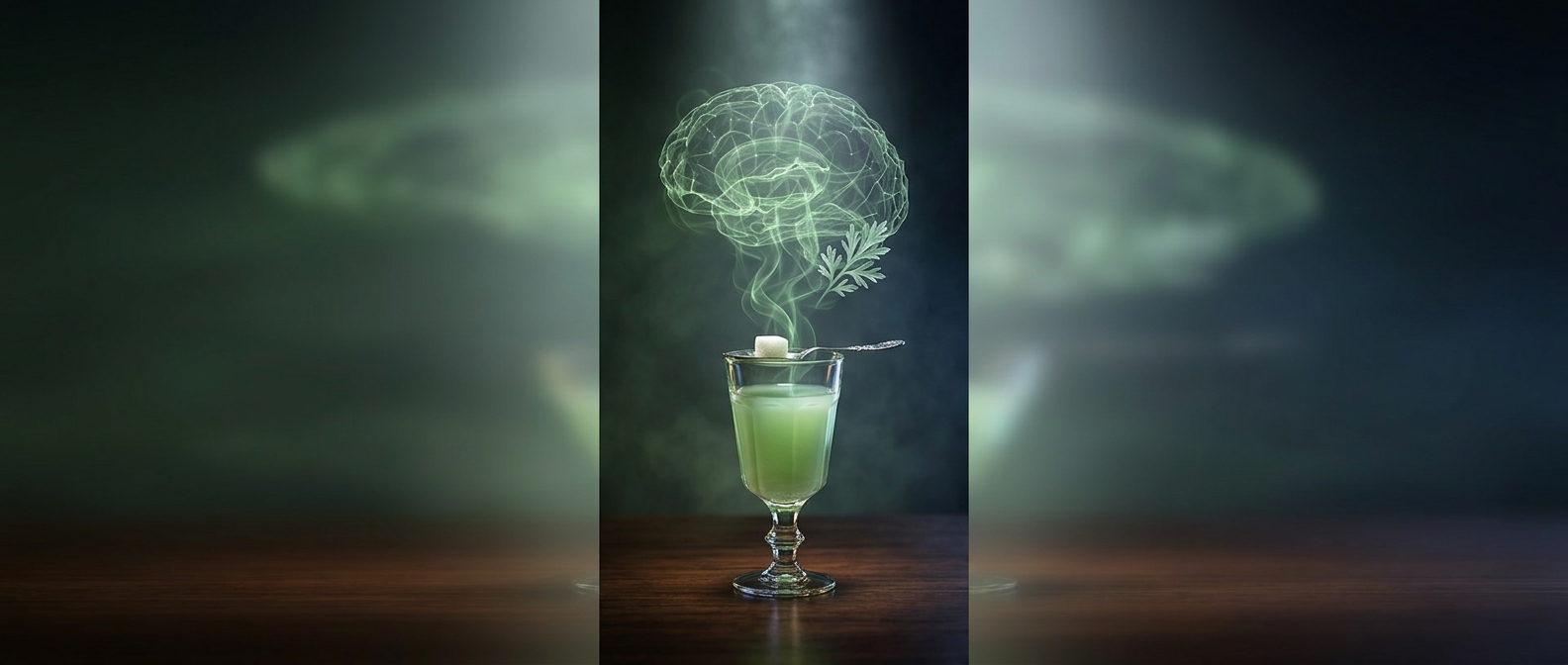
Wormwood gives absinthe part of its bitter, herbal character, and it contains thujone, a chemical that can affect the nervous system. At sufficiently high doses, thujone can interfere with brain signaling and cause seizures. But the amounts in absinthe are far too small to produce the dramatic visions once attributed to the drink. A substance’s effects depend not just on what it is, but on how much reaches the body.
Why absinthe felt so powerful
The more immediate force came from the alcohol. Absinthe is a strong spirit, and enough of it can disrupt judgment, perception, balance, and memory. In a dim room, after repeated drinks, ordinary distortions of intoxication could be interpreted as something uncanny. That helps explain how the drink acquired an aura of supernatural danger without requiring a hallucinogenic ingredient.
The distinction matters: a mysterious reputation is not the same as a mysterious mechanism. Thujone helped make absinthe’s name sound exotic, but alcohol was the likelier cause when drinkers saw or believed they saw things. The “green fairy” belonged to the drink’s cultural mythology; its effects still followed the familiar chemistry of intoxication.