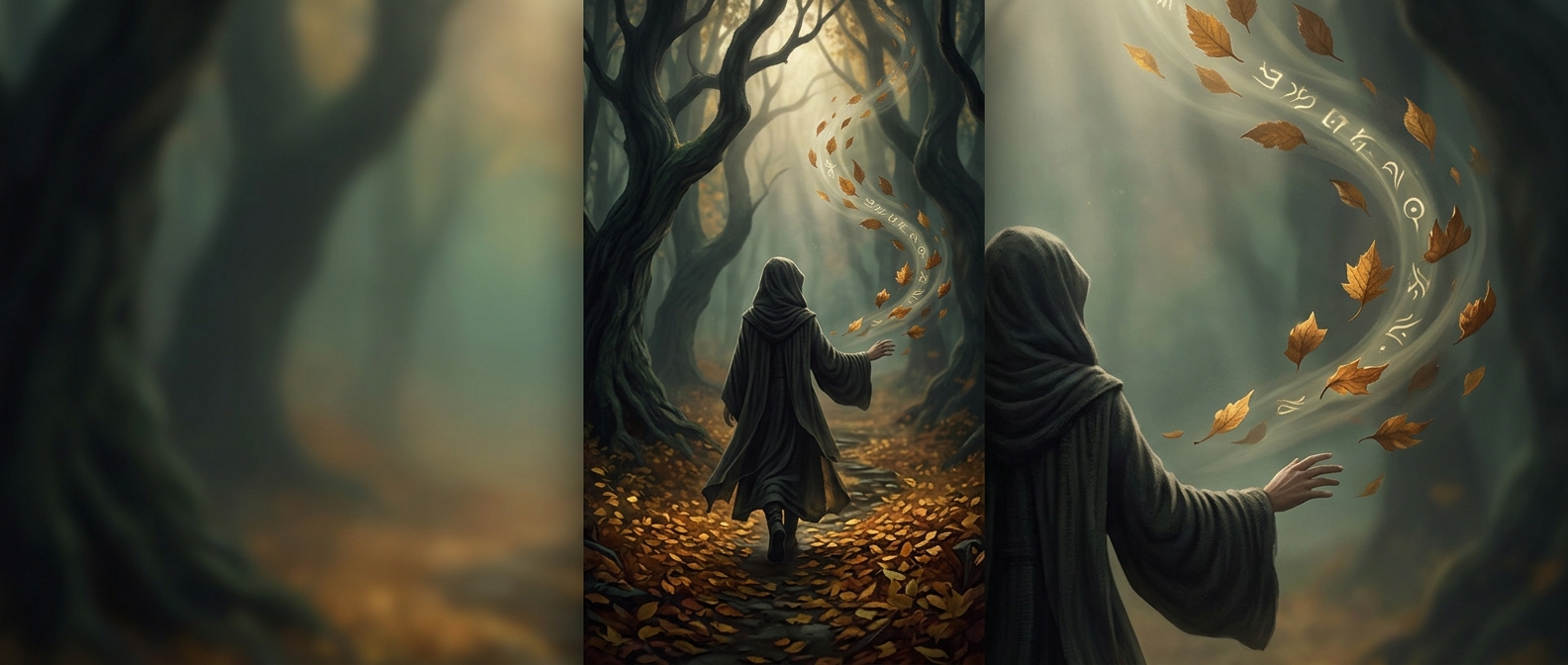
How rustling becomes a reading
Phyllomancy is a form of divination in which practitioners look to leaves for guidance. In this practice, the leaves’ rustling is treated not simply as background noise but as something to interpret: a change in the sound, its rhythm, or the moment it catches a listener’s attention may be given personal meaning.
The wind does not deliver a fixed sentence. The practitioner brings a question or concern, then considers the sound as a prompt for reflection. That makes the reading less like decoding a universal signal and more like finding meaning in an experience whose interpretation depends on the person and the situation.
The meaning lies in the interpretation
Leaves move in response to ordinary forces such as wind, and the resulting sound can shift from a soft hiss to a brief flurry. Within phyllomancy, those variations may feel significant because they arrive in a particular place and moment. The practice’s value, for believers, is in attending closely to that moment and connecting it to a personal question—not in treating rustling as scientifically verified guidance.
A familiar sound can therefore become a private cue: the same gust may be incidental to one passerby and an invitation to pause and think for someone consulting the leaves.