How a bowling ball’s core helps it turn
A bowling ball does not hook simply because its center of gravity is off-center. Its core—the dense weight block molded inside the outer shell—shapes how the ball rotates as it travels. When that mass is distributed unevenly, the ball has preferred directions of rotation rather than behaving like a perfectly balanced sphere.
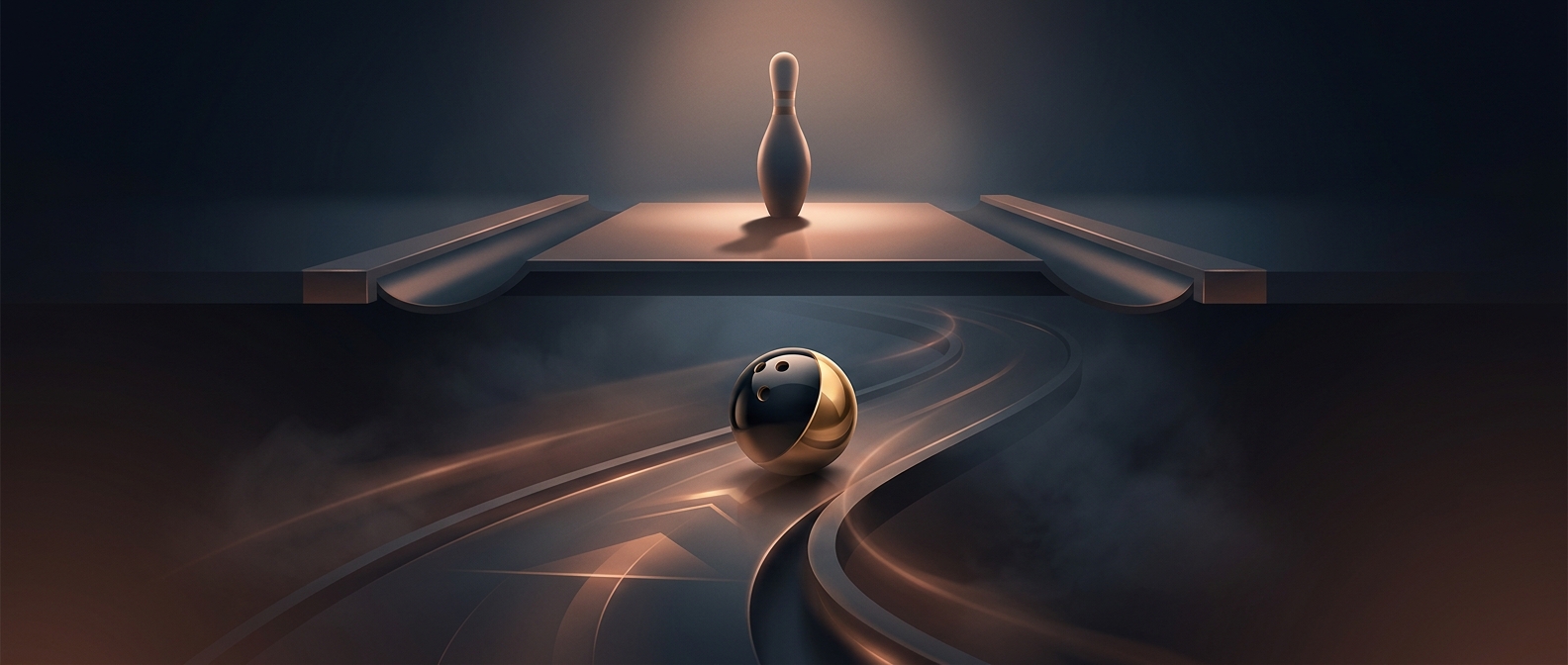
As the ball rolls, friction with the lane gradually changes the direction of its rotation. The ball’s axis of rotation shifts—a process bowlers call axis migration. An asymmetrical core can make that shift more pronounced, helping the ball change its motion when it reaches a part of the lane where it can grip.
The lane completes the job
The core supplies a tendency, not a steering force. Lane oil reduces friction, so the ball can skid farther; on a drier surface, friction catches the ball and turns some of its sideways rotation into forward motion. The visible hook is the result of that interaction among the core, the ball’s spin, and the lane—not the hidden weight acting alone.
That distinction matters to bowlers choosing equipment. Different core shapes and mass distributions produce different reactions under similar conditions, but the same ball can hook early on a dry lane and later on an oily one. The weight block influences the ball’s behavior; the lane determines when that influence becomes visible.