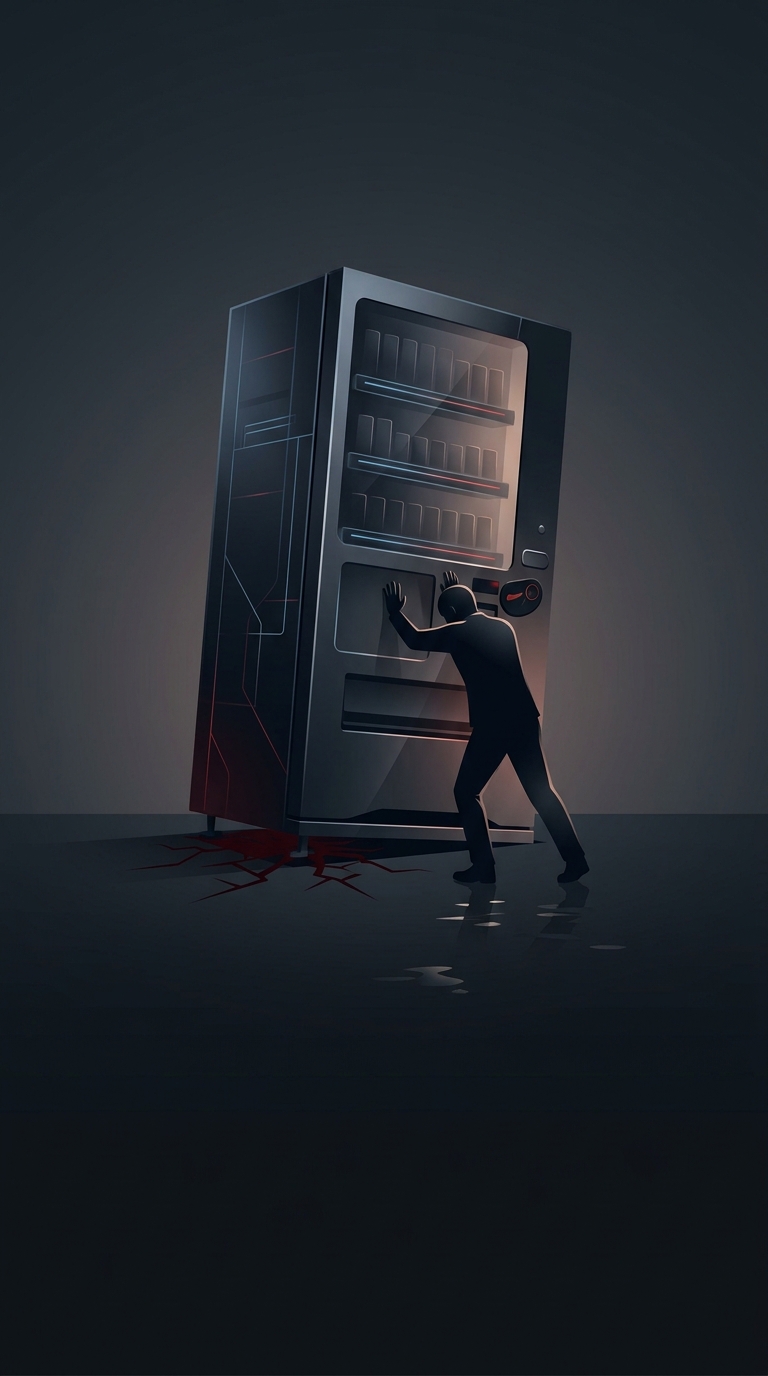
Why an unattended shop can earn around the clock
A vending machine makes money by turning a small patch of floor into a retail counter that needs no cashier. The operator pays for the machine, the goods, restocking, and repairs; in return, sales can happen wherever people pass and want something quickly. That arrangement is especially useful in a country with dense urban neighborhoods and many daily journeys: the machine brings the product close to the customer without requiring a staffed shop at every stop.
The machine’s convenience depends on a simple exchange: customers can buy quickly, while operators keep the machine stocked and working. Its compact, self-service design also concentrates many products in one tall, heavy cabinet.
How a snack can become a tipping hazard
A vending machine is stable when it stands as intended. But shaking it can make the cabinet sway. If it begins to tip, its weight shifts beyond the small area touching the ground; gravity then pulls it down, and its mass can turn a brief wobble into a crushing impact. A customer may be trying to dislodge a stuck item, not move the whole machine, but force applied high on the cabinet can create leverage.
That is the sharp tradeoff behind the story: the same unattended access that makes vending profitable also leaves a heavy machine available to be handled without a shop employee nearby. A stuck snack is a minor inconvenience; rocking the cabinet can transform it into a life-threatening one.