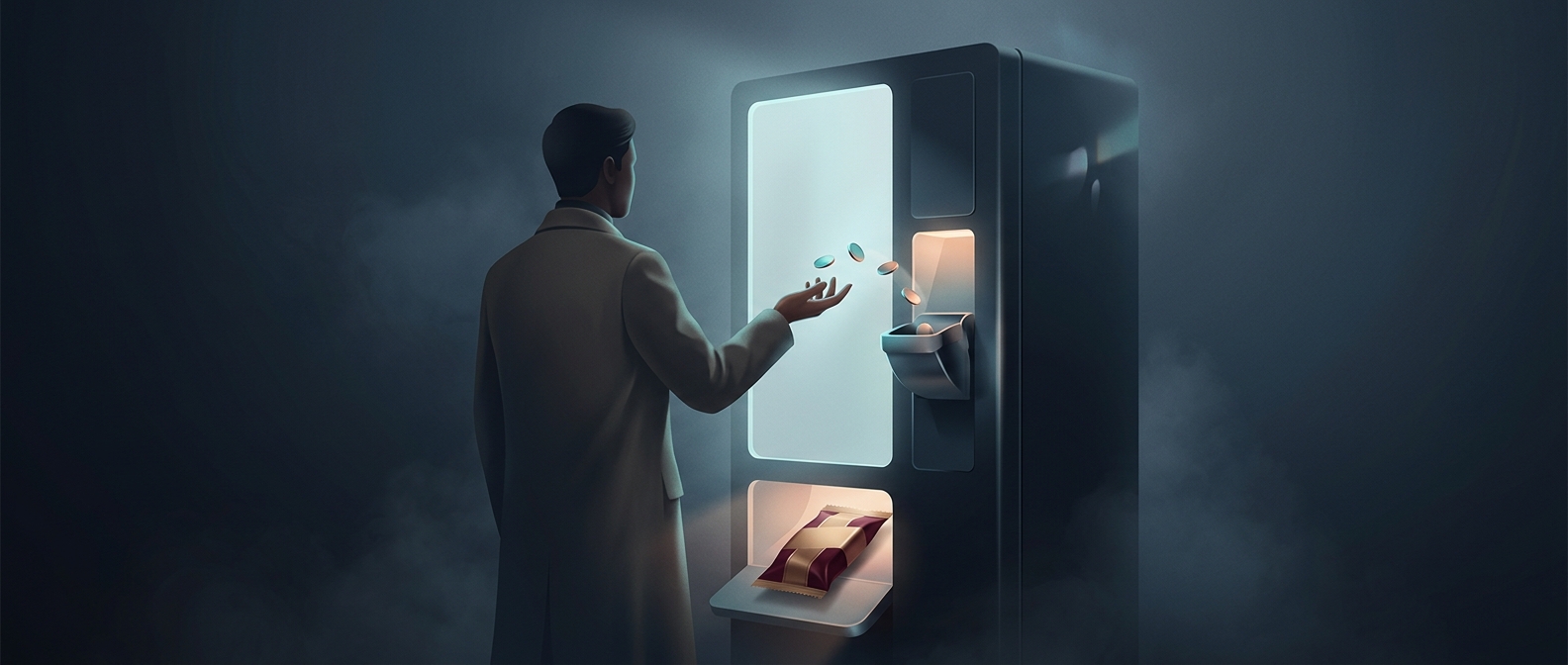
A motor turns a shelf into a one-item dispenser
In a common snack machine, each product sits in a lane formed by a rotating metal spiral. The spiral’s curved turns keep packages separated; when a motor turns it, the next package is nudged past the shelf’s edge. Gravity does the rest, carrying the snack down a chute to the pickup tray. The machine does not need an arm to reach for a product: it needs only a motor, a lane, and a path that lets the item fall.
The arrangement works best when packages fit the lane and slide freely. A bag that is too wide can catch; one placed awkwardly may fail to move when the spiral turns. That is why operators have to match products to shelf dimensions and load them in a consistent position. Other machines use different dispensing mechanisms, but the same practical challenge remains: release one item without disturbing the rest.
Simple dispensing shapes what the machine can sell
This design makes it possible to offer many individually packaged products without a person standing nearby to hand each one over. But the machine’s shelves constrain the menu: items must fit, stay in place, and drop reliably. A product that sells well in a shop may be a poor choice for a vending lane if its packaging snags or takes up too much room.
So the falling snack is also the result of a small logistics decision. The machine can sell only what its mechanism can store and release dependably.