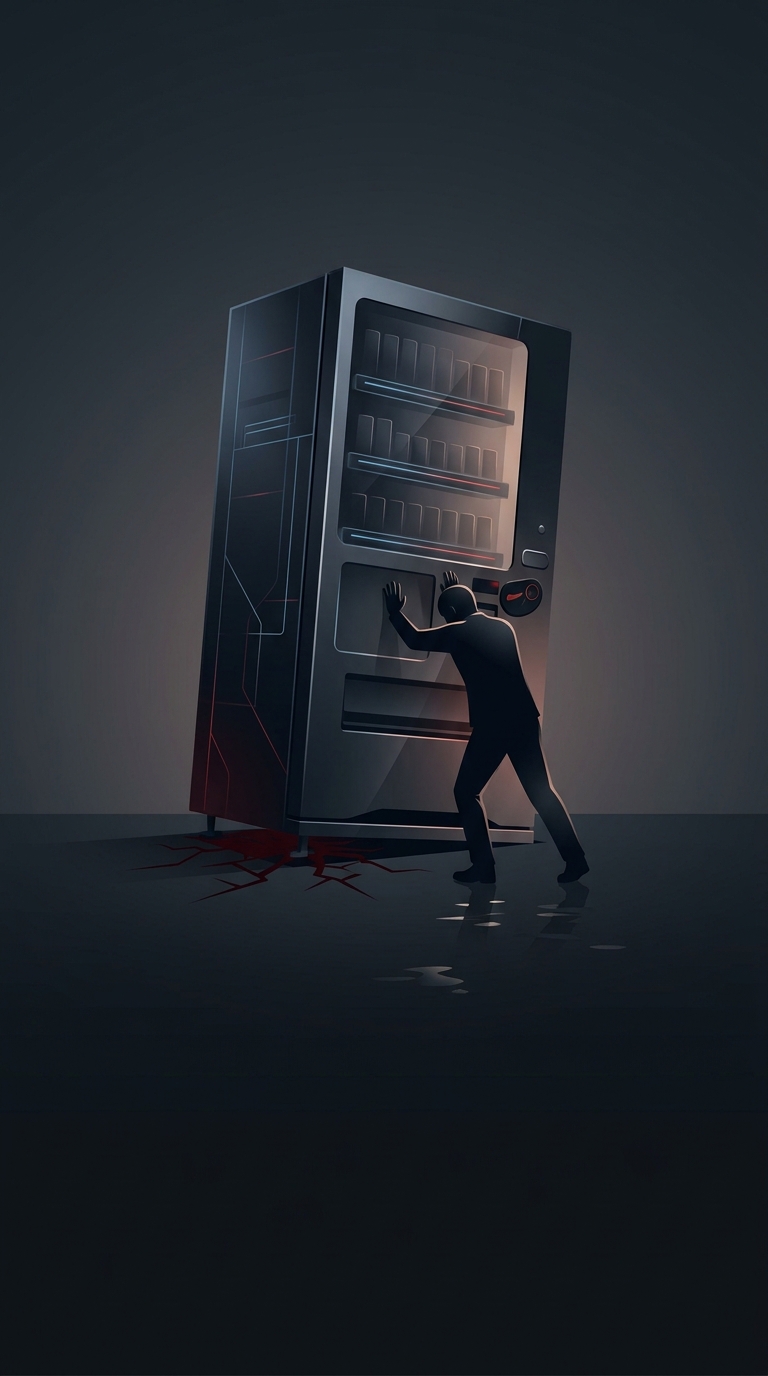
Why a Snack Can Stop at the Edge
In a common spiral vending machine, each snack sits between the turns of a metal coil. When a customer pays, a motor rotates the coil, pushing the snack toward the front until it loses support and drops into the collection bin.
The design depends on a small but important assumption: once the snack clears its shelf, gravity will finish the job. A flexible wrapper can catch on the shelf’s front lip, or a box can tilt and wedge against the opening. The motor may complete its turn even though the product has not fallen cleanly.
The Tradeoff Behind the Coil
A vending operator needs the coil to hold products securely during travel and release them reliably when sold. But snacks come in different widths, shapes, and package stiffnesses. A coil with too much clearance can let a product sit crooked; one that grips too tightly can squeeze a soft package or keep it from advancing. The shelf edge and the angle of the product also affect whether it drops.
That makes stocking a form of calibration. Operators choose a coil and position products so the package fits the space and moves forward without catching. The same setting may work well for a rigid box but poorly for a floppy bag, so a machine filled with many product types can be harder to tune consistently.
A Small Failure With an Economic Cost
The machine has already taken payment and spent electricity turning the coil, yet the sale may not be complete from the customer’s perspective. A trapped snack can mean a refund request, a complaint, or a lost repeat purchase. If the snag goes unnoticed, the empty-looking selection may continue accepting payments until someone restocks or checks the machine.
That is why a vending machine’s reliability is not just about whether its motor works. The last few centimeters—from shelf to bin—determine whether a paid-for product actually becomes a sale.