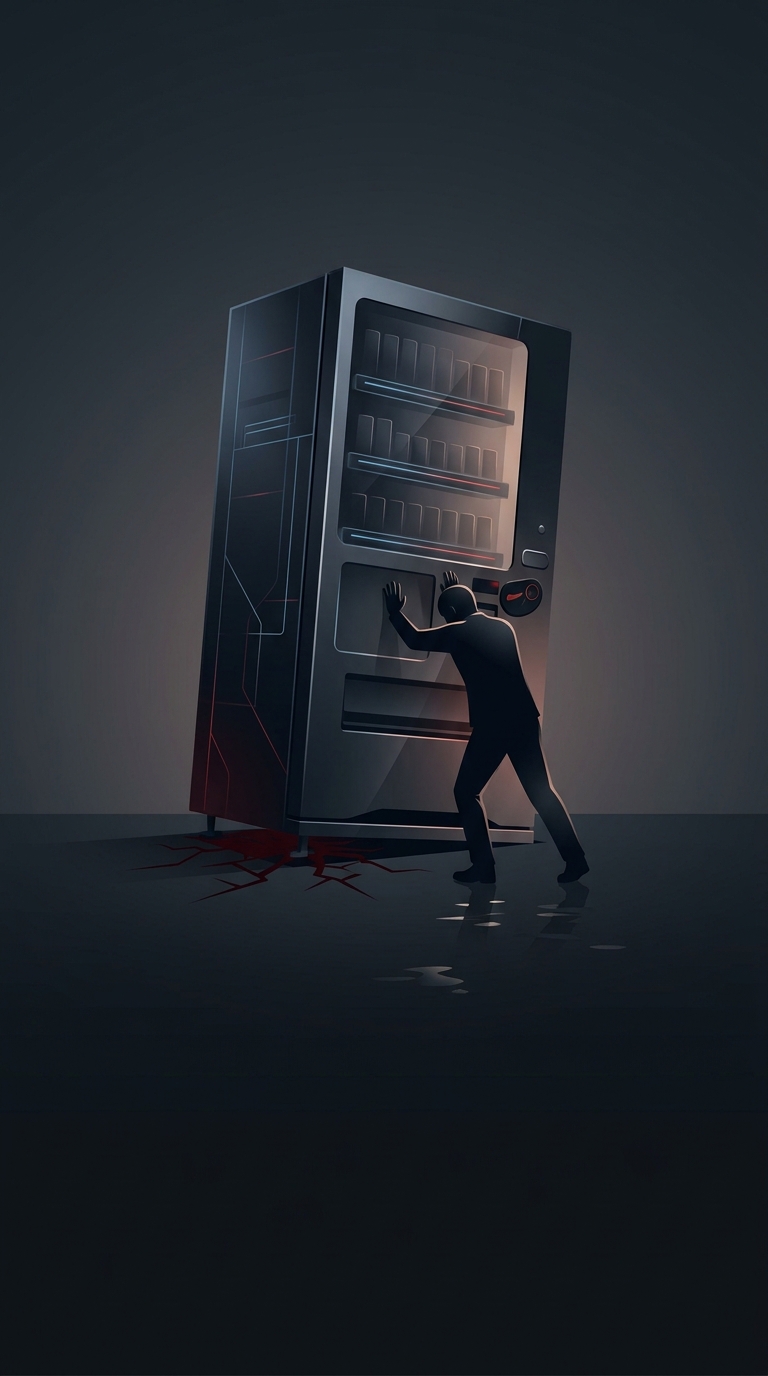
The Thump Closes the Sale
A vending machine is an unusually quiet kind of retailer: there is no cashier to hand over the item and no open shelf where a shopper can watch it being picked up. After payment, the customer has to trust that the machine has completed both halves of the exchange—taking the money and releasing the snack.
In many machines, a motor turns a coil or moves a tray until the item slips into a collection bin. The snack’s fall makes a physical sound that reaches the buyer before they retrieve it. That sound is a simple form of feedback: it makes an otherwise hidden mechanical action perceptible.
A Small Signal With Economic Value
The noise is not a receipt, and it cannot prove that the right item landed in the bin. But it can reduce the moment of uncertainty between pressing a button and reaching for the purchase. If nothing seems to happen, a buyer may wonder whether the machine has stalled, whether the selection registered, or whether payment was lost.
That matters to the seller, too. A machine that feels unreliable can discourage repeat purchases, even when most transactions work. The falling snack’s thump is a low-tech reassurance built into the product’s movement: the customer hears evidence that the exchange is progressing, rather than having to infer it from a screen. In a self-service sale, a snack hitting the bin can do a little of the social work a cashier’s handoff normally would.