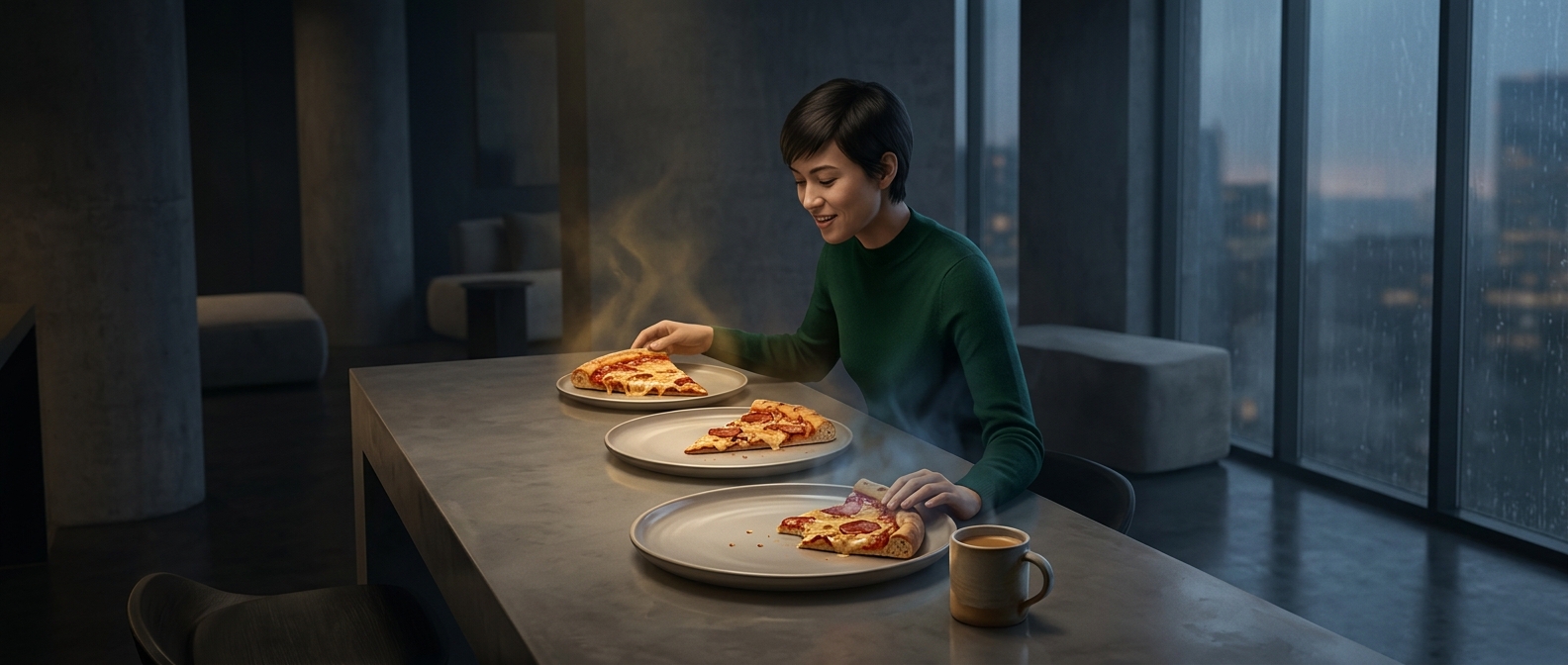
Why the first bite has the biggest payoff
When you’re hungry, the first bite of pizza does more than taste good: it starts relieving hunger. The next bite still satisfies, but it has less hunger to relieve. In economics, the extra benefit from one additional unit—here, another bite—is called marginal utility. When that extra benefit shrinks as you consume more, it’s diminishing marginal utility.
The same change happens in your senses. After repeated bites, the smell and taste become familiar, so they stand out less than they did at first. Meanwhile, your body is getting fuller. The pleasure doesn’t have to disappear; it simply becomes less intense with each addition.
How that small change shapes choices
Diminishing marginal utility helps explain why people may gladly pay for the first slice but hesitate over another. A slice has no fixed amount of value: its worth depends on what it adds to the eater’s experience at that moment. If you’re ravenous, another slice may feel worthwhile. If you’re already full, the same slice offers less benefit, even at the same price.
That difference matters whenever people choose how much to buy or consume. A restaurant’s portion, a shopper’s budget, or a person deciding whether to order one more slice all involve comparing the extra satisfaction with the extra cost. The key economic idea is not that later bites are bad, but that each one has to compete with a smaller remaining need.