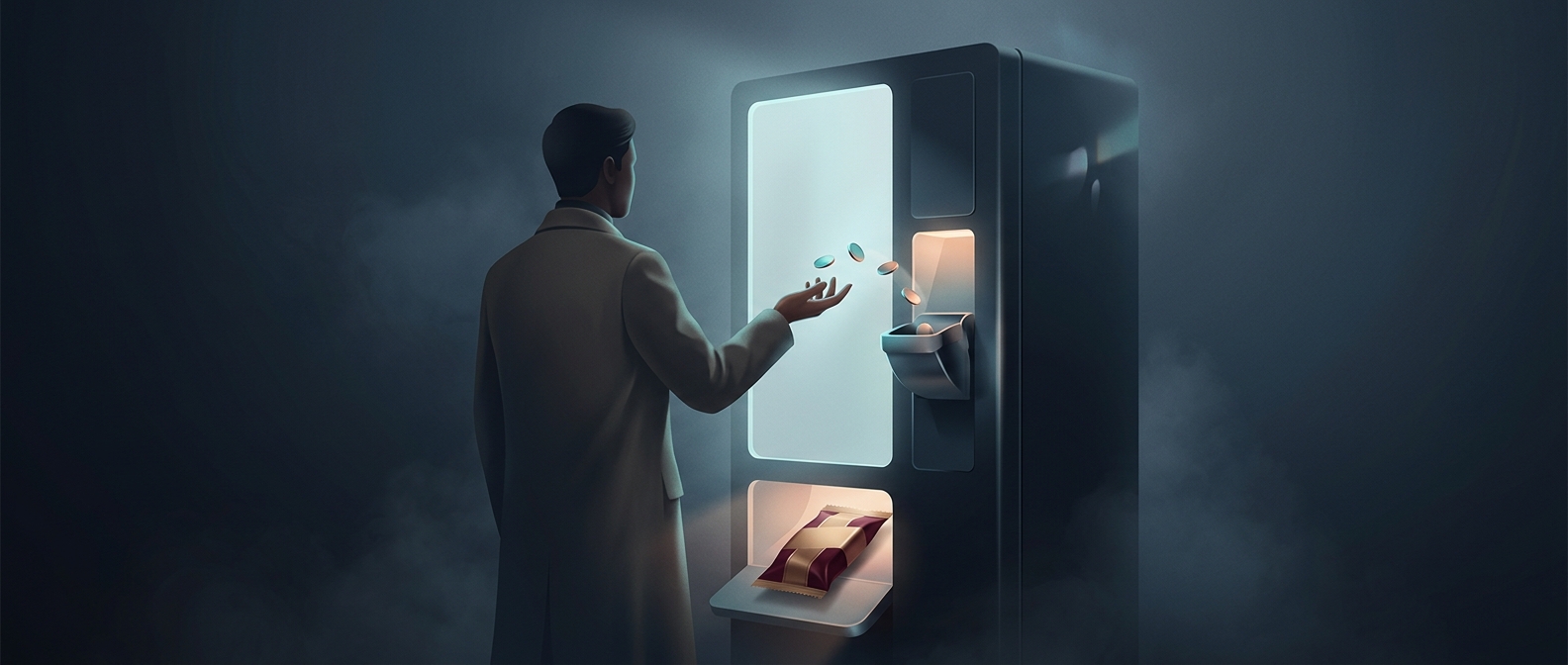
A coin is checked as it moves
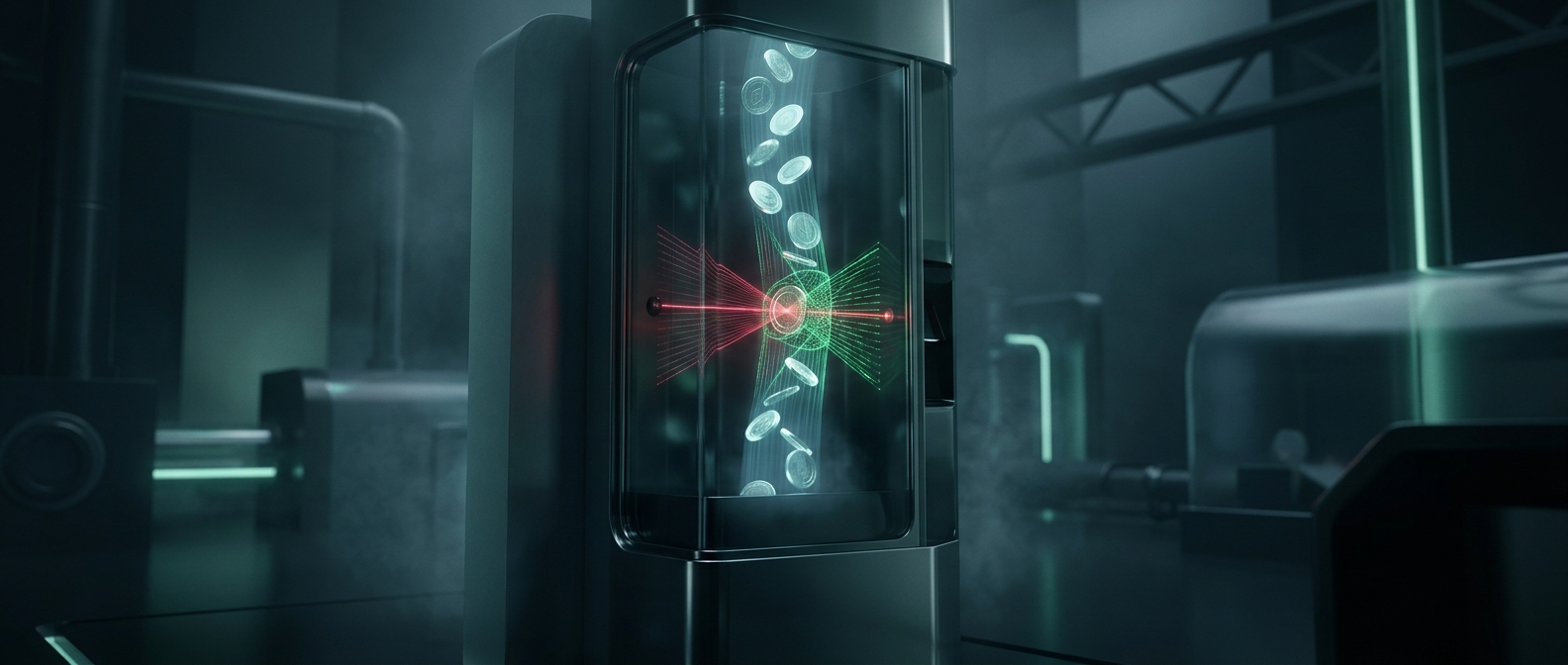
A vending machine cannot rely on a coin’s apparent diameter alone: a washer or foreign coin may fit through the slot. In a laser-based validator, narrow light beams cross the coin’s path. As the coin rolls past, it interrupts different beams for different lengths of time. That pattern can reveal details such as the coin’s size and outline, rather than merely whether something metal entered the slot.
The machine compares the readings with the expected profile of coins it accepts. A close match can be sent toward the cash box and counted as payment; a mismatch is diverted to the return. The validator is making a quick mechanical decision while the coin is still moving, before the machine commits to dispensing anything.
Why use light instead of a simple slot?
A slot can screen out objects that are obviously too large or too small, but it cannot reliably distinguish objects with similar dimensions. A sensor adds another layer of evidence: the timing and shape of the interruptions help separate a genuine coin from a look-alike. Depending on the validator, other checks may also be used; a laser scan is not a guarantee that every counterfeit will be caught.
That extra check protects the machine owner from accepting something with little or no payment value, while reducing false rejections of real coins. The practical payoff is small but immediate: the machine can test a coin in transit, then either credit it or give it back before a customer’s selection is released.