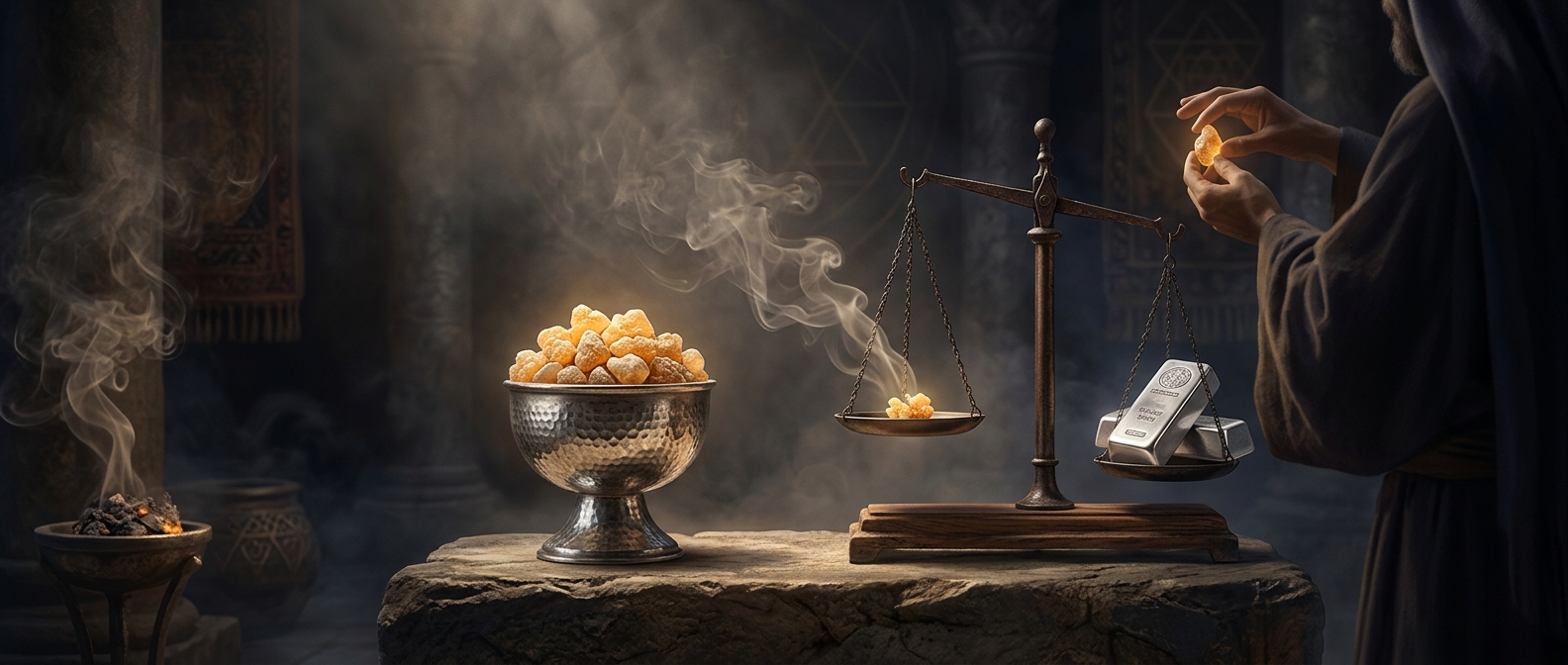
Why Some Frankincense Is Worth More
Frankincense is aromatic resin that forms when a Boswellia tree’s bark is cut. In Oman, harvesters make small incisions and collect the hardened drops, often called “tears.” The resin is sorted by qualities such as color, size, cleanliness, and fragrance. Large, pale, relatively clean pieces from sought-after trees can command a premium; mixed or darker resin generally sells for less.
That sorting matters because frankincense is a natural harvest, not a uniform factory product. Each batch can vary, and desirable pieces are limited. Comparing a top grade with silver therefore highlights how valuable a particular resin can be—not a standard price for all frankincense or a guarantee that it will always outrank silver.
From Tree to Trade
A tree’s resin must be collected, dried, graded, and brought to buyers. The final price reflects both scarcity and what customers want: frankincense is burned as incense and used in perfumery, while its scent and role in ritual also give it cultural importance. Those uses connect a small piece of resin to markets well beyond the place where it grew.
In religious and other traditions, burning frankincense can mark a sacred moment or make a space feel set apart. That meaning is cultural and spiritual; the resin’s market value comes from the qualities buyers prize and the limited supply of top grades. The striking result is that a handful of carefully selected tree resin can be priced like a precious metal, while ordinary grades remain a very different product.