A divine spark—and a burden inherited from the Titans
Orphism was not a single church with one fixed creed. The name covers a cluster of ancient Greek religious teachings and practices associated with the legendary poet Orpheus. Some accounts linked human origins to a grim myth: after the Titans killed and consumed the young god Dionysus, Zeus struck them down, and humanity arose from what remained. In this telling, people carried both a divine element associated with Dionysus and the Titans’ guilt.
That mixed inheritance gave ordinary life a spiritual consequence. The soul was thought to outlast the body, but it could be reborn repeatedly, remaining caught in a cycle of lives until it was purified. Ritual discipline—including abstaining from certain foods—could help a person pursue release. The point was not simply to obey a list of taboos; it was to live in a way that honored the soul’s divine potential and loosened its ties to the material world.
Gold tablets as instructions for the next life
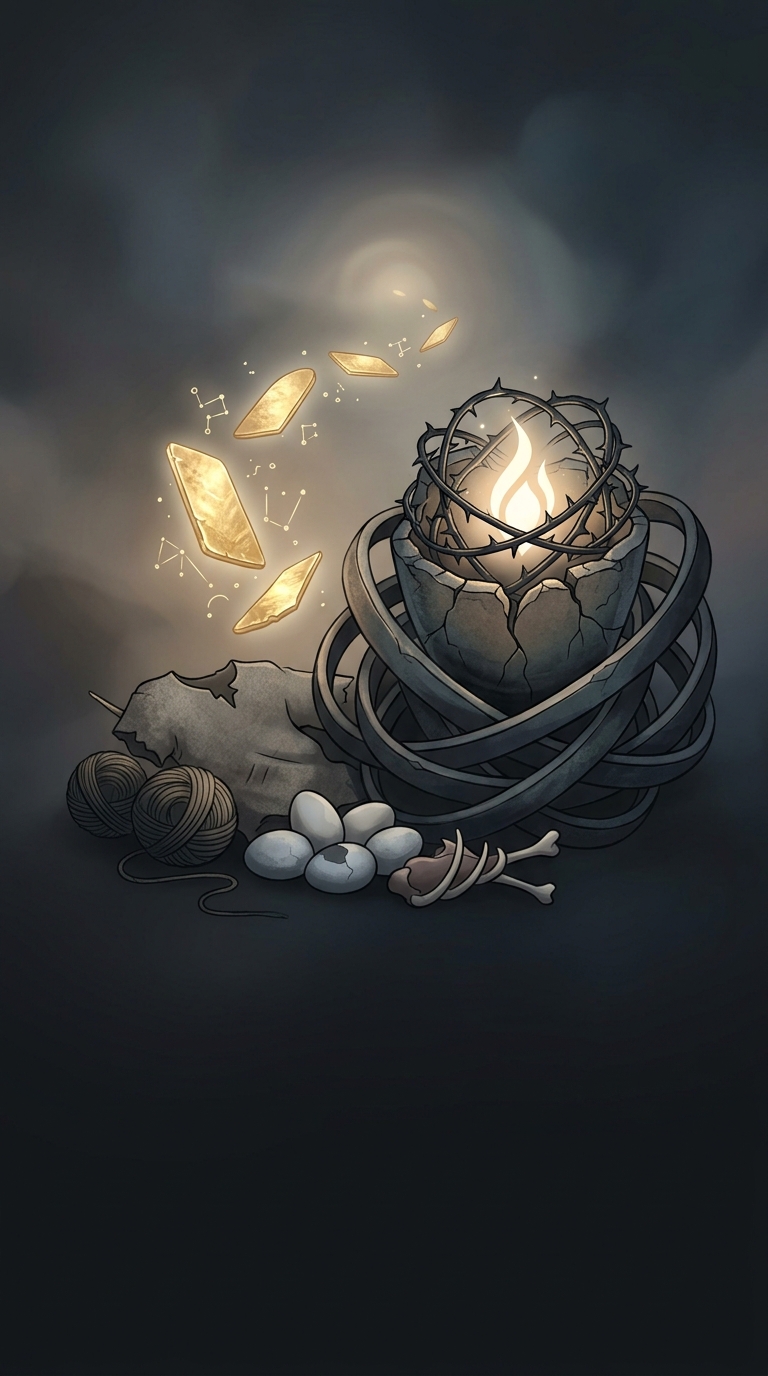
Some people associated with these beliefs were buried with thin gold tablets inscribed with directions for the dead. The surviving texts vary, but they often guide the soul through the underworld, warning it away from a source of forgetfulness and toward a source of memory. Remembering who the soul was—and where it came from—could help it avoid another ordinary rebirth and claim a more favorable fate.
The tablets make the teachings unusually tangible: a believer could carry a written guide into the afterlife. They were not a universal Orphic practice, just as dietary restrictions differed among communities and periods. Accounts describe avoidance of meat and, in some traditions, wool or eggs, but the evidence does not support one identical rulebook for every follower. What united these practices was the hope that the soul’s fate could be shaped before death, through purity, remembrance, and preparation for its journey beyond the body.