The egg as a beginning
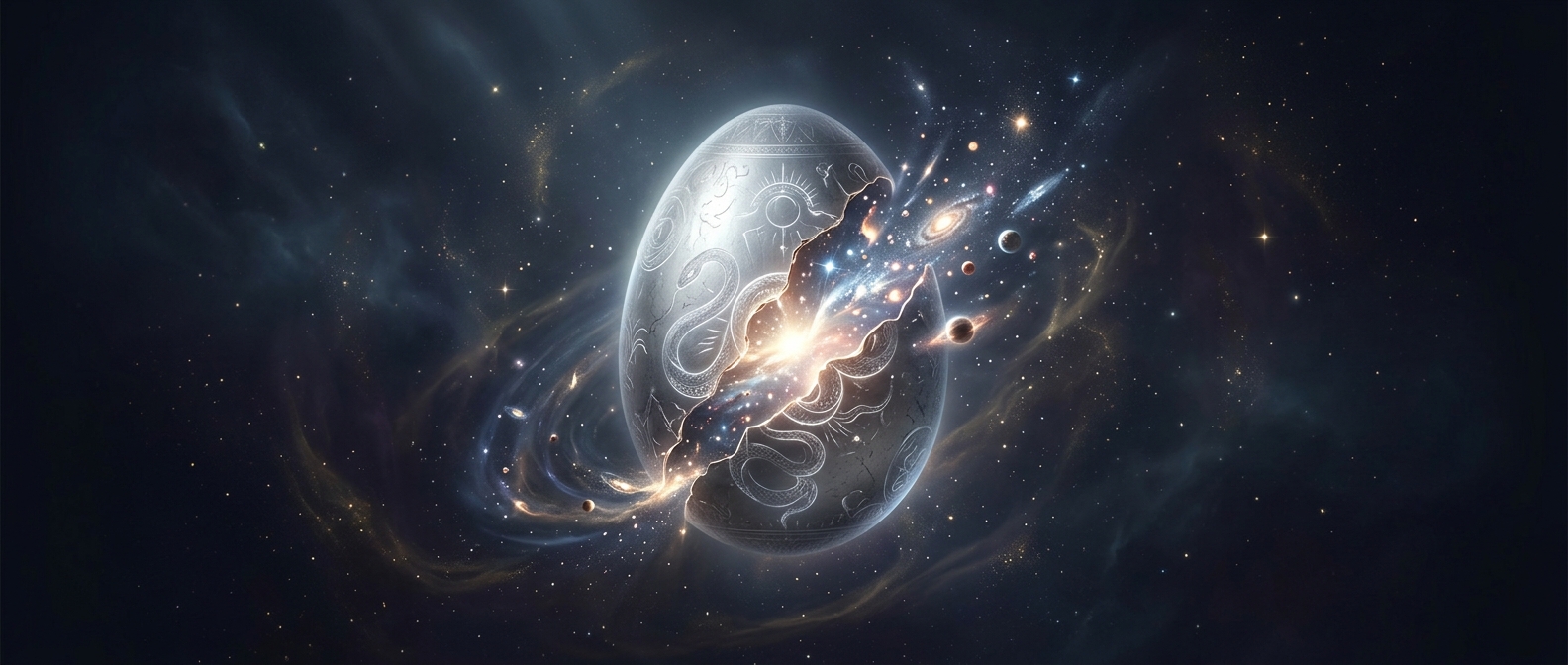
In Orphic myth, the universe begins not with an empty void but with a sealed, silver egg. Time brings the egg into being; inside it, the god Phanes waits to emerge. The image turns creation into a visible sequence: something is formed, its shell opens, and a living power appears.
An Orphic myth belongs to a Greek religious tradition associated with Orpheus, the legendary poet. Ancient Greek creation stories varied, and this egg is part of a particular mythic account—not a single creation story shared by every Greek worshipper.
What Phanes brings into the world
Phanes is described as intersex, with both masculine and feminine characteristics, and as golden-winged. In the myth, hatching is more than a birth: Phanes becomes the force through which the universe is created. The deity’s mixed characteristics can be read as an image of generative power encompassing more than one sex, rather than as a detail that limits the god to a human category.
The egg gives that cosmic power a beginning point. While it remains closed, creation is potential; when it breaks, the source of the ordered world is revealed. Its silver shell makes the boundary between hidden possibility and visible cosmos part of the story itself.
A compact image of creation
The myth compresses a large question—how did everything begin?—into one memorable event. Instead of describing the universe as assembled piece by piece, it imagines creation emerging from a single living source. The image’s lasting force lies in that transformation: the universe is not merely made around the egg; it is born from what the egg contains.