Why a Fox’s Tails Multiply
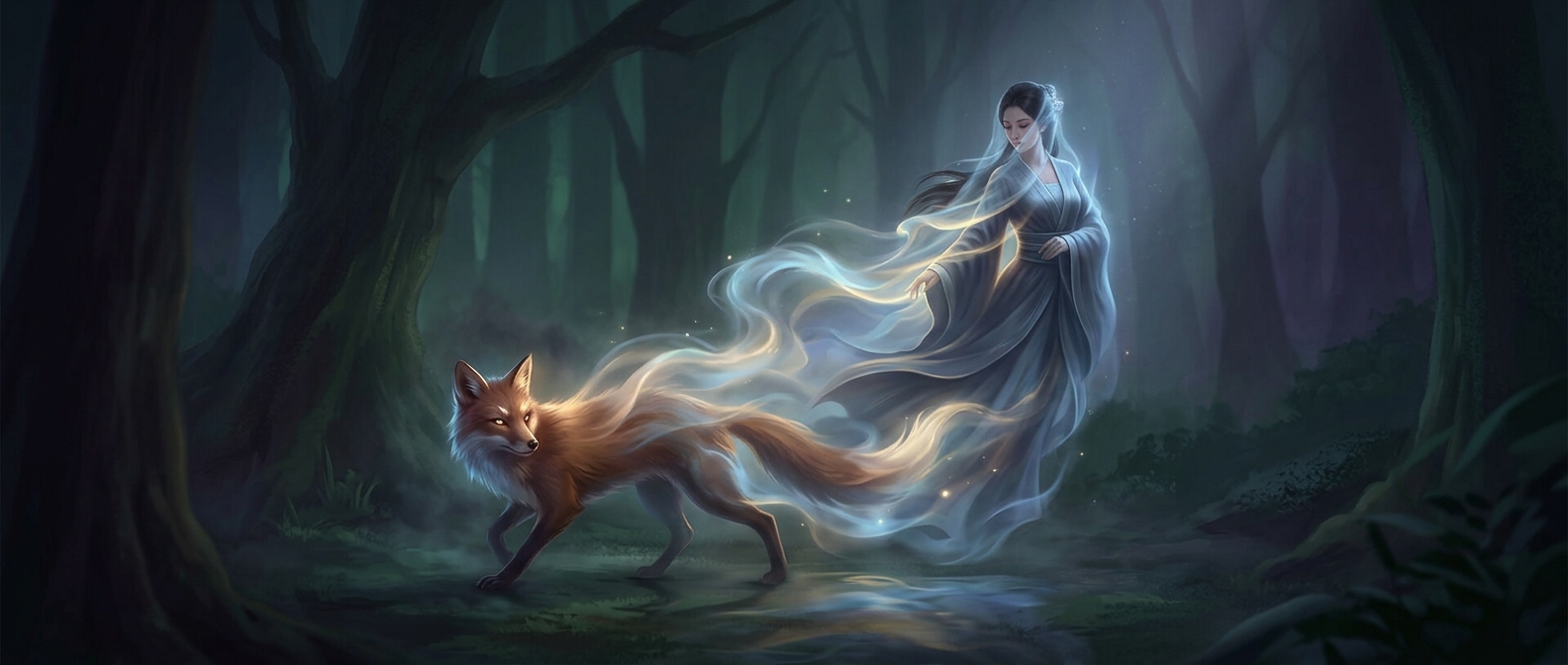
In Japanese folklore, a kitsune is a fox spirit whose growing number of tails signals more than unusual appearance. The tails make an invisible quality—age, wisdom, and supernatural power—visible. A young kitsune may have one; in familiar versions of the tradition, the number can rise to nine as the fox becomes older and more formidable.
A Folkloric Measure of Power
The idea belongs to a broad storytelling pattern: beings accumulate signs of rank as they gain experience. For kitsune, extra tails turn a long life into a feature an observer can recognize at a glance. They also help distinguish a powerful fox spirit from an ordinary fox, even when the spirit takes another shape.
Kitsune stories vary across regions and tellers, so the tails do not function like a fixed rulebook. Their meaning depends on the tale: greater age may bring cleverness and mastery of transformation, but a powerful kitsune can also be dangerous or deceptive. Wisdom does not necessarily make the spirit benevolent.
The Image Behind the Legend
A fox can vanish into brush, appear at the edge of a village, or seem to change identity—qualities that make it an apt figure for stories about hidden knowledge and uncertain appearances. The multiplying tails give that ambiguity a memorable visual scale. Each new tail marks a spirit whose experience has become power, while reminding the audience that such power may be difficult to judge or control.