Why a familiar plot can feel like a revelation
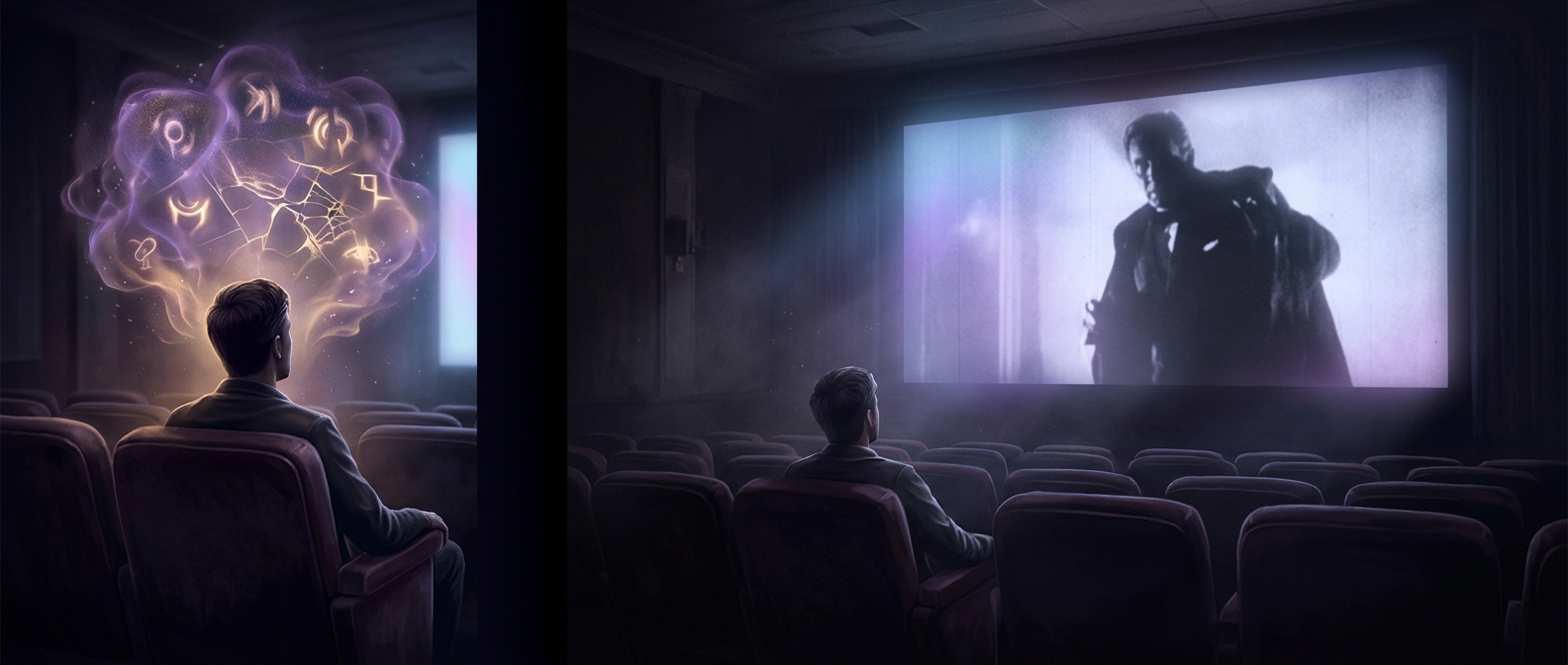
A movie twist rarely arrives without clues. A suspiciously emphasized object, an oddly evasive character, or a detail introduced early and then repeated can quietly steer viewers toward one explanation. In a formula-driven story, those signals may make the ending guessable even when the film is designed to feel surprising.
Viewers also make predictions as they watch, often without pausing to mark them as predictions. If one turns out to be right, the ending can make the earlier hunch feel sharper and more certain than it was. The mind remembers the match between guess and outcome, while vague or incorrect possibilities are less likely to stand out.
How a hit becomes “evidence”
This is confirmation bias: the tendency to notice and interpret information in ways that support a belief. Once someone thinks, “I knew it,” the successful guess can seem to confirm not just their ability to read the story, but the idea that they have a special intuition. The conclusion feels personal; the ordinary clues that produced it are easy to overlook.
A simple way to test the impression is to write down predictions before the ending, including the guesses that seem unlikely, and check them afterward. That creates a record of misses as well as hits. A correct prediction is real; what it proves depends on how often the same intuition is wrong. The twist may still feel uncanny—but the tally can show whether it was extraordinary or simply the one hunch that survived the credits.