Why the Cabin Can Make Bumps Feel Bigger
An airplane does not have to move more for a passenger to feel more motion. What matters is how the brain pieces together signals from the eyes and the inner ear, which senses changes in head movement and acceleration.
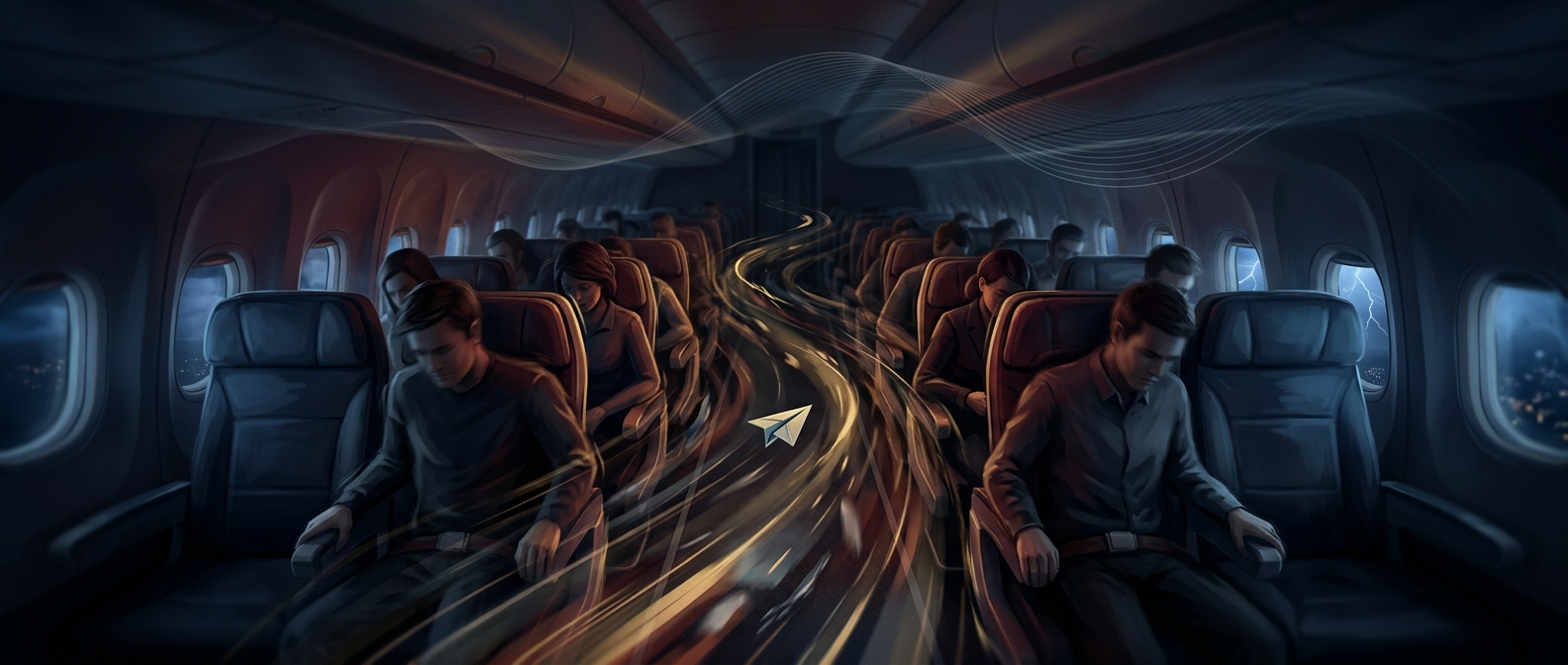
During a bump, the inner ear registers the aircraft’s small jolts. From an aisle seat, the nearby cabin offers few stable visual landmarks: seats, walls, and overhead bins all move along with the plane. That makes it harder for the eyes to show how the aircraft is shifting through space, leaving the body’s motion signals more prominent.
A Window Adds a Reference Point
A view of the distant horizon or landscape can help the brain interpret movement. Because those features are far away, their apparent position provides a steadier reference than objects inside the cabin. The view does not stop the aircraft from bouncing; it can simply make the motion easier to read.
The effect depends on conditions. Clouds, darkness, or a window view blocked by the wing can remove that visual reference, while some aisle passengers may barely notice the difference. Seat location changes the cues you receive, not the amount of turbulence the aircraft encounters.
That is why the same patch of rough air can feel more pronounced from the aisle: the plane is moving, but the cabin gives your eyes less help in judging how.