A blemish gives the eye a fixed reference
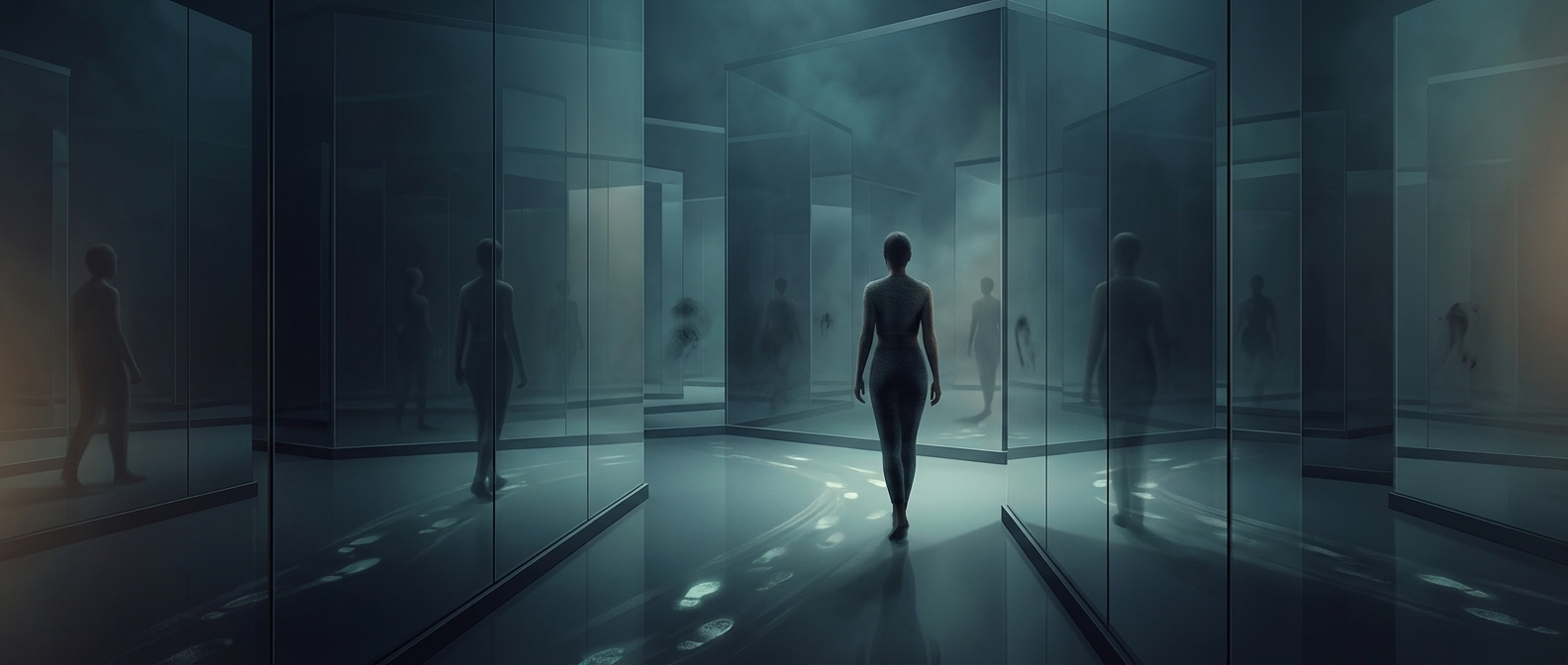
A mirror maze works by making a reflection look like a passage. Repeated panels can reflect the same corridor from different angles, so an apparent doorway may be only an image of the space behind you. With few distinctive features to orient by, the visual system has to infer whether a dark opening is open space or a reflected scene.
A smudge on the mirror provides a clue tied to the surface itself. As you shift your head, the smudge remains attached to the same pane, while the reflected corridor changes with your viewing angle. That difference can help reveal which apparent details belong to the mirror’s surface and which belong to the scene reflected in it.
Why the clue matters
The smudge is not a magic marker that identifies every false exit. Its usefulness comes from comparison: notice where the mark sits, move slightly, and watch what changes. A real opening gives a view into space beyond the wall; a reflection presents a view that shifts according to the mirror’s angle. Even a small surface flaw can make that distinction easier to detect.
Mirror mazes are designed to deprive visitors of reliable landmarks, but they cannot make the glass disappear completely. A tiny mark turns the mirror itself into a landmark—and may keep a convincing reflection from becoming a collision.