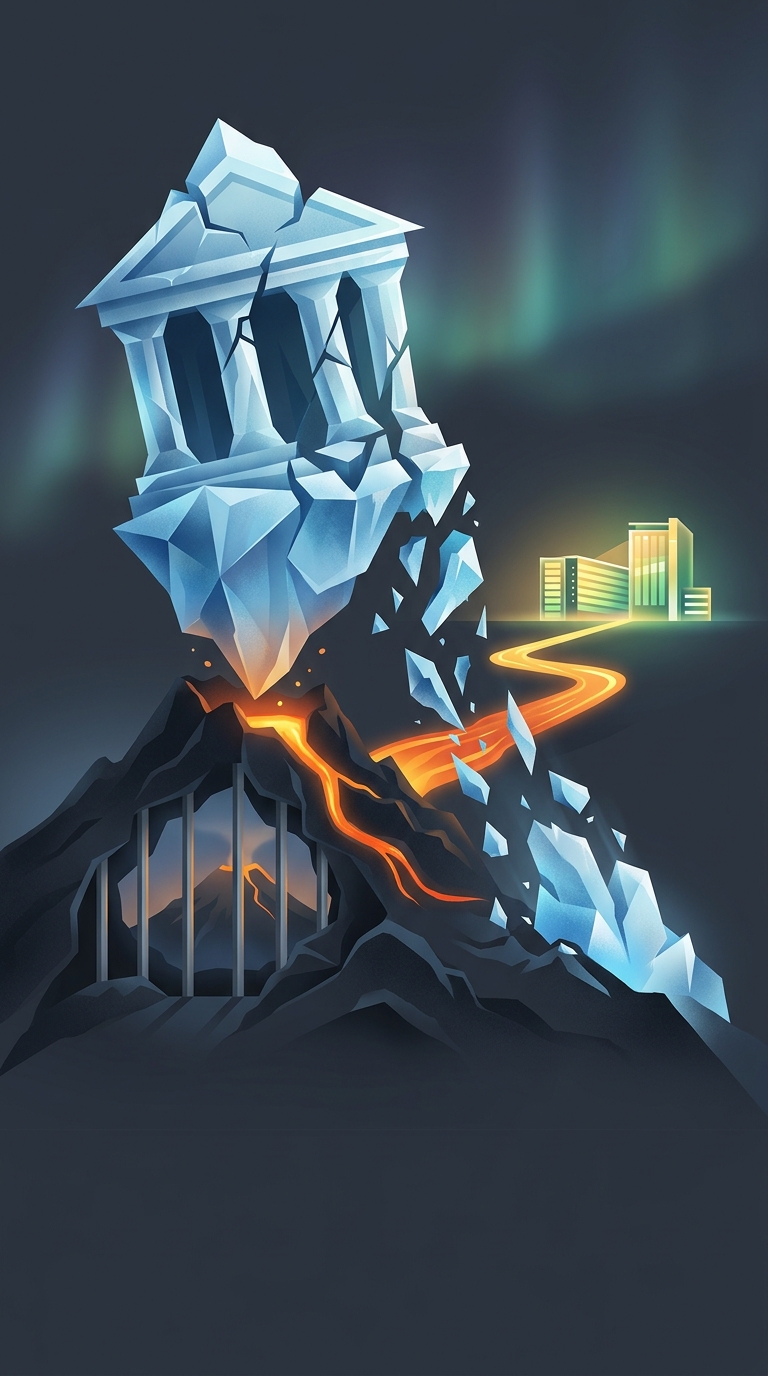
How Iceland’s banks outgrew the country
In the years before 2008, Iceland’s banks expanded rapidly by borrowing from international markets and using that money to finance investments and acquisitions abroad. Their balance sheets—the assets they owned and the debts they owed—grew to roughly ten times Iceland’s annual economic output. That made the banks enormous compared with the country expected to support them.
The model depended on lenders continuing to provide funds. When the global financial crisis froze credit, Iceland’s banks could no longer refinance their debts. Their foreign-currency obligations were especially hard to meet as the krona, Iceland’s currency, plunged in value. The banks failed, and the government could not simply cover liabilities on a scale many times larger than the economy.
Why the shock reached household budgets
A bank collapse does not affect every account in the same way. But the crisis hit households through lost access to money, falling confidence, and the krona’s sharp decline. Imported goods became more expensive, pushing inflation up and reducing what household savings could buy. For many people, the damage was not only a vanished balance; it was the shrinking value of money in everyday life.
The distinction matters: the banks’ international debts and the losses faced by Icelandic households were connected, but they were not identical. The state’s response and the handling of deposits differed across institutions and account types.
Recovery changed what powered growth
After the crash, Iceland rebuilt under tighter financial conditions. Technology businesses contributed to the economy, while international tourism became a major source of customers and foreign currency. Visitors brought spending from abroad without requiring Icelandic banks to finance a vast overseas expansion.
That shift offered a vivid contrast: the recovery drew value into the country through services and expertise, rather than relying on banks growing far beyond the country’s capacity to support them.