Why Shani Shingnapur Leaves Its Entrances Open
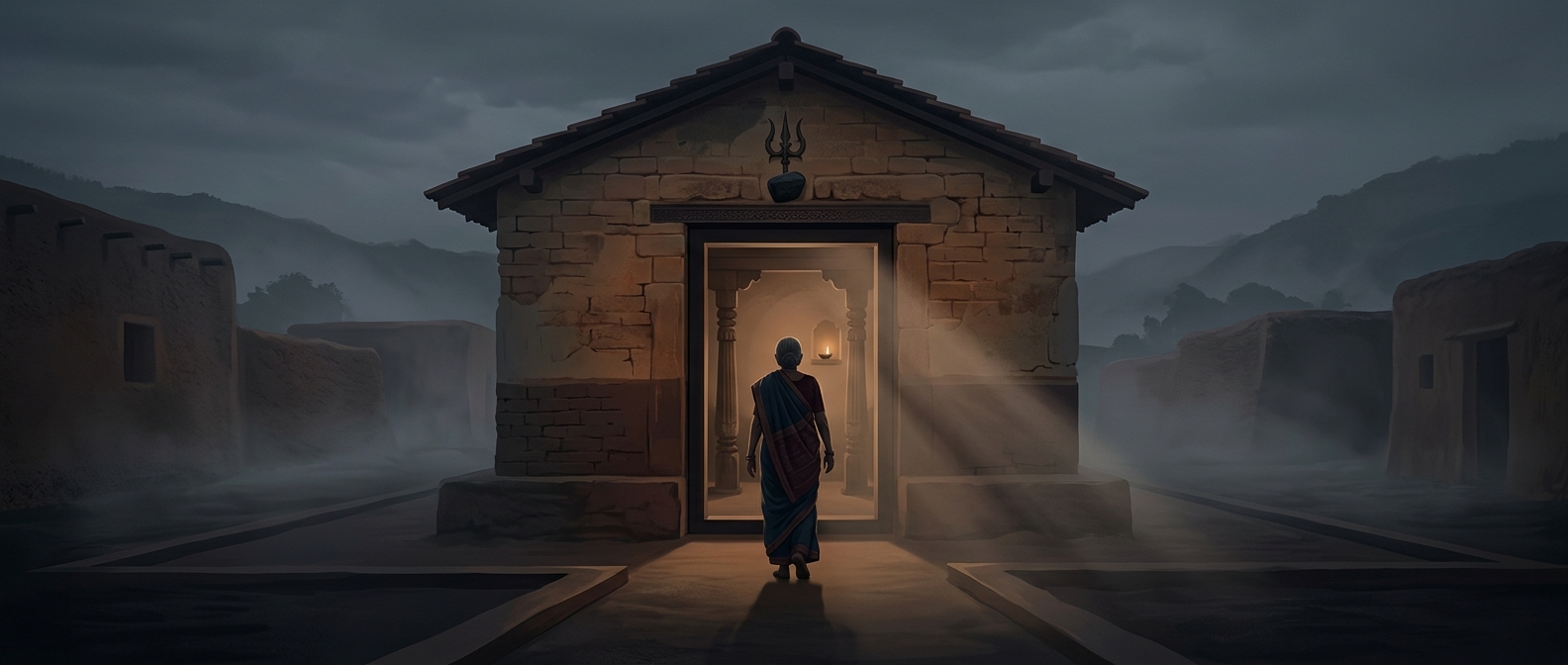
In Shani Shingnapur, in Maharashtra, the open entrances are more than an architectural oddity: they express a local act of faith. Residents believe that Shani, a Hindu deity associated with the planet Saturn, protects the village. A conventional front door—with its lock and barrier—would suggest that protection must come from household security instead. Leaving the entrance open makes trust visible in everyday life.
That choice shapes how a visitor reads the village. An unbarred entrance is not simply an invitation to look inside; it reflects a shared belief about who guards the home. Residents also say crime is absent, a claim that belongs to the village’s own account of life there rather than something the architecture itself can prove.
A Local Belief You Can See
The tradition is tied to Shani’s presence in the village, where devotion is part of the place’s identity. Its striking feature is how belief moves beyond the shrine and into ordinary domestic space: protection is not only prayed for, but signaled at the threshold of the home.
For travelers, the open fronts offer a memorable glimpse of faith translated into a daily choice. What would usually mark the boundary between public street and private house becomes, here, a visible statement of confidence in divine guardianship.