A wedding can unfold as a sequence, not a single ceremony
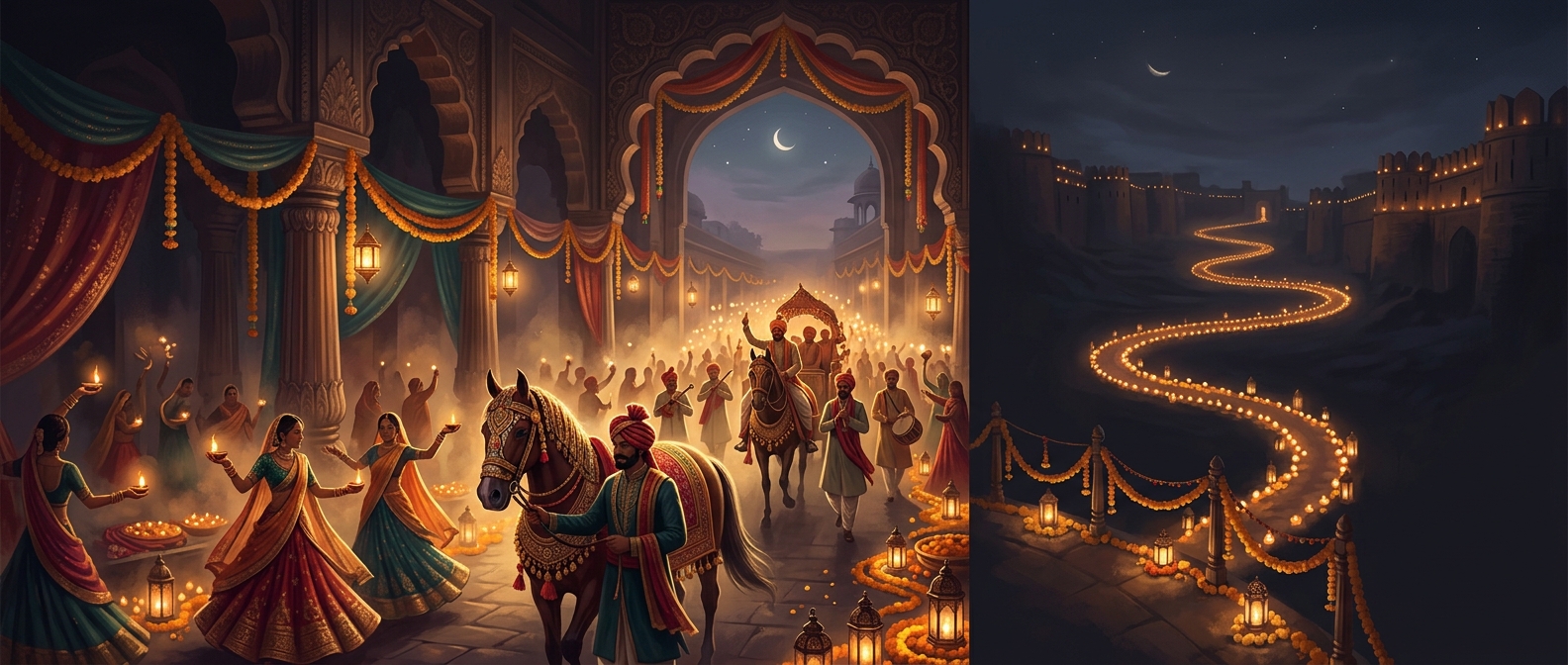
In many Indian communities, a wedding is organized as several gatherings over multiple days. The events differ by region, religion, family, and personal preference, so there is no single schedule that fits every wedding. One celebration might include a mehndi gathering, where henna is applied, or a sangeet centered on music and dancing; another may use different customs or names.
This format gives distinct parts of the celebration room to breathe. A religious or ceremonial rite can remain focused, while meals, dancing, and welcoming guests happen at other events. The days are connected, but each gathering can have its own dress, atmosphere, and role.
The schedule makes room for a wider circle
A large wedding often brings together relatives and friends who may be traveling from different places. Spreading events out can give guests more chances to meet, take part, and celebrate with the couple and their families. It also means practical work—preparing food, arranging venues, changing outfits, and coordinating guests—must be planned across several occasions rather than one.
That combination of ritual and hospitality helps explain why the celebration may feel expansive: the wedding is not only the central ceremony, but also a series of opportunities for families and communities to gather. The particular customs vary, but the extra days make space for more people to share in the occasion.