Why one sour became two national signatures
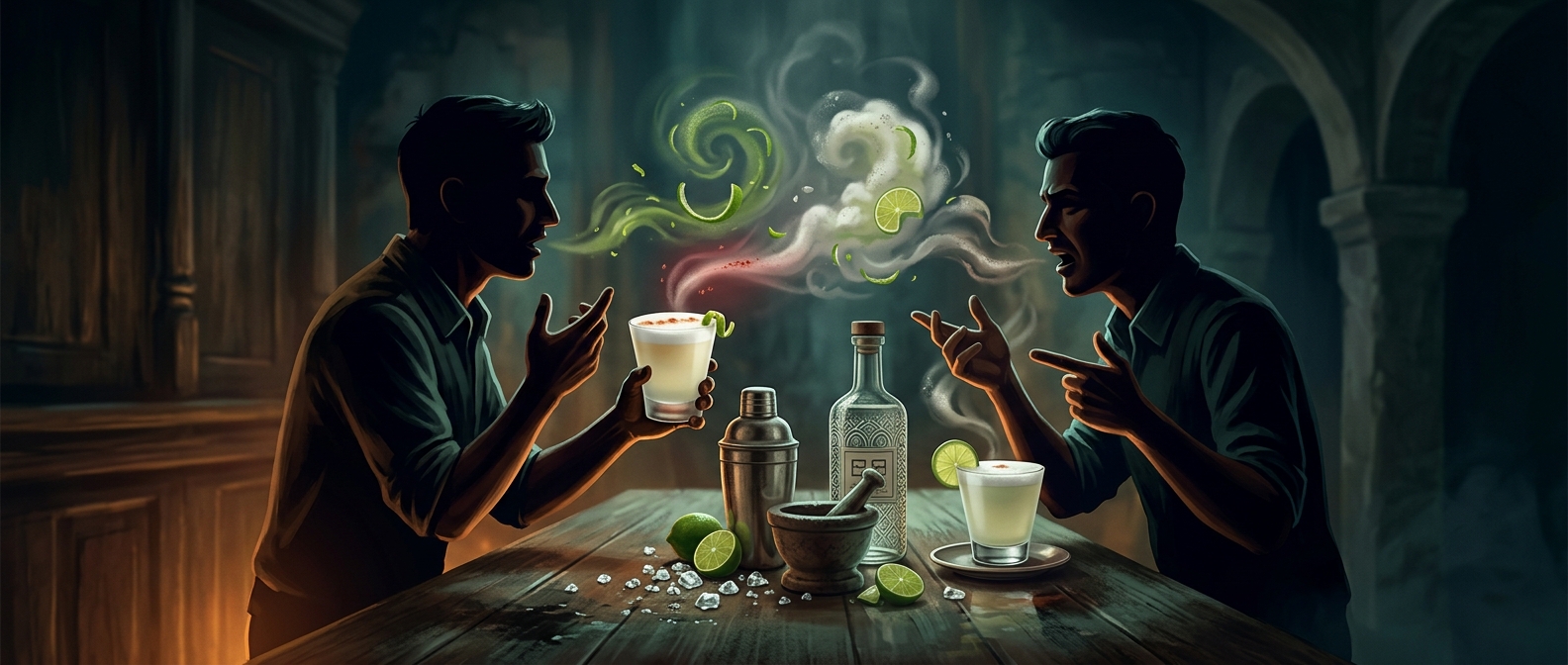
The argument over the pisco sour is about more than a garnish. Pisco is a grape-based spirit made in both Peru and Chile, and each country connects it to its own history of winemaking and drinking. The cocktail turns that shared, contested ingredient into something visitors can encounter in a glass—and something each country can present as distinctly its own.
A small recipe difference changes the drink
In the Peruvian version, egg white is shaken into the cocktail, creating a pale, foamy cap. Bitters—concentrated flavoring added in small drops—bring an aromatic, slightly bitter note. Chile’s version leaves out both, so the contrast is not merely visual: the texture and finish change too. One recipe makes the foam part of the drink’s identity; the other lets the spirit and the rest of the mix speak without it.
The dispute travels with the name
For travelers, ordering a pisco sour can mean encountering a national claim as well as a local house recipe. The drink makes a difficult question of cultural ownership legible through ordinary choices: what goes into the shaker, what is left out, and which tradition a bartender says the glass represents. The foam is a detail; the identity attached to it is the real point of contention.