A Neapolitan pizza is built to stay supple
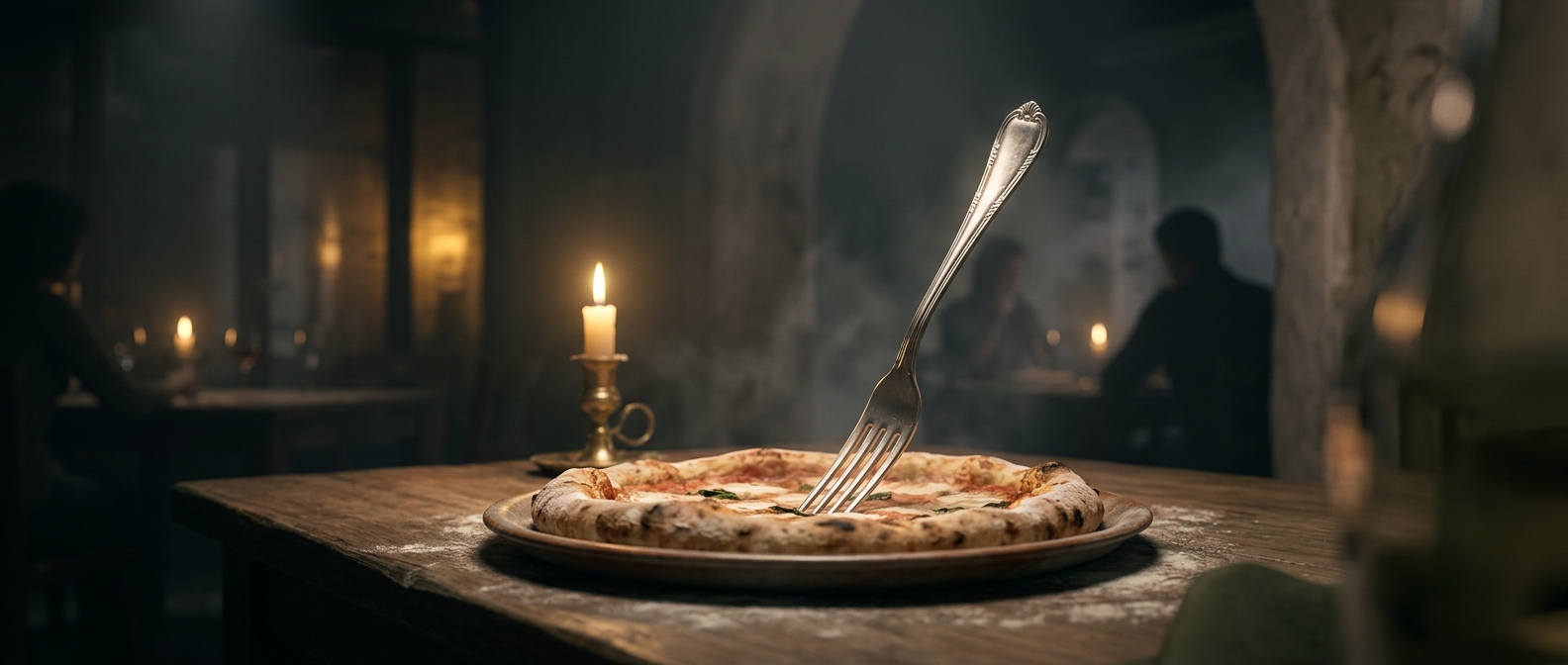
The knife and fork are less a rule of etiquette than a response to the pizza’s structure. Neapolitan dough is shaped with a thin middle and a puffed outer rim, then baked quickly at very high heat. The result is tender rather than crisp throughout: the center can bend under its toppings instead of holding itself flat like a firm slice.
Fresh mozzarella adds another complication. As it warms, it releases moisture onto the tomato-covered middle, making a freshly baked pie especially soft and difficult to lift in one piece. Cutting off a manageable bite lets the diner keep the toppings on the dough—and avoid chasing a drooping slice around the plate.
The fork is often just for the first bites
A whole pizza may arrive at the table for the diner to cut, rather than already divided into neat slices. Starting with a knife and fork is practical while the center is hot and floppy; once it cools a little, some diners switch to their hands, particularly for the firmer outer rim. Habits vary, and the utensil choice is not a test of being Italian.
That contrast is part of the pleasure: a soft, saucy center gives way to a breadier edge. The cutlery helps manage the first without getting in the way of enjoying the second.