How a rocky hill acquired a face
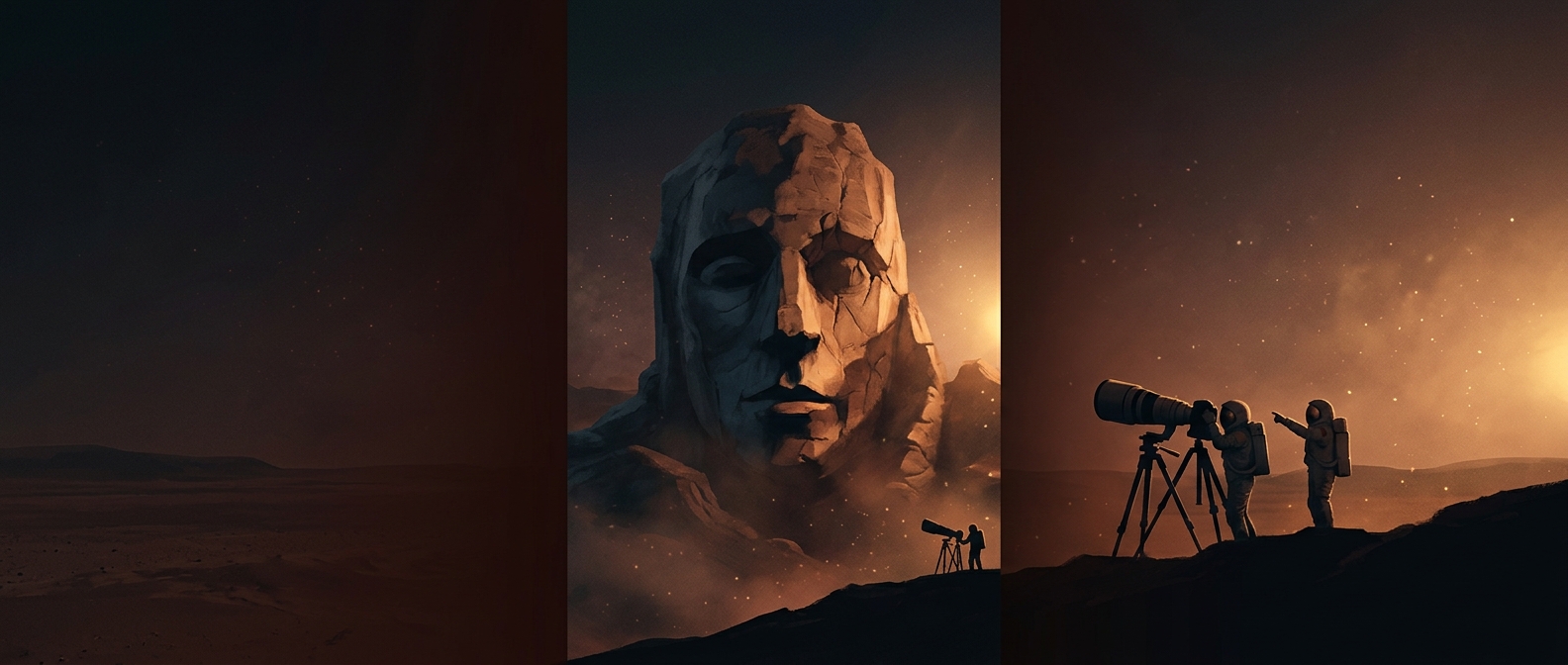
The image that made the Martian “face” famous was taken by NASA’s Viking 1 spacecraft in 1976. From far away, the landform in the Cydonia region appeared to have eyes, a nose, and a mouth. But the camera captured only a small, grainy view, and the Sun’s low angle cast strong shadows across the surface. Those dark patches supplied the features the landscape itself did not have.
Human vision is quick to recognize faces, even in incomplete patterns. Once a viewer sees eyes and a mouth, ordinary bumps and shadows can seem to confirm them. In a low-resolution image, subtle changes in terrain blur together, making a natural hill look more sculpted than it is.
Better views changed the picture
Later spacecraft photographed the same area with sharper cameras and from different angles and lighting conditions. The added detail revealed an ordinary rocky landform, not a face. As the illumination changed, the apparent facial features weakened or disappeared; what remained was a mesa—a broad, elevated formation with a relatively flat top and steep sides.
The transformation is a reminder that a striking outline is not enough to establish what a landscape is. A shadow can make a slope look like an eye socket, while a new viewing angle restores the terrain’s depth. On Mars, better images turned an apparent monument into a hill—and showed how much the first impression depended on light.