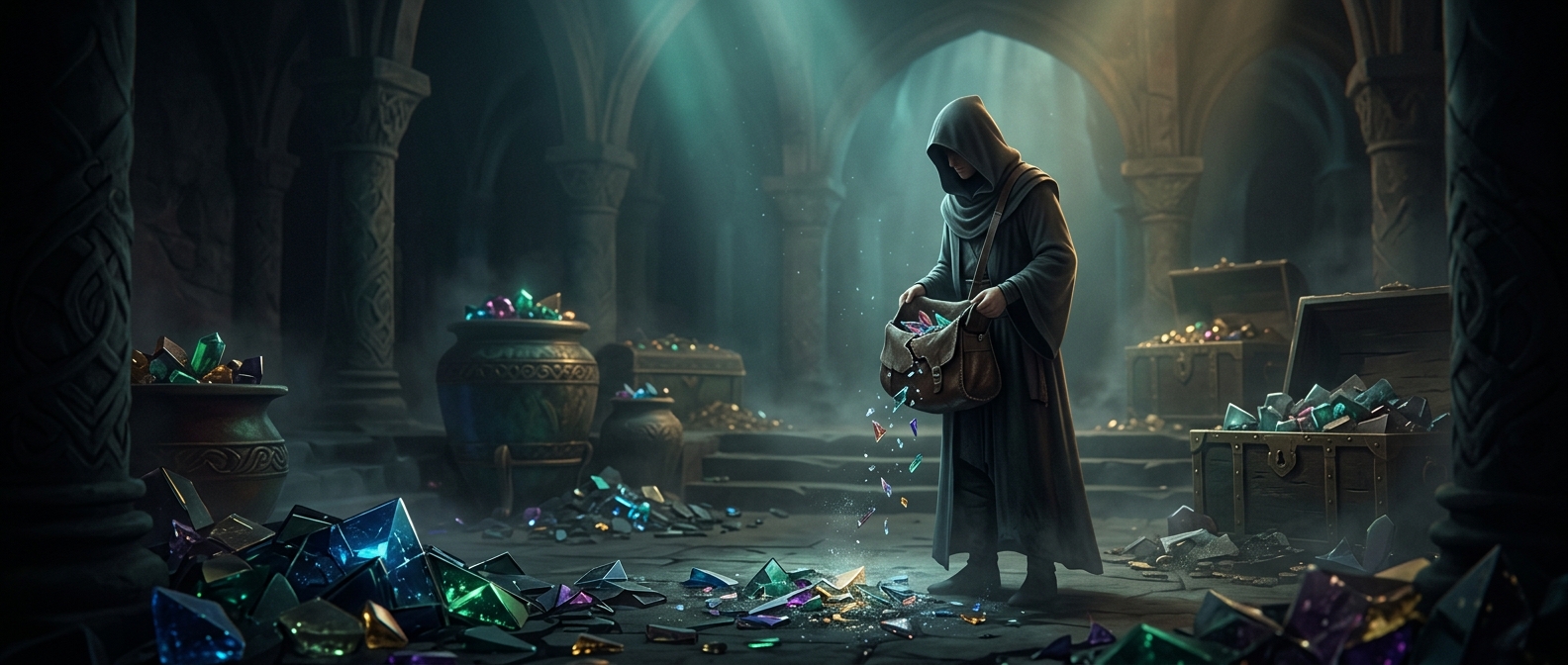
A pot turns exploration into a reward loop
A breakable pot is more than scenery: it is a small, readable invitation to act. The player sees an object that looks fragile, tries a swing, and gets an immediate result. When gems spill out, curiosity becomes a useful habit—check the next pot, corner, or room for something worth collecting.
That quick payoff also connects exploration to the game’s larger economy. The gems are a shared resource: finding them in the environment can help pay for goods elsewhere. A player who takes time to search may arrive at a shop better prepared to buy explosives for obstacles or potions for dangerous encounters.
A comic shortcut with practical value
The arrangement is deliberately convenient. In an ordinary household, smashing a ceramic vessel would destroy something; in a game, the broken pot can function like a hidden cache with an unmistakable signal. Its contents are easy to notice, and the action takes little explanation. The fantasy logic is silly, but the rule is clear: breakable objects may reward attention.
That clarity matters because players are often balancing limited supplies against uncertain threats. A potion can make the difference between surviving a fight and having to try again, while explosives may open a route or help overcome an obstacle. Scattering currency through optional breakables gives players a way to improve their odds without making every purchase depend on a single reward or mandatory path.
So the pot serves two jobs at once: it makes the world feel interactive and quietly teaches players to look for resources. The next shop purchase may begin with a satisfying crash.